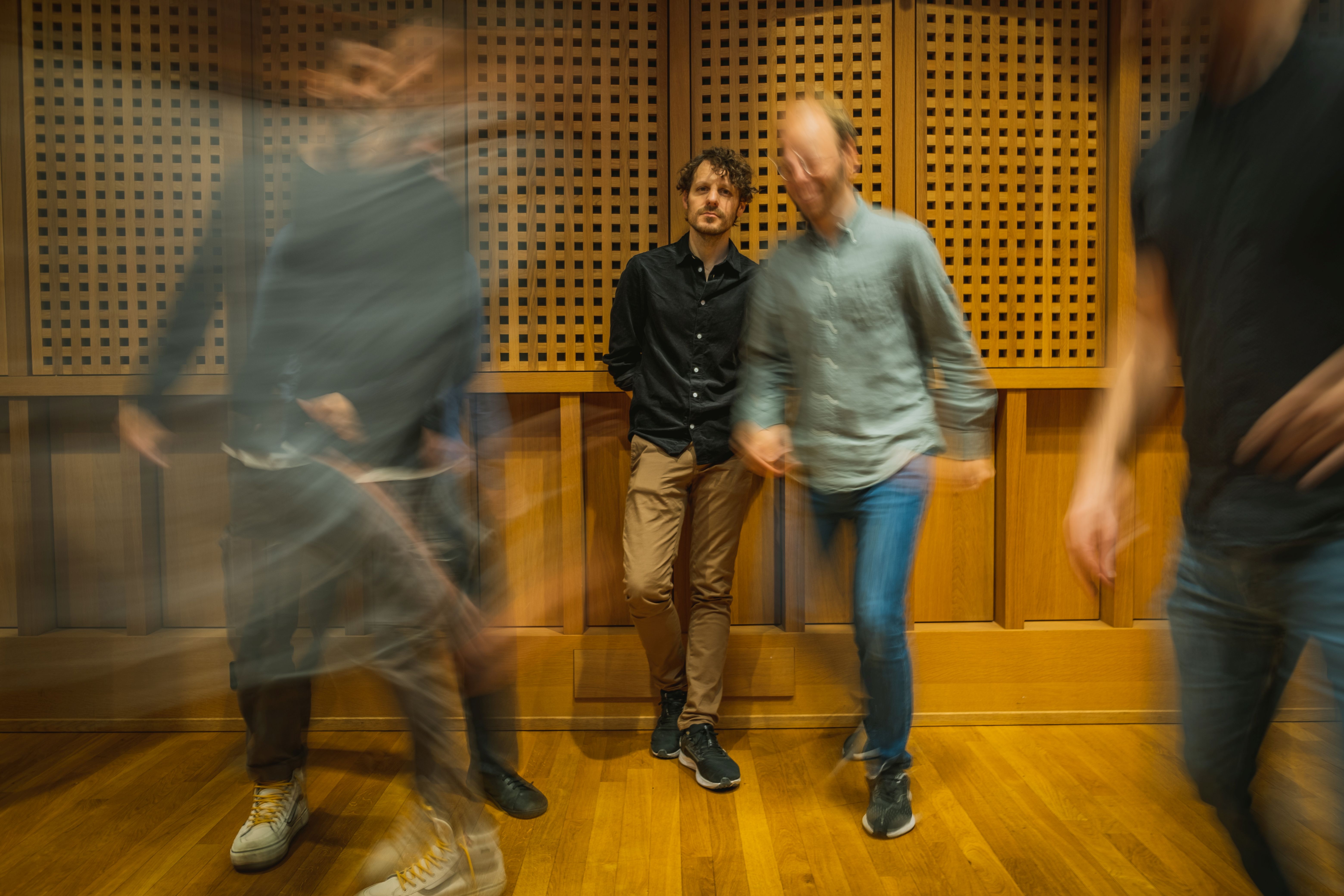
Published
Name: Ramiro Zayas
Nationality: Argentinian
Occupation: Pianist, composer
Current release: Ramiro Zayas's new album Collector is out via ears&eyes. Alongside Ramiro himself, it features Sebastián Greschuk (trumpet, flugelhorn), Yossi Itskovich (trombone), Jonathan Acevedo (tenor sax), Baptiste Stanek (bass clarinet, tenor sax, soprano sax), and Gianni Narduzzi (double bass)
Recommendations for Berlin, Germany: Well, there are many things, but I’ll mention just one. In the summer, go to the lakes, any of them, even the busiest ones like Schlachtensee, early in the morning. It’s something I always enjoy and really value. Later, grab some Vietnamese or Lebanese food. Berlin is a great city for eating outside.
Topic I am passionate about but rarely get to talk about: Music takes up a big part of my everyday life, but to feed other parts of myself, I’d say food and swimming. Both feel like a kind of therapy or meditation for me. Cooking is something I mostly do for other people rather than for myself. Swimming, on the other hand, is more reflective — when you get into the flow, gliding through the water, feeling light and following the rhythm, it’s just amazing.
If you enjoyed this Ramiro Zayas interview and would like to stay up to date with his music, visit his official homepage. He is also on Instagram, Facebook, and bandcamp.
What were some of the musical experiences which planted a seed for your interest in jazz?
As a kid, I used to lose myself in the record collection we had at home. Whenever I was alone, I’d explore those albums without any preconceptions, just just for fun.
I remember there was one by Miles with Gil Evans, another by Ella Fitzgerald, some Louis Armstrong, plus a lot of rock and Argentinian music.
Later, as a teenager learning piano, I stumbled upon Keith Jarrett’s solo recordings and that opened the door to my love for jazz.
What does the term jazz mean today, would you say?
That’s a tough one … to me, jazz is about community and being open to any sonic experience.
As of today, what kind of materials, ideas, and technologies are particularly stimulating for you?
I really like dark rooms with surround sound, that feeling of being underwater, where gravity and sound feel different.
Many of that can mostly be heard on my latest album Collector.
Where do most of your inspirations to create come from – rather from internal impulses or external ones? Which current social / political / ecological or other developments make you feel like you need to respond as an artist?
Most of my inspiration comes from within, from sensations of movement or temperature, a story I want to tell, people I’ve met and care about, or music I love and want to translate into another form.
I think we’re living through really complex times. The world feels like it’s burning, with so much injustice and so little care for the planet. Art, including music, should somehow reflect that complexity.
To me, creating something honest is already saying something. And if it reaches someone, then the sound sort of rises above all the negativity.
Tell me a bit about the sounds & creative directions, artists & communities, as well as the colleagues & creative hotspots of your current hometown, please. How do they influence your music?
My biggest influences come from my time in Argentina.
I now live in Berlin, where the music and art scene is very diverse and leans toward experimental work, beyond the well-known techno scene. I’m inspired by the city’s rebellious, rough style and fast pace, but I also find peace in escaping to a lake or the forest to create.
My network isn’t just in Berlin. I’ve lived among other places, in Basel and Buenos Aires, and I’m lucky to make music with friends in different places. For example, I have a project coming up with the Basel Jazz Orchestra, ...
... and I also recorded an album with Uruguayan drummer and composer Juan Ibarra.
What role do electronic tools and instruments play for your creative process?
I’m not very good with technology, which is a bit ironic since I began as a keyboard player and have always loved exploring different sounds.
I used to work with MIDI, Ableton, and similar tools, but nowadays I don’t keep up with them much. The main thing I use is recording voice notes while I’m composing, it’s really useful.
Still, much of what I write is an attempt to emulate synths or pad sounds in other ways. In the track “Cosmos” I used a drone as a background, and I would like to do more of that.
Jazz has always had an interesting relationship between honouring its roots and exploring the unknown. What does the balance between these two poles look like in your music?
That question really makes me think of Wayne Shorter, especially the part about exploring the unknown.
I think tradition is really important, too, it’s not just about doing things “correctly,” but about carrying on someone else’s legacy, like a thread through time.
In the end, it’s all about the music. If it’s done with love and respect, the people you see as part of that tradition are still there, even while you’re exploring new, uncharted territory.
How much potential for something “new” is there still in jazz? What could this “new” look like?
I like to believe there’s still a lot of potential.
I understand and often say that so much has already been done and explored by composers over time, but new musicians keep emerging who look for fresh connections, bring something new, or take something already explored by someone else and bring it into their own world.
Which makes it feel new again.
For many artists, life-changing musical experiences take place live. How do you see that yourself?
The first time I played in a band, I realized I could handle the music even though I didn’t really know much.
Another moment like that was the first time I heard Guillermo Klein live. It hit me hard. I didn’t really understand what I was hearing, but I loved it. It is one of those experiences you remember forever.
How, would you say are your live performances and your recording projects connected at the moment? How do they mutually influence and feed off each other?
I need deadlines to create, even if I wish I didn’t.
Recordings and concerts give me different opportunities to try new things, meet musicians, and see what works. Recording gives me a structure and a point to finish, while live performances let me take that further and expand on it.
Improvisation is obviously an essential element of jazz, but I would assume that just like composition, it is transforming. How do you feel has the role of improvisation changed in jazz?
I think schools have had a big influence on how people improvise, for better or worse, but that’s not my main focus.
What interests me more is the trend toward real-time composition, which connects jazz to improvisers from other genres like contemporary music and explores sound in ways that straight-ahead jazz might not.
What, would you say, are the key ideas behind your approach to improvisation?
Something I would sing, trying to figure out what the song I’m playing really means, or sometimes just an urge to express something that words can’t capture.
The Montreux Festival intends to preserve its archive of recordings for future generations. Do you personally feels it's important that everything should remain available forever - or is there something to be said for letting beautiful moments pass and linger in the memories of those that experienced them?
That’s a good point.
The ephemeral definitely has its charm, but I also think this music has grown so fast because of physical media like recordings and videos. They make it possible for someone like me, from the southern part of the world, to discover and access it.