Published
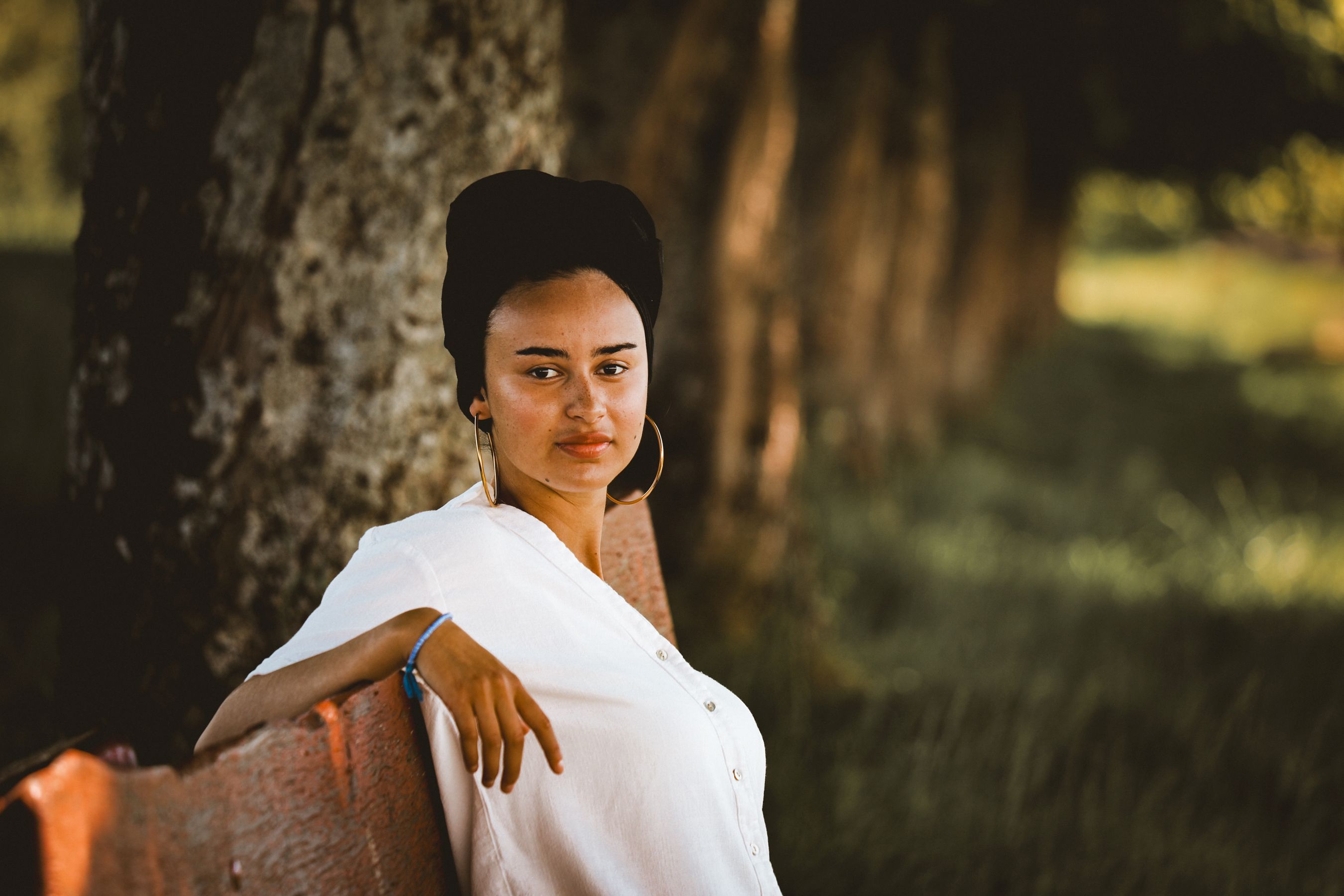
Name: Rania Yasmin
Nationality: Swiss-Dominican-Tunisian
Occupation: Singer, songwriter, producer, composer
Current Release: Rania Yasmin's new album UBUNTU is out now.
Current event: Rania Yasmin is one of the artists at the latest edition of the Montreux Jazz Festival Residency, taking place at the Petit Palais of the Fairmont Le Montreux Palace. Other participants include Antonio Monasterio Ensamble, Bananasoverdose, Wet Enough!?, Den Dala, ISHA, Aino Salto, and Ramzi Hammad. Tutors include Lizz Wright, Christian Sands, Ida Nielsen, Mádé Kuti, Jas Kayser, Cherise, and Orphy Robinson.
Hometown recommendations: I’d recommend you’d go walk in the nature of Mies (my hometown) starting at Chemin de la Faverge. Go in the direction of Chemin des pommiers, take the road Vy des Tschioquants and continue your walk in the direction you’d like. It’s a really beautiful place and I could never get tired of it.
Topics I am passionate about but rarely get to talk about: I love doing simple things with people I love. I adore watching movies, shows, documentaries — and analyzing them. I’ve played sports all my life: soccer, tennis, basketball, ping-pong … anything with a ball. I love dancing alone in my room, completely free. And lately, I’ve become very interested in current events and geopolitics.
I’m actually working on a song called “Al Horreya” (“freedom” in Arabic), inspired by what’s happening in Palestine.
That situation deeply affected me and made me reflect more broadly on injustices in the world — colonization, capitalism, patriarchy, imperialism …
That awareness has a huge influence on my music today.
[Read our Ida Nielsen interview]
[Read our Mádé Kuti interview]
[Read our Jas Kayser interview]
If you enjoyed this Rania Yasmin interview and would like to find out more about her music, visit her on Instagram, Facebook, tiktok, and threads.
Do you think that some of your earliest musical experiences planted a seed for your interest in writing lyrics or poetry? How and when did you start writing?
I started writing because I had a deep need to express emotions that were too intense to keep inside. In those moments, it’s as if something flows through me — something greater than myself. Writing then becomes fluid, natural, uncontrollable — like a river in the middle of a storm. I write without thinking, until I feel emptied, relieved.
That’s really how I fell in love with songwriting. But my first texts weren’t songs — they were rap lyrics. Rap gave me a new way to approach writing: I could use more words, more nuances, and express with precision the full complexity of what I feel.
Entering new worlds and escapism through music and literature have always exerted a very strong pull on me. What do you think you are drawn to most when it comes to writing?
At first, I wasn’t a big reader or someone who deeply analyzed lyrics. What gives me chills in a song is the interpretation — the way an emotion comes alive through the voice.
For example, in my track “Don’t Go” (at 1:39), when I sing “... but you never wrote back, am I not what you want?”, it’s the emotion in my voice — it even becomes a bit “crunchy” — that makes people feel what I went through while writing those words.
I also love how an honest interpretation can give new meaning to simple sentences. Sometimes, it’s the way you sing a single word that changes everything.
What were some of the artists and albums which inspired you early on purely on the strength of their lyrics? What moves you in the lyrics of other artists?
Lauryn Hill deeply impacted me. Her honesty, passion, the strength in her voice, and her socially conscious lyrics touched me from the first listen. She herself was inspired by Nina Simone, who moves me deeply as well.
Lauryn Hill’s flow has always fascinated me — her words are simple yet powerful, poetic and striking at the same time. One of the videos that moved me the most is “The Ballad of Hollis Brown” by Nina Simone.
And also “I Gotta Find Peace of Mind” by Lauryn Hill, especially the live version.
I’ve always been a musician and singer before being a writer. Usually, I start by creating my toplines on my productions, then I write to make the words sound natural within the melody.
I often think in syllables, rhythms, and rhymes — even before I think about the full meaning. Sometimes, a single word or repeated phrase becomes the entire foundation of a song.
For example, in “Open Your Door” at 1:44, “If I stood on a pulpit, maybe you would listen …” — the flow I found in the topline guided the whole writing process.
But when an emotion is really strong, I write without music — and then I compose around my words. It’s rarer, but always very sincere.
Have there been song lyrics which actually made you change (aspects of) your life? If so, what do you think, leant them that power?
Yes — “I Can’t Breathe” by H.E.R. That song, written after George Floyd’s murder and the Black Lives Matter protests, shook me to my core.
The first time I heard her perform it live at the Roots Picnic, I had tears in my eyes.
What moved me was the perfect balance between substance and form: she denounces with softness, anger, and poetry. Her spoken word part is precise, rhythmic, and written with deep awareness.
I wanted to memorize every single word. I hope one day to write something with that same universal and powerful reach.
It is sometimes said that “music begins where words end.” What do you make of that?
I completely feel that.
There are emotions so strong that no word is precise enough to describe them. But music can.
It’s often through a melody or rhythm that I understand what I want to express. The words come afterwards, guided by that first emotion. For me, the meeting point between poetry and music creates an indescribable force.
I have always considered many forms of music to be a form of poetry as well. Where do you personally see similarities? What can music express which may be out of reach for poetry?
I think music is something you feel, while poetry is something you think.
Music touches the invisible — what can’t really be explained. Poetry, on the other hand, tries to make the inexplicable understandable. But they meet when both are lived sincerely.
Maya Angelou, for instance, creates rhythm in her poems that evokes the same emotion as a melody. And to me, rap was born from that fusion between poetry and music.
What are areas/themes/topics that you keep returning to in your lyrics?
My songs like “Too Bad You Got Away,” “Don’t Go,” “Branches Before Bloom,” “Gimme Somethin’ Baby,” “WIWY,” or “Désirée” and “Et Si” (which aren’t released yet) often revolve around romantic desire. They’re stories inspired by what I’ve lived or imagined.
I guess I’m a true romantic, haha. Love — in all its forms, missed, dreamed, lived, or hoped for — remains my most recurring theme.
I’d love to know how you think the meaning or effect of an individual song is enhanced, clarified or possibly contradicted by the EPs, or albums it is part of. Does the song, for example, need to be consistent with the larger whole?
I find that fascinating.
A song that contrasts with the rest of a project can actually highlight its emotional complexity. In my EP Ubuntu, there’s a strong global coherence, but the last song, “Héritage Vivant,” stands out completely.
It’s the only one in French — more socially engaged, more grounded. It marks an opening toward another side of me.
When you're writing song lyrics, do you sense or see a connection between your voice and the text? Does it need to feel and sound “good” or “right” to sing certain words? What's your perspective in this regard of singing someone else's songs versus your own?
Yes, especially when I rework my songs to perform them live. That’s when I feel a deeper connection between the texture of my voice, my interpretation, and the meaning of the lyrics.
When I sing a cover, I always try to make it my own — to make it mine. I often change the way I pronounce certain words so that it sounds right and natural for me.
Creativity can reach many different corners of our lives. Do you feel as though writing song lyrics or poetry is inherently different from something like making a great cup of coffee?
Not that much, actually. I think every creative act — writing, composing, even making coffee — can come from the same source: sincerity.
What changes is the intensity of the sharing and the depth of the impact. Creating a song is like offering a part of yourself — it goes beyond a simple everyday action.