Published
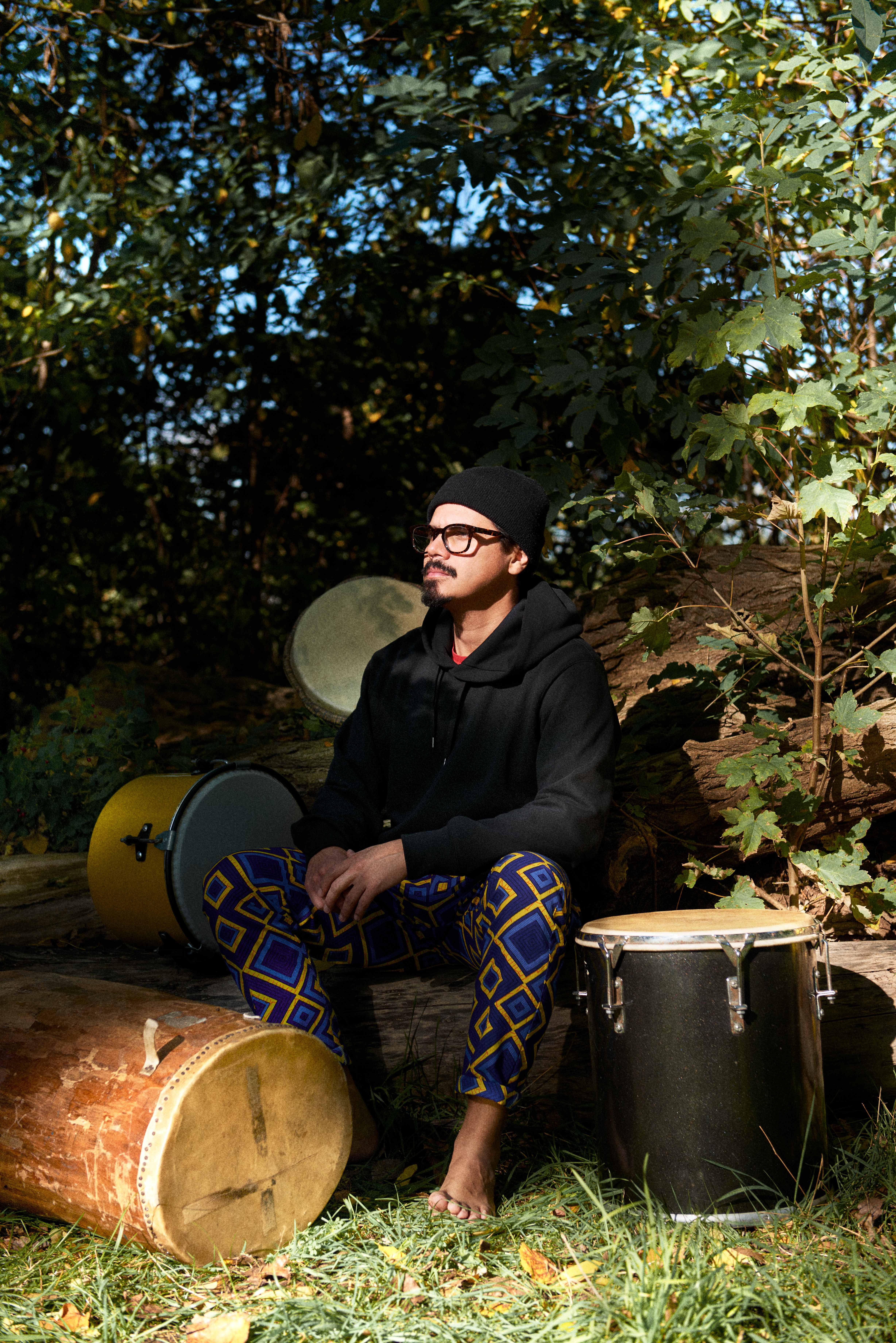
Name: Raúl Monsalve
Nationality: Venezuelan
Occupation: Bassist, composer, improviser
Current release: Raúl Monsalve y Los Forajidos's new album Sol is out via Olindo.
Recommendations for Paris, France: If you ever find yourself in Paris, I highly recommend exploring some of the city's incredible record stores, like Superfly Records or my friends at the Marché aux Puces (Flea Market) in the north of the city.
After, head to Belleville and enjoy a delicious Pho soup at one of the local Vietnamese restaurants. Lastly, try visiting the AERI—it's one of the craziest vibes I've discovered since arriving in the city.
If you enjoyed this Raúl Monsalve interview and would like to find out more about his music, releases and upcoming live dates, visit him on Instagram, Facebook, and bandcamp.
What were some of the musical experiences which planted a seed for your interest in jazz?
Probably three key moments stand out:
The first time I listened to Headhunters by Herbie Hancock, In a Silent Way by Miles Davis, and my encounter with Venezuelan saxophonist Pablo García, who was a great influence on me. He was a true school.
What does the term jazz mean today, would you say?
Freedom!
As of today, what kind of materials, ideas, and technologies are particularly stimulating for you?
With the new lineup revolving around the repertoire of the Sol album, we are incorporating percussion samples for the first time, with timeless sounds ranging from 80s drum machines to sounds closer to trap, all while preserving our raw drum sound that has been a hallmark of the group.
Additionally, I’ve now taken on the role of percussionist in the band, leaving many basslines to Edgar Bonilla on the synthesizer. All of this has created a sound that has us very excited—something we hadn’t tried before.
Where do most of your inspirations to create come from – rather from internal impulses or external ones? Which current social / political / ecological or other developments make you feel like you need to respond as an artist?
There is no fixed rule. Bichos, our previous album, had a very political content, driven by a strong need to respond to the terrible political situation in Venezuela.
Sol, on the other hand, is a much more introspective album that reflects on the recognition of the sun during moments of “light” and “shadow”.
It also connects with the celebration of San Juan Bautista, the patron saint of the Afro-Venezuelan community, which coincides with the summer solstice—the day with the most sunlight of the year.
Music has become a lot more global, and incorporating elements from other parts of the world or the musical spectrum is commonplace. Do you still think there are city scenes with a distinct, unique sound? How does your local scene influence your work?
Absolutely, everything influences your way of creating, even the way of producing a sound: the air, the language, the sense of humor, the sonic landscape, the history.
I don’t know how to define exactly how this influences our music, but I can feel Paris and London in our music and aesthetic.
Thanks to technological advances, collaboration has become a lot easier. What have been some of the most fruitful collaborations for you recently and what approaches to and modes of collaboration currently seem best to you?
My last two albums are full collaborations, many of which were done remotely. For instance, working with the Venezuelan singer Betsayda Machado has been a dream come true. I’ve also had the pleasure of collaborating with my friend Nick “Emmanative” Woodmansey.
On the mixing side, I’ve been working for years with the wizard Malcolm Catto in London and the Venezuelan engineer Fidel Goa, with whom I’ve been collaborating for over ten years without ever meeting him in person—which is absurd - but thanks internet! (Laughs).
Jazz has always had an interesting relationship between honouring its roots and exploring the unknown. What does the balance between these two poles look like in your music?
This is precisely the core of the matter for me. My daily work revolves around studying and immersing myself in traditional Afro-Venezuelan music. However, since I didn’t grow up in a community where this music is learned from the womb, and because I was raised in a city like Caracas, I have no choice but to use traditional music as a creative tool.
That said, we strive to respect the rhythms and many of the songs, aiming to convey their poetry and imagery. For me, it’s about bridging the past and the future. As I like to say: Ancient to the Future and Future to the Ancient. This approach allows me to honour the roots of Afro-Venezuelan traditions while exploring new sonic territories through jazz, afrobeat, funk, and experimental sounds.
It’s not just about preservation but also about something else—taking these rhythms and stories into uncharted spaces while remaining deeply connected to their essence.
How much potential for something “new” is there still in jazz? What could this “new” look like?
No human being is exactly the same as another, yet we all share certain traits or similar sensibilities. Music, therefore, can belong to a particular tradition, but as long as there are individuals who truly connect with themselves and deeply explore their own essence, there will always be new music.
Jazz, or music in general, is a living language—its potential for innovation lies in the endless ways it can absorb and transform influences while remaining true to its spirit of freedom and exploration.
How, would you say are your live performances and your recording projects connected at the moment? How do they mutually influence and feed off each other?
It’s funny because I’ve been thinking about this a lot lately. Since the release of Bichos, I’ve faced the challenge of reproducing live a record that features such a vast number of guest musicians and instruments. With Sol, the challenge became even greater, as I deliberately reduced the band to its bare minimum.
That decision has been incredibly rewarding because it has made our live shows much more dynamic. Everyone in the band had to step up—studying percussion, vocals, and other elements to bring the music to life. As I mentioned earlier, adapting certain parts with different instruments has created a more distinctive and unique sound for our performances.
This interplay between recording and live performance feeds into itself: the limitations of the stage inspire creative solutions that, in turn, influence how we think about future recordings. It’s a constant dialogue where both worlds push each other forward.
What, would you say, are the key ideas behind your approach to improvisation?
With this project, I’ve found a way to create spaces for improvisation that almost always revolve around a repetitive, trance-like rhythmic section. These foundations provide a steady pulse over which anything can take flight—from more traditional, classic improvisations to noise and the most experimental psychedelia.
I want to create a dynamic interplay between structure and chaos, tradition and experimentation, resulting in moments of spontaneity that feel both organic and transformative.
Are there approaches, artists, festivals, labels, spaces or anyone/-thing else out there who you feel deserve a shout out for taking jazz into the future?
For years now, I’ve been amazed by the incredible music released by our friends at International Anthem. Their work consistently pushes boundaries, blending jazz with a wide range of influences and creating something truly progressive
In London, the Total Refreshment Centre has been a pivotal space for innovation. Although it’s no longer active as a live venue, its legacy as a hub for creativity continues to inspire. It played a crucial role in shaping the new wave of British jazz, fostering talents like Nubya Garcia, Shabaka Hutchings, and Ezra Collective.
.
Then there are artists like Moor Mother. Her work is deeply inspiring—she creates an expansive universe that combines poetry, experimental sounds, and free jazz. I believe her contributions will be fully understood and appreciated in the years to come.
[Read our Nubya Garcia interview]
[Read our Ezra Collective interview]
The Montreux Festival intends to preserve its archive of recordings for future generations. Do you personally feels it's important that everything should remain available forever - or is there something to be said for letting beautiful moments pass and linger in the memories of those that experienced them?
Honestly, I’d love to be the kind of person who says that those moments should simply pass and live on in the memories of those who experienced them—just as the great John Cage might have argued.
However, in reality, I’m constantly searching for vinyl records and field recordings where I can uncover true cultural treasures of traditional music and relive pivotal moments in history. This practice evokes what I think some call hauntology—a wonderful sensation of time travel that allows you to connect with the past while reimagining it in the present.
For me, preserving these recordings is not just about nostalgia; it’s a vital tool for study and inspiration. These archives are like time capsules, offering insights into musical traditions, performance practices, and even the social contexts in which they were created. They allow future generations to learn, reinterpret, and build upon what came before, ensuring that these beautiful moments continue to resonate far beyond their original context.