Published
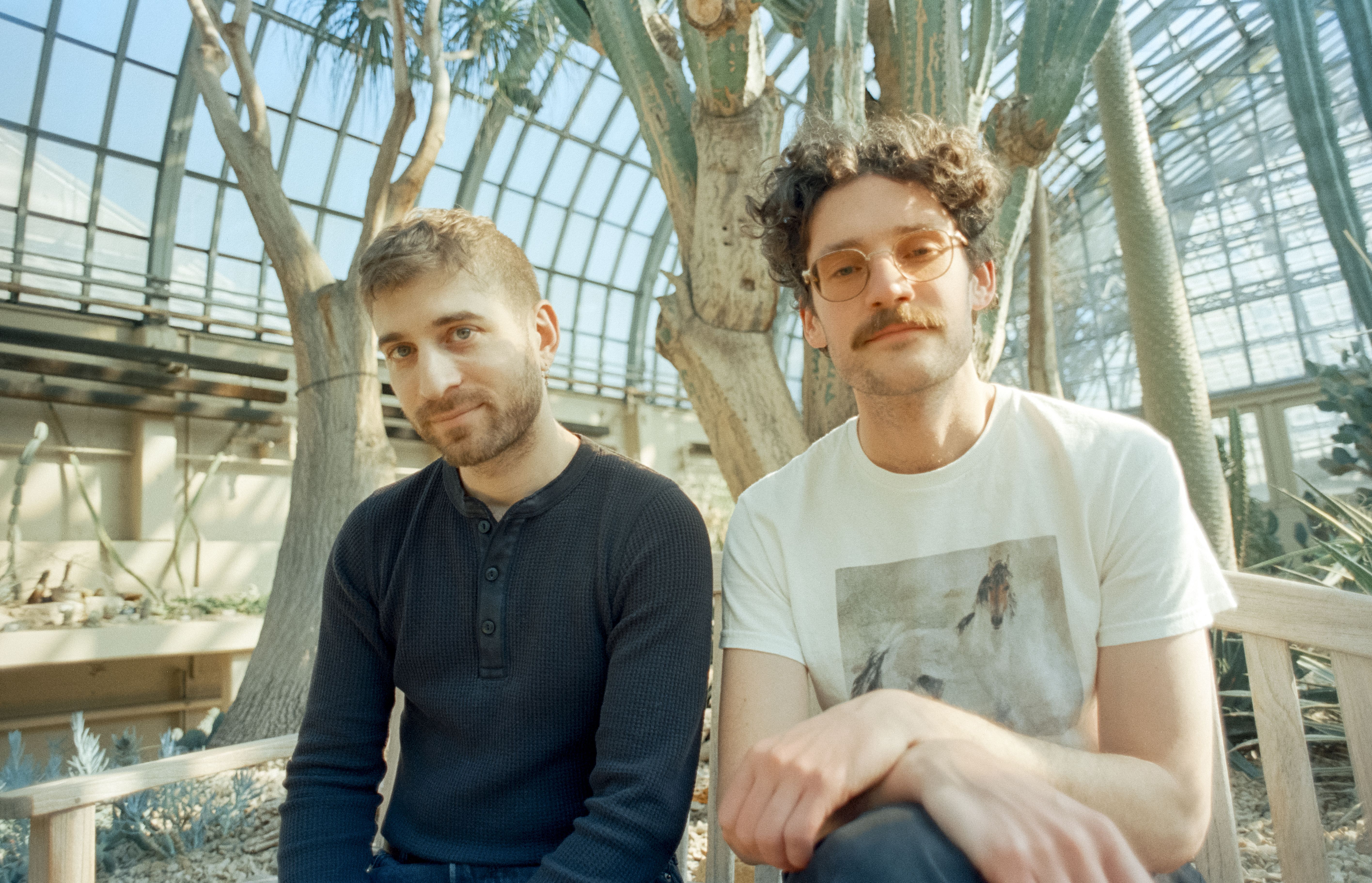
Names: Will Miller aka Resavoir, Matt Gold
Nationalities: American
Occupation: Composer, producer, multi-instrumentalist (Will Miller), guitarist, multi-instrumentalist, songwriter, producer (Matt Gold)
Current release: Resavoir & Matt Gold's new album Horizon is out May 23rd 2025 via International Anthem. It features, among others, Macie Stewart (strings), Tim Bennett (soprano saxophone), Wills McKenna (flute), Eddie Burns (drums), and Claire Chenette (oboe).
Global Recommendation:
Matt: I would recommend a swim in lake Michigan, a bike ride on the North Branch Trail, a meal at Cellar Door Provisions, and a Friday happy hour at either the Green Mill (where you’ll hear Chris Foreman play solo organ) or the Empty Bottle (where you’ll hear the Hoyle Brothers play Texas two-step).
[Read our Macie Stewart interview]
If you enjoyed this Resavoir and Matt Goldinterview and would like to stay up to date with their music, visit their respective websites: Resavoir; Matt Gold
What were some of your earliest collaborations? How do you look back on them with hindsight?
Will: Matt helped me put together a demo for a jazz brunch gig I was trying to hustle back home at the end of my senior year at Oberlin.
I got the gig so it worked!
There are many potential models for collaboration, from live performances and jamming/producing in the same room together up to file sharing. Which of these do you prefer – and why?
Matt: The sound and structure of every project is really shaped by its relationship to those models, and I really love working in all of them – they bring out such different energies in the music.
The way we made Horizon was in line with a lot of the collaborative records I’ve made, which is maybe my favorite way to work: most of the writing was happening together in the room, and we rolled complete live takes of the songs as a duo before producing the tracks further with additional instrumentation, manipulating the recordings, etc.
I feel like this approach allows us to capture the freshness of discovering the composition for the first time, while leaving space for all the more measured decisions around additional layers and production processes.
How did the collaboration for Horizon come about?
Will: Matt recorded guitar on the song “inside minds” off the 2nd Resavoir album. His melodic instincts were spot-on and took the song to another level.
I think we both felt like there was more to be explored after this initial collaboration, so in January 2023, after we both wrapped up some significant tours, it felt like the right time to lock in and make more music together.
What did you know about each other before working together? Describe your creative partner in a few words, please.
Matt: Will and I have known each other for something like fifteen years, although this is the first full-length project we’ve made together.
Will is a listener, a bird’s-eye-view musician, a sensitive melodicist, a tea connoisseur.
What do you generally look for in a collaborator and what made you want to collaborate with each other specifically?
Will: An ideal collaborator, for me, has complementary skill sets and tastes.
Matt is proficient at so many instruments aside from guitar- he plays piano, bass, drums, percussion, pedal steel, you name it he can play it, and with taste!
Tell me a bit about your current instruments and tools, please. In which way do they support creative exchange and collaborations with others?
Matt: One of the things I found exciting in making this record was the way our skills and instrumental voices formed a sort of perfect Venn diagram.
I am primarily a string instrument person, and was covering the bass, guitar, and pedal steel guitar voices across the record. For a long time we were focused on limiting the guitar voice to strictly a nylon-string guitar, but towards the end of the writing and recording process we started hearing some specific opportunities for an electric guitar voice to come through.
There is also a guitar moment on the last track, “Tomorrow,” that features a very console-fuzzed-out acoustic guitar solo – I love the way the attack and decay of a steel string guitar responds to being completely obliterated by a preamp.
I also love recording percussion and, in this case, even the occasional drum set part. Will operated from the keyboard chair, covering piano, Rhodes, organ, and synths. Of course, he’s a brilliant trumpet player, and the record has moments of trumpet and EVI as well, along with building out some sample-based instruments from other sounds we’d recorded.
Will and I both like to engineer a lot of our own records, so we were blending our recording approaches throughout the sessions, meeting in the middle to move the recordings forward.
Before you started making music together, did you in any form exchange concrete ideas, goals, or strategies? Generally speaking, what are your preferences when it comes to planning vs spontaneity in a collaboration?
Will: I sort of had it in my head that I wanted to make an acoustic guitar record.
Pretty much from the first link up we decided that electric guitar was off the table, and through our shared admiration for Brazilian music from the 60s and 70s decided that could be a great North star for the general sound of the record.
I think having some boundaries in place is always helpful to the creative process, and a certain sonic inspiration can also be really beneficial.
Describe the process of working on your latest release, please. What was different from your expectations and what did the other add to the music?
Matt: At first, the sessions were almost just an excuse to spend some more time together.
We had each been on the road with different groups quite a bit over the previous few years before both finding ourselves in Chicago for a relatively slow winter. Chicago winters can sometimes be great avenues for collaboration and nurturing new ideas, before things ramp back up for the year. So the expectations were decidedly loose.
We began with a guiding principle of centering the nylon string guitar, but we kept the initial sessions very open-ended and would simply try to come out each day with something like a complete piece of music.
Gradually we started to feel like a body of work was taking shape, and we began slowly bringing in some friends and great musicians (including Mei Semones, Macie Stewart, Peter Manheim, Tim Bennett, and more) to contribute to the songs.
Is there a piece which shows the different aspects you each contributed to the process particularly clearly?
Will: I think “metropoli” might be an interesting example seeing as that’s one of the few songs where its just Matt and I.
This song was completely improvised. I devised this weird sampler instrument where I was playing the bass clarinet/drum machine sample with my left hand, and the flute sample with my right, and then Matt was sitting at the piano just ripping the most brilliant melodies over it.
I think often times one of us would bring in a short idea like a 4 bar loop and the other would expound upon it and we just sort of bounce ideas back and forth until it feels like a song.
What tend to be the best collaborations in your opinion – those with artists you have a lot in common with or those where you have more differences? What happens when another musician take you outside of your comfort zone?
Matt: I’m not sure any of us can predict how a given collaboration will go before stepping into the room, regardless of artistic similarities or differences …
But I tend to feel like trust is the biggest factor, often much more so than any aesthetic considerations. When love and trust are in the room, the music really takes care of itself. Operating from that centered place gives us a framework to be honest and open in the music, and that’s where the good stuff lives.
Getting outside our comfort zones is among the gifts of collaboration – I see it as a very different headspace and goal as opposed to making music by myself or as the sole primary artist. Ideally the sensitivities and personal sounds of each musician can amplify the other’s, a constructive interference.
I will say that I tend to love working with folks who have very broad listening habits, and are therefore able to navigate a wide array of reference points and tie together different traditions of music-making as we push forward into wherever it is we’re going in the music.
Decisions between creatives often work without words. How did this process work in this case?
Will: A combination of talking and listening.
What are your thoughts on the need for compromise vs standing by one's convictions? How did you resolve potential disagreements in this collaboration?
Matt: I think of it less as “compromise” and more like “flexibility” or “malleability” in the musical materials; especially when you’re writing or producing with someone.
There are so many possible truths in the beginning stages of a piece. The collaborative relationship challenges our impulse to feel like there’s only one right answer, only one way forward. When we’d reach a point of disagreement, a little bit of time and distance from the material along with an open mind towards really hearing the other’s way of imagining a moment or sound or section would usually help us see the possibility in an idea.
Also, sometimes the smallest change can make the biggest difference in getting an idea to land – a change in the eq, or trying something in a different register, or a small tempo change, etc … sometimes it’s wild how close we are to a solution without realizing it.
Was/Is this collaboration fun – does it need to be?
Will: Certain parts are incredibly fun, and certain parts are challenging. I think that:s the nature of any collaboration.