

Name: Rin Seo
Nationality: Korean
Occupation: Composer, conductor, pianist
Current release: Rin Seo's debut album City Suite is out via Cellar Live. Stream it here, and buy on bandcamp.
Recommendation for NYC, USA: New York City is full of great jazz venues. Definitely visit a jazz club!
Topic I am passionate about but rarely get to talk about: I’m a big fan of indie films. A few years ago, I even visited the Sundance Film Festival, and I try to go to indie theaters whenever I have time. My favorite director is Pedro Almodóvar!
If you enjoyed this Rin Seo interview and would like to stay up to date with her music and upcoming live dates, visit her official homepage. She is also on Instagram, Facebook, and bandcamp.
Where does the impulse to create something come from for you? What role do often-quoted sources of inspiration like dreams, other forms of art, personal relationships, politics etc play?
The impulse to create comes from everything around me—mundane daily experiences, film, literature, music, dance, politics, other artists, and so on.
For instance, my piece “Desert Flower” was inspired by the film Desert Flower, which tells the life story of Waris Dirie, a Somali-born immigrant to the UK and an activist against female genital mutilation.
“Music for Dance No. 2” drew its inspiration from modern dance.
I often find that inspiration emerges from unexpected intersections between these sources, allowing me to transform impressions, emotions, and observations into sound.
For you to get started, do there need to be concrete ideas – or what some have called a 'visualisation' of the finished work? What does the balance between planning and chance look like for you?
For me, the most important starting point is the story I want to convey through my music and the musical motives that will express it. Once I have those, I plan the overall structure of the piece and begin writing. From there, I develop and revise the details, guided by both my ears and instincts.
I think of it as a balance between planning and chance: the framework gives direction, but intuition and discovery shape the finer details.
Is there a preparation phase for your process? Do you require your tools to be laid out in a particular way, for example, do you need to do 'research' or create 'early versions'?
Yes, I do a preparation phase that often involves research. For instance, when I write music inspired by Korean traditional musical idioms, I spend time listening, studying, and researching extensively.
For my composition “Play,” I studied many Korean rhythms and explored related fields to inform the piece. This research helps me understand the materials deeply and integrate them authentically into my music.
Do you have certain rituals to get you into the right mindset for creating? What role do certain foods or stimulants like coffee, lighting, scents, exercise or reading poetry play?
I have a small ritual to get into the right mindset for creating. I tidy up my room and organize things in my own way, and then I start writing with a cup of black coffee.
A clean, organized space, and the aroma of coffee helps me focus. If my room is messy, it’s much harder for me to concentrate on my work.
For your debut album, what did you start with? If there were conceptual considerations, what were they?
I knew before even planning the recording that the concept and title of my debut album would revolve around the city I came to in pursuit of my dreams, a place that has been one of my greatest sources of inspiration.
I first completed the composition of the title piece, "City Suite," keeping in mind the recording artists I wanted to collaborate with. After that, I began assembling the ensemble and selecting the remaining tracks for the album.
Tell me a bit about the way the new material developed and gradually took its final form, please.
I explore many ways to create variations and refine the original idea.
No matter how the piece evolves, I make sure to preserve the main motive throughout, so it remains the core of the work by the time it reaches its final form.
Many writers have claimed that as soon as they enter into the process, certain aspects of the narrative are out of their hands. Do you like to keep strict control or is there a sense of following things where they lead you?
I like to follow where the music leads me, often in unexpected ways.
I trust the process and my instincts, and I find that this approach usually results in a sound that feels more natural than if I tried to maintain strict control.
There are many descriptions of the creative state. How would you describe it for you personally? Is there an element of spirituality to what you do?
Most of the time, I’m sitting at my desk, wrestling with ideas.
But when the moment comes and certain ideas click and start leading me forward, I feel a rush of excitement and complete focus.
Other ideas naturally emerge as well, flowing alongside the main ones. Those moments are rare, though haha!
Once a piece is finished, how important is it for you to let it lie and evaluate it later on? How much improvement and refinement do you personally allow until you're satisfied with a piece? What does this process look like in practise?
It is very important for me to let my work sit and evaluate it later.
I usually don’t change large sections, but I spend a lot of time refining small details such as voicing or instrumentation after the first reading or rehearsal. As composers, we create music by imagining the sound, so these refinements are essential.
Feedback from instrumentalists also plays a significant role in shaping the final version of the piece.
How do you think the meaning, or effect of an individual piece is enhanced, clarified or possibly contrasted by the EPs, or albums it is part of? Does each piece, for example, need to be consistent with the larger whole?
I believe an album tells a story, so each piece should feel organic within the larger whole.
While each composition has its own character, it is shaped by and contributes to the narrative or emotional journey of the album as a complete work.
What's your take on the role and importance of production, including mixing and mastering for you personally? In terms of what they contribute to a song, what is the balance between the composition and the arrangement (performance)?
Mixing and mastering are especially important for large ensembles, as the right balance and levels help listeners fully enjoy the music. They also play a crucial role in conveying the composer’s intentions in terms of sound.
Music and the accompanying artwork are often closely related. Can you talk about this a little bit for your current project and the relationship that images and sounds have for you in general?
Images are always a significant source of inspiration when I compose music. For this project, visual imagery played a central role from the very beginning. The album’s title piece, “City Suite,” is directly inspired by images of New York City.
The first movement, “The Big Apple,” portrays the city as vibrant, dynamic, fast-paced, and full of ambition.
“Cityscape,” the second movement, captures the dazzling beauty of New York City’s night skyline, …
… while “Alone, but Not Alone,” the third movement, draws from the beautiful yet lonely atmosphere of Manhattan during a solitary walk.
These images strongly shape my compositional language and musical textures.
I see the album artwork as an extension of this process—it doesn’t simply illustrate the music, but reflects the same modern, sophisticated sensibility that defines the sound of the album.
After finishing a piece or album and releasing something into the world, there can be a sense of emptiness. Can you relate to this – and how do you return to the state of creativity after experiencing it?
I don’t really feel a sense of emptiness after finishing my work. After releasing my album, I was just so excited to finally share my music with the world.
Once a piece is complete, I immediately start thinking about my next project, so there’s never really a moment to feel empty. My focus is always moving forward, and I love this process!
I would love to know a little about the feedback you've received from listeners or critics about what they thought some of your songs are about or the impact it had on them – have there been “misunderstandings” or did you perhaps even gain new “insights?”
I love all the pieces on my album, though of course I have my favorites and lesser favorites.
I realized that listeners experience my music in very different ways. I always knew everyone has different tastes, but seeing it firsthand was a fascinating and eye-opening experience.
Creativity can reach many different corners of our lives. Do you personally feel as though writing a piece of music is inherently different from something like making a great cup of coffee? What do you express through music that you couldn't or wouldn't in more 'mundane' tasks?
I believe making a great cup of coffee is similar to creating a piece of music. There are countless coffee beans in the world, and many ways to brew such as hand drip, French press, espresso machine, and so on. Each choice affects the taste, and the final cup reflects the person who made it.
Composition works in much the same way. There are countless sonic materials to choose from, and even with the same elements, the music will sound different depending on who creates it.
Through my music, I can express anything I want. I create stories from my imagination, explore emotions, and even speak about politics in ways I couldn’t in more mundane tasks. For example, in my composition “Floating,” the constantly shifting tonal centers reflect the unsettled minds of immigrants, an experience I understand personally.

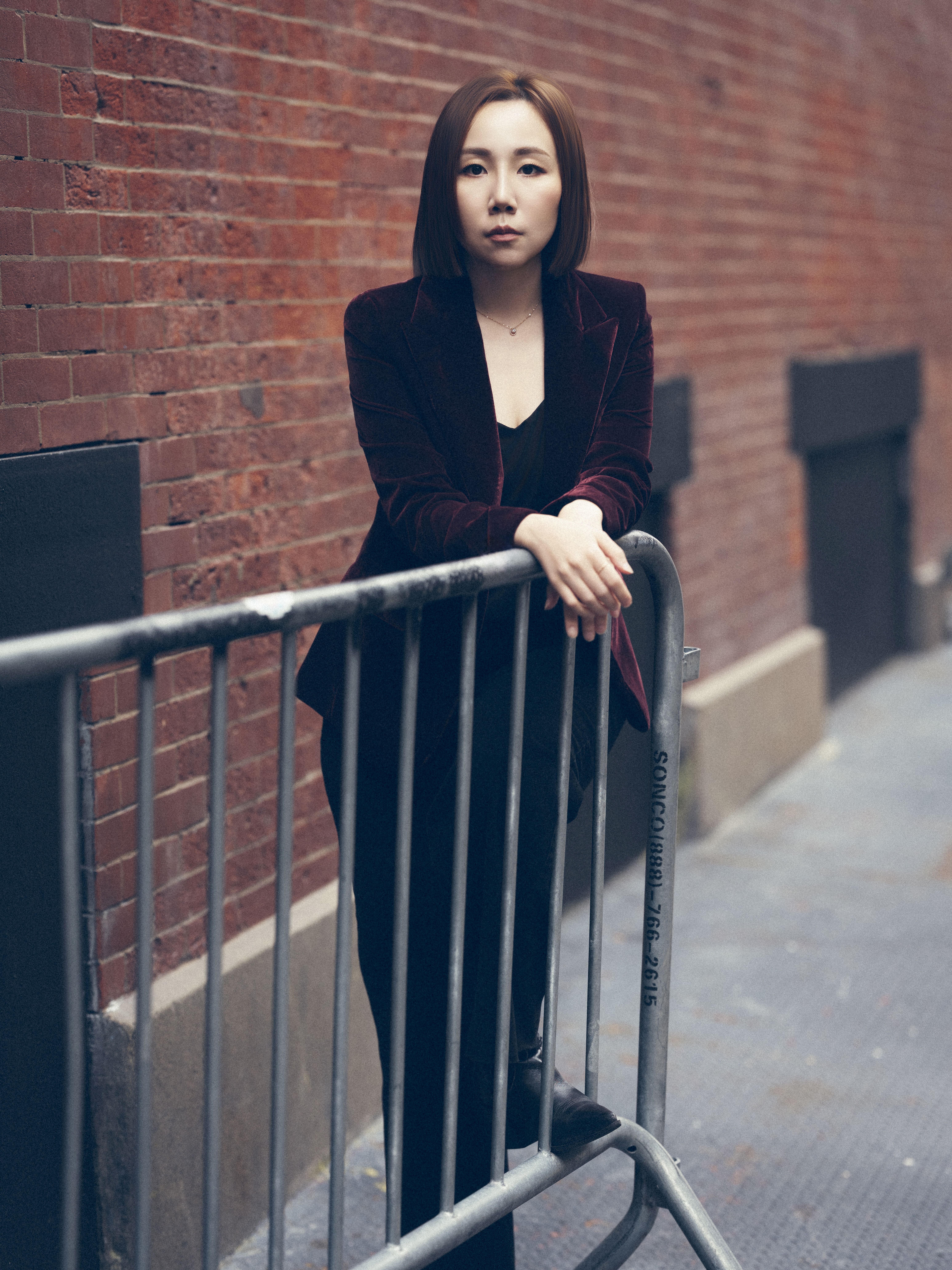 Rin Seo Interview Image by Haseok Chung Studio
“An album tells a story. Each piece should feel organic within the larger whole.“
Video
