Published
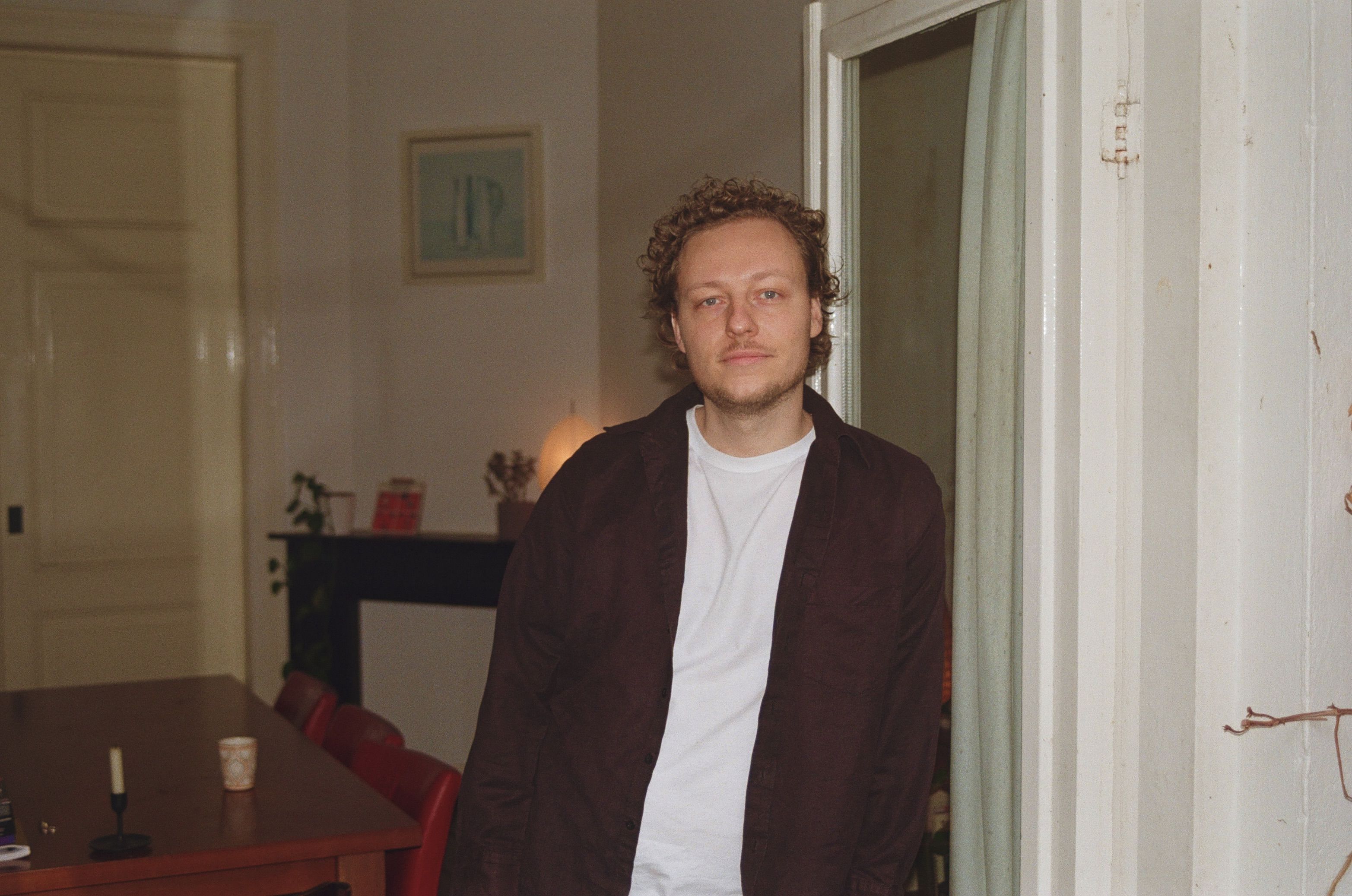
Name: Rindert Lammers
Nationality: Dutch
Occupation: Producer, composer, keyboardist
Current release: Rindert Lammers's debut album Thank You Kirin Kiki is out via Western Vinyl.
Recommendation for Nijmegen, the Netherlands: I would recommend checking out de Basis. It’s a hub for musicians and creatives. It used to be the old Doornroosje, the iconic concert venue in Nijmegen. Instead of demolishing the entire building, they transformed it into practice rooms and a café. Even better, they’ve built an entire organization around it that supports musical talent in the region. Nowadays, there are courses, jam nights, inspiration sessions, and networking opportunities throughout the week, all very accessible to anyone interested in making music.
Last year, I followed a talent development program at de Basis. They not only supported me financially but also helped me think about what I want in the long term. The work of de Basis has truly contributed to a whole new wave of interesting artists coming to the forefront, and I specifically want to mention Nobuka as an exciting experimental act from Nijmegen.
If you enjoyed this Rindert Lammers interview and would like to know more about his music and upcoming live dates, visit him on Instagram, and bandcamp.
What were some of the musical experiences that planted a seed for your interest in jazz?
In the pre-Spotify era, my father used to burn compilation CDs of his favorite artists.
Growing up in a fairly Christian household—my father was a Protestant pastor—these weren’t the most exciting CDs: think ballads by Phil Collins, Christian AOR from America, and so on.
However, the CD that was played most often was a collection of Van Morrison songs, which always started with the opening track of Common One (1980): "Haunts of Ancient Peace."
From the first note, it felt very esoteric and spiritual. The muted trumpet, guitar, and Fender Rhodes seemed to float really organically around Morrison’s melody.
At the time, I was too young to fully understand it, but now I realize that Van Morrison was incorporating elements of jazz into his R&B.
Another pivotal moment was witnessing a rare Pharoah Sanders concert at the highly progressive Le Guess Who? music festival in Utrecht in 2017. I remember the anticipation being almost Taylor Swift-level—everyone was so eager to see him.
The concert began, but there was no sign of the 77-year-old saxophonist.
Only after 20 minutes did Pharoah slowly, almost dancing, waddle out from the wings. After a few minutes, he reached the microphone and played just a few notes, but it was incredible. The notes felt so soulful yet effortless; it was truly a spiritual experience.
How would you say your live performances and recording projects are connected at the moment? How do they mutually influence and feed off each other?
To be honest, I’m technically not a great musician, but that’s not where my interest lies. For me, it’s all about creating an album—being the director of a world of sound. I approach this world-building in a very meticulous way: cutting and pasting improvised pieces, adding voice recordings, and crafting every detail.
For my debut album, Thank You Kirin Kiki, I handled most of it myself—writing, mixing, recording, and more. There were times when I spent an entire week arranging a two-minute piece. I love this process, but it can also be exhausting, and you often lose the spark of spontaneity that you had at the beginning.
About six months ago, I decided to form a band with real jazz musicians to bring the album to life on stage. It was a nerve-wracking decision because it meant giving up some control. However, during the first rehearsals, I realized how much joy I gained by rediscovering the songs. No, it wasn’t possible for me as a keyboardist to reproduce all hundred keyboard parts live—but did that really matter?
This entire experience taught me to approach my next project differently: to leave more room for improvisation from various musicians and to let go of my overly meticulous and protective attitude toward my musical world.
Of course, I still like to maintain a sense of direction, but just like in film credits, it’s the collaboration of many that brings a vision to life.
Thanks to technological advances, collaboration has become a lot easier. What have been some of the most fruitful collaborations for you recently, and what approaches to collaboration currently seem best to you?
For my album, I invited the amazing saxophonist Joseph Shabason to improvise on two tracks.
After hearing his stunning contributions to Kaputt, the lush breakthrough album by Destroyer, I discovered his solo records. I fell in love with his melancholic, soft approach to jazz and his use of '80s-inspired digital synthesizers, all without falling into kitsch or cheesiness. This approach also inspired the direction of my own album.
[Read our Joseph Shabason interview]
[Read our Joseph Shabason interview about his session work for Destroyer and The War on Drugs]
I sent him two demos, and he really liked them. For each track, he provided multiple improvised takes. At first, I found it challenging to adapt because I was so locked into the meticulous structure of my demos. But the process of selecting the best moments, cutting and pasting, and even moving parts to other tracks brought a renewed sense of inspiration to the project.
It’s a bit like what Mark Hollis called "arranged spontaneity," a method I’d love to as far as Talk Talk did. Sadly, I can’t quite afford to lock woodwind sections and children’s choirs in a studio for a year with only the vaguest of musical instructions.
What role do electronic tools and instruments play in your creative process?
I work in the box and am a big fan of software synthesizers.
Not long ago, Roland made all their iconic digital synths from the '80s and '90s available in software form, and I love exploring all the sounds they offer. I’m especially drawn to the clean bell tones and choir-like sounds these synthesizers produce.
This influence was also shaped by Hiroshi Yoshimura, the Japanese ambient pioneer. His recently reissued album Surround is one of my all-time favorites, and I think you can hear echoes of his keyboard sound choices in Thank You Kirin Kiki.
Are there approaches, artists, festivals, labels, spaces, or anything else out there that you feel deserve a shout-out for taking jazz into the future?
I mentioned the Le Guess Who festival earlier, and I truly believe they are carrying the spirit of jazz into the future. I call it the "spirit of jazz" because it’s not a traditional festival in that sense. The festival showcases all kinds of progressive music, with sounds that you’ve never heard before.
What I really appreciate is how they give space to non-Western artists: incredible talent from all corners of the globe is featured, not tucked away in a small spot on the program but performing in major venues. I think it’s a bold move by the festival, but apparently, it works, as the event has been sold out every year before any of the lineup is even announced. This invitation to truly discover new sounds aligns perfectly with what jazz is about for me.
In these challenging times, creating your own musical community is also becoming more and more important, and Le Guess Who not only programs artists for the festival but also supports musical communities around the world throughout the year.
Do you have things you are really passionate about but rarely get to talk about? Please tell me about them.
Phil Collins! Okay, everyone knows him, but I still always want to talk about him. It’s not like I keep quiet about Phil; my friends laugh when I bring him up, but I’m just a fan, and I grew up with his music.
I find him iconic and versatile: he was both the drummer and singer in Genesis, played some serious jazz fusion with Brand X, and in the ’90s, he chose to return to the drums in a Buddy Rich-inspired big band. Even when it comes to sounds, I find him iconic—his drum fills were always so powerful, even without the famous gated drum sound from In the Air Tonight.
And of course, there may be better songwriters and lyricists than Phil Collins, but his sound is so recognizable and warm. Maybe it's because the first sounds you hear as a child stick with you, but either way, Phil Collins has always been a constant in my life.