Published
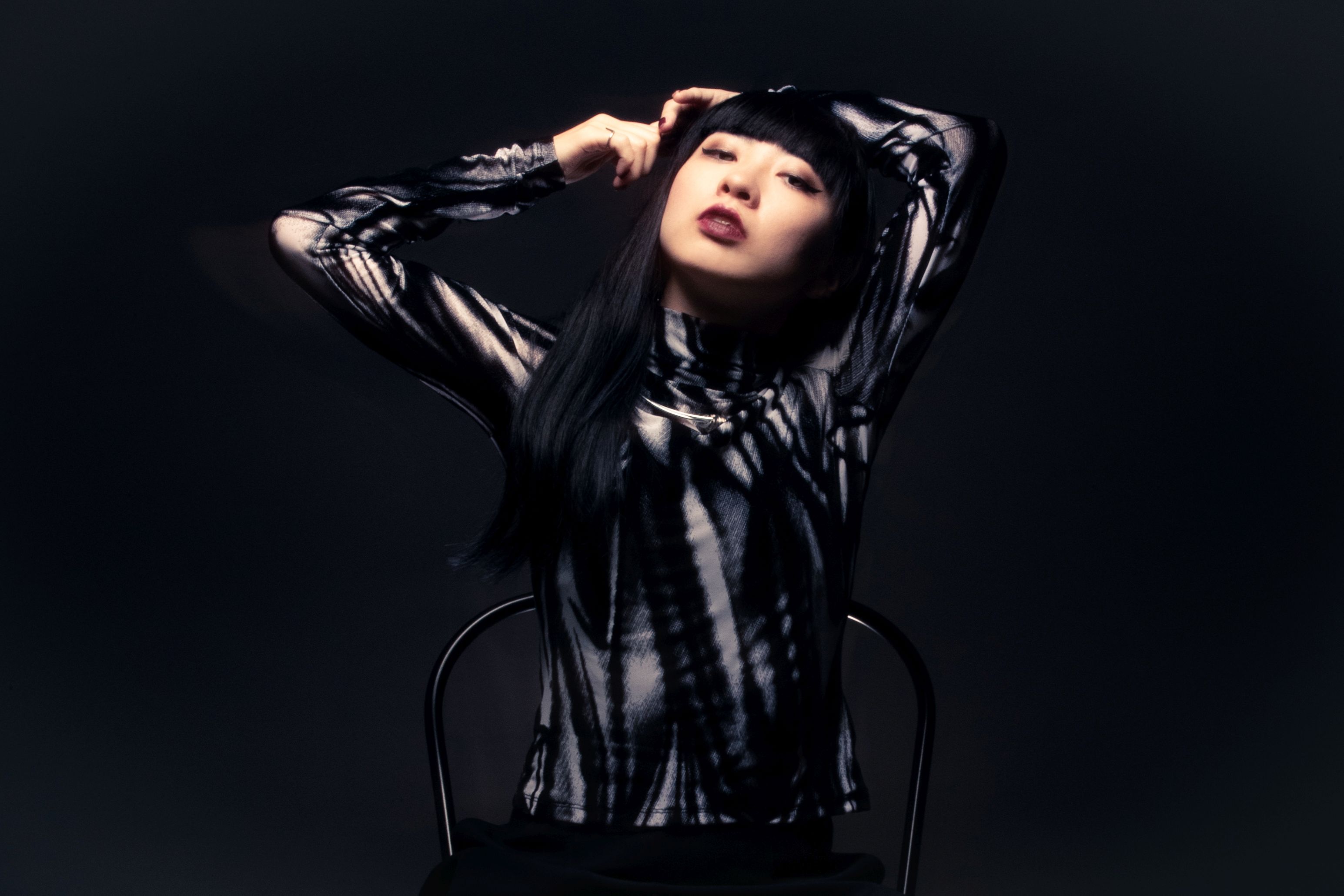
Name: Risa Taniguchi
Nationality: Japanese
Occupation: DJ, producer
Current release: Risa Taniguchi's Look At Hatred EP is out via Nicole Moudaber's MOOD.
Recommendations: Claude Debussy – "Pagodas" from Estampes. Chopin - Barcarolle played by Zimmerman
[Read our Nicole Moudaber interview]
If you enjoyed this Risa Taniguchi interview and would like to stay up to date with her music and current live dates, visit her official homepage. She is also on Instagram, Facebook, Soundcloud, and twitter.
Do you think that some of your earliest musical experiences planted a seed for your interest in DJing?
I had never listened to electronic music (or in other words, never consciously listened to the genre of music) until a friend took me to a nightclub for the first time when I was a uni student.
The moment I heard that deep bass rumbling through the floor, I knew I wanted to be the one in control of that sound—the one they called as "DJ".
Up until that night, I knew what a DJ was but never felt the slightest interest in becoming one.
I have always loved club music, but I was not initially a dancer very much. What was this like for you? How does being – or not being – a passionate dancer influence the way you deejay?
On that first night in a club, my body started moving in ways that surprised even me. It was as if I was in a trance, completely absorbed in the moment. Ironically, it might have been the most I’ve ever danced in my life, considering I’ve always been quite shy and even dreaded school events where dancing was required.
Since then, every time I go to a club, I find myself gravitating more toward the dance floor than toward socializing. Now, when I DJ or produce music, I feel like I’m always connected to the experience of the dancer, and that’s where a lot of my creative energy comes from.
For your own DJing, what were some of the most important things you learned from teachers/tutorials, other DJs, or personal experience?
One of the most important lessons I’ve learned is that there’s no such thing as a DJ who pleases every single person on the dance floor.
Also, not all the crowds are always watching your technique—they’re listening, feeling.
How do you approach digging, what are you looking for, and what were some of the best finds of the past few weeks for you?
I always try not to listen to anything in the Top 10 first, although I check them later. Also, before buying a track, I always think about where it fits into my set—whether it’s for the opening, the mid-section, or when I want to drive the energy.
Lately, I'm not particularly attracted to tracks these days that seem to be clearly drawn to a particular genre. Rather, I'm looking for tracks that I get lost in when people ask me, ‘Which sub-genre is this?".
One of my recent finds is this remix work by TSVI, which isn’t mainstream techno or trance but something completely original. I loved it even more, as if I found a hidden treasure because I found it before anyone had included it on their Beatport chart!
How do you experience "groove," and rhythm? What is the relationship between harmony, rhythm and melody?
Groove doesn’t come when you’re consciously trying to create it. It’s something that appears when you let go and allow yourself to create freely, without constraints.
How would you describe the experience of DJing, physically and mentally? Do you listen – and deejay - with your eyes open or closed?
DJing is the most mentally and physically intense part of my life.
Even though I’m not a DJ who moves around a lot while performing, the sheer focus it demands leaves me completely drained after every gig.
How does the decision making process work during a gig with regards to the inclusion of key records, the next transition and where you want the set to go? How far do you tend to plan ahead during a set?
It totally depends on the gig, but I usually prepare a folder of tracks I’d like to try out that night, something like my newly-made demos on rekordbox.
I don’t believe in having a completely-prepared set playlist because that’s not what DJing is about. It’s more about reading the room and choosing tracks in real time based on the crowd’s energy.
To do this smoothly, I spend a lot of time organizing my folders meticulously.
When you're DJing, does it actually feel like you're inventing something on the spot – or are you inventively re-arranging patterns from preparations, practise or previous performances?
It’s a blend of both—there’s definitely some on-the-spot invention, but it’s also a creative rearrangement of things I’ve prepared or practiced before.
Do you engage with audiences/dancers - and how? Taking one of your online DJ mixes as an example, how does the experience and the way you deejay change when you subtract the audience?
When there’s no crowd, I approach the set like creating a single, cohesive piece of art. It’s all about the story I want to tell.
But with an audience, it’s more like an experiment in creating a groove together with the crowd in real time.
How important is dancing for our wellbeing on a personal and even on a societal level?
It’s not just about dance; moving your body in any way is undeniably good for your mental and physical health.
But when it comes to dancing to music with others, it adds a social dimension that’s essential to our well-being as human beings.
Especially in the light of advances in AI, where do you see the role of humans in DJing versus that of technology? Can AI act as a collaborator or creative stimulus?
AI can definitely expand the possibilities of creativity by generating random ideas that I might not have thought of myself. In that way, it can be an incredible tool to stretch the limits of what’s possible.
Tinnitus and developing hyperacusis are very real risks for anyone working with sound. Do you take precautions in this regard and if you're suffering from these or similar issues – how do you cope with them?
I’m always careful not to listen to my monitors at too high a volume when producing. Not only to protect my ears, but also because when the volume is too loud, it’s harder for me to capture the sense of space and depth of the sound.
If I’m in a space where the frequency is overwhelmingly loud, I’ll put in earplugs right away to protect my hearing.
Do you feel as though DJing is inherently different from something like making a great cup of coffee? What do you express through music that you couldn't or wouldn't in more 'mundane' tasks?
I think the role of a DJ is to help people experience something extraordinary, to create a space where they can fully immerse themselves in the "unreal" world we build together in the club. That's my motto as a DJ.
Let's imagine you lost all your music for one night and all there is left at the venue is a crate of records containing a random selection of music. How would you approach this set?
Honestly, I’m a bit of a perfectionist (laughs), so I might skip the gig altogether!