Published
Name: Rita Ray
Nationality: Estonian
Occupation: Singer, songwriter
Vocal Music Recommendations: My favourite album regarding impeccable vocals is of course Aretha Franklin’s Amazing Grace. I think it’s even my all-time favourite album. Listening to this album feels like a core shaking spiritual experience that eases the pain and worries – whatever the listener is going through. This work of art has given me hope, when there wasn’t any light in my life. It has helped me through some tough times and reminded me once again how powerful music can be.
Current event: Rita Ray just finished her current German tour and will return to the country in July and September.
02.05.24 Berlin PANDA at Kulturbrauerei
03.05.24 Greifswald Nordischer Klang
04.05.24 Bremerhaven Pferdestall
05.05.24 Hamburg Birdland
25.07.24 Stuttgart Jazzopen at Bix Jazzclub
15.09.24 Schleswig Norden Festival
If you enjoyed this Rita Ray interview and would like to know more about her music, visit her official homepage. She is also on Instagram, Facebook, and bandcamp.
Do you think that some of your earliest musical experiences planted a seed for your interest in your voice and singing? How and when did you start singing?
My earliest musical experience was through singing. I remember my mum singing this one lullaby to me and I started to copy her even though I could barely talk at the time.
I loved singing instantly, then she put me in a local choir when I was five or six years old and that’s where it all started.
If you're also playing other instruments, how does the expressive potential of these compare to your own voice?
Since I play the piano, I have felt through my career that it has helped me so much along the way.
Playing and practising together with the piano has developed my intonation, rhythm, phrasing and so on. Quite often, I have played the piano parts on my own records and combining singing with piano has been my favourite.
What were some of the main challenges in your development as a singer/vocalist? Which practices, exercises, or experiences were most helpful in reaching your goals – were there also “harmful” ones?
I think the most harmful was learning from teachers that weren’t educated properly and swearing by a technique that didn’t suit me. That led me to the loss of my voice, as I will talk about later on.
But a helpful practice has been trusting my instincts and finding a coach that focuses on releasing all unnecessary tension from my body.
How do you see the relationship between harmony, rhythm and melody? Do you feel that honing your sense of rhythm and groove has an effect on your singing skills?
It has to be all connected. Can’t have one without the others.
Quite recently I shifted my attention more towards the rhythm and phrasing. I have realised that if I think more about the rhythm, then I’m not concerned about my vocal tone or intonation and I trust myself more.
What are the things you hear in a voice when listening to a vocalist? What moves you in the voices of other singers?
The first thing I notice now, is if the singer is straining or pushing too much. If the singer sings freely, you can feel it being in the audience or vice versa.
Just recently I had a chance to see the amazing Ledisi in concert. And she was just out of this world. How she sang was everything. The freedom, the control, the emotions – oh my … she moved me deep to my core.
What kind of musical settings and situations do you think are ideal for your own voice?
Well I love singing more in concert halls than in outdoor settings, but it all depends on the occasion.
I need to have a good ear monitor mix and my favourite microphone. If I have those things, then I’m good to go.
Of course an amazing sound engineer is a must as well!
We have a speaking voice and a singing voice. Do these feel like they are natural extensions of each other, ends on a spectrum or different in kind?
I think that singing voice should be based on the natural speaking voice. There is a whole technique called Speech Level Singing based on that – I recommend looking into that.
If your singing voice and speaking voice are two very separate things then you might be imitating somebody else when singing.
From whispers to screams, from different colours to dynamics, what are the potentials and limits of your voice? How much of your vocal performance can and do you want to control?
Well, I want to control and practise everything to a point that when I’m on stage I don’t have to think about it anymore. This is what I learned from the book ‘Effortless Mastery’.
You need to know the material that you’re going to sing so well, that when you step on the stage, you no longer think about the technique or lyrics or whatever nonsense that pops to your mind while performing. You just sing.
When you're writing song lyrics, do you sense or see a connection between your voice and the text? Does it need to feel and sound “good” or “right” to sing certain words? What's your perspective in this regard of singing someone else's songs versus your own?
I like singing and writing my own songs. I think it gives me the freedom to suit the song for my voice. 
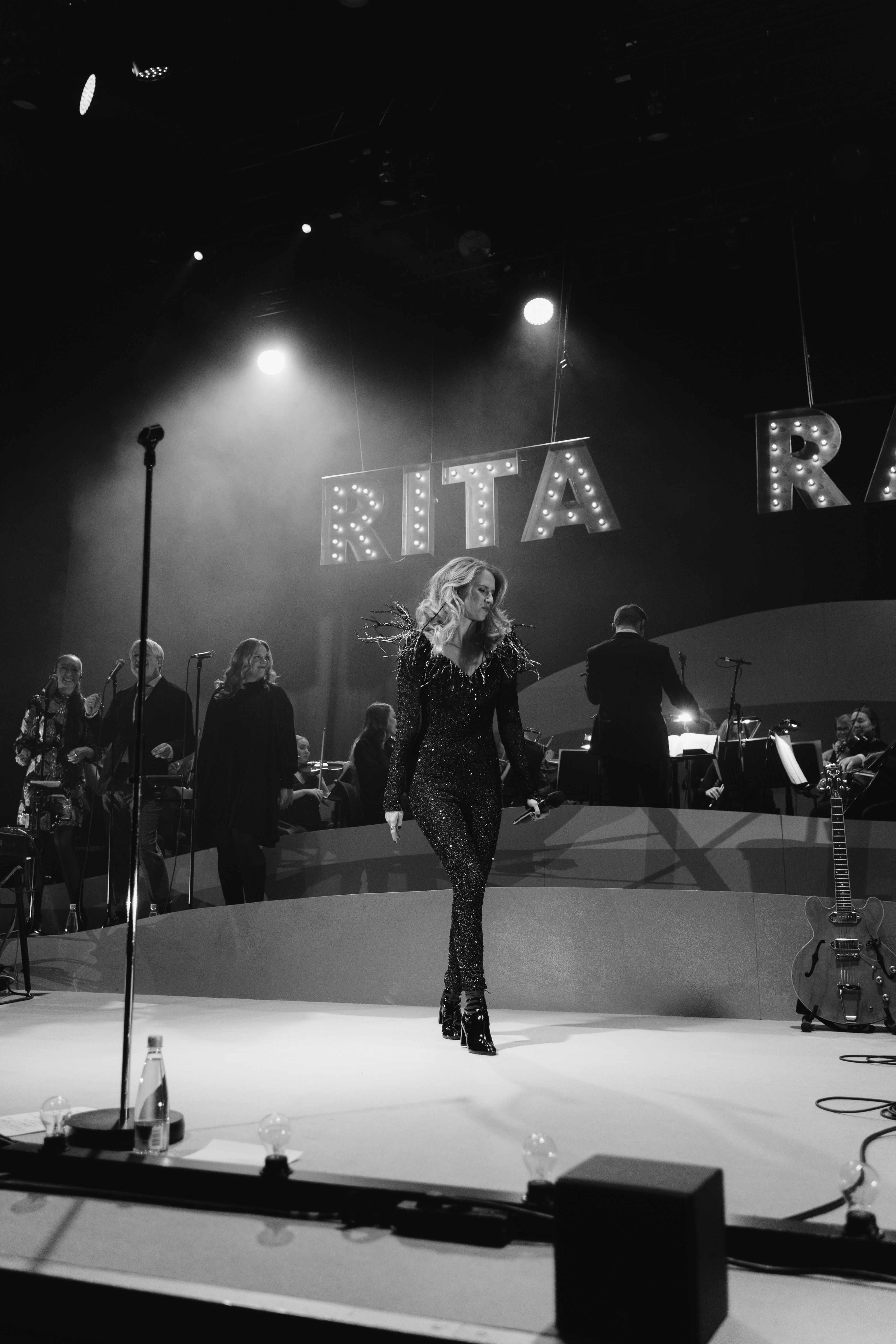
Rita Ray Interview Image by Ako Lehemets
Strain is a particularly serious issue for many vocalists. How do you take care of your voice? Are the recipes or techniques to get a damaged voice back in shape?
I agree, it is a serious issue and I’ve been through the loss of my voice back in 2020 when I was diagnosed with a vocal cord closure defect. I was producing sound through huge tension and straining heavily and my vocal cords just couldn’t close properly anymore.
Right before, I had studied a technique called Complete Vocal Technique in Georg Ots Tallinn Music school by vocal coaches that in my opinion don’t have any business teaching vocal technique. Those teachers and the technique in general pushed me to my limits – I was wrecking my voice and being like 19-22 at that time, I was too young to understand what's healthy regarding singing or not. I was in a really hopeless situation back then, I had just released my first album and didn’t have any voice.
Fortunately for me, lovely Covid came and that gave me time to reflect and find a vocal coach that helped me discover my own voice through not straining and pushing. To this day, I visit my vocal coach Sirje Medell occasionally and it’s had a tremendous impact on me.
That’s what I recommend to people with vocal concerns too. Find you a coach that helps you to release tension and teaches you about healthy vocal practices. There is no miracle remedy or no easy way. It’s a process.
How has technology, such as autotune or effect processing, impacted singing? Has it been a concrete influence on your own approach?
It definitely had a huge impact on me. Since most of the stuff on the radio is heavily melodyned and/or autotuned, my perfectionism regarding my own vocals was far from normal. I felt the need to be perfect all the time, but the thing is – flaws remind us that it’s human to make mistakes.
The thing that bothers me though, is that here in Estonia, there are some TV-shows that include singing which is marketed as fully live vocals, even though I know for a fact that they are most of the time pre-recorded and heavily processed and melodyned afterwards.
It’s all fine if this is being communicated to the audience, but if not, I think it gives a wrong impression.
Rita Ray Interview Image by Ako Lehemets
For recording engineers, the human voice remains a tricky element to capture. What, from your perspective, makes voices sound great on record and in a live setting?
I think it all starts from a singer that is connected to her/his voice and knows their limits, capability, is not straining and singing freely.
For me, the right microphone is really important as well. I swear by my Neumann U87 vintage mic that I fell in love like 4 years ago. Since then I have tried a variety of condenser microphones, but nothing does it like the legendary U87.
But I mean, it really depends on the preamps used and of course the person behind the mixer. She/He has to know how to get the best from your vocals, so it’s a big combination of things.