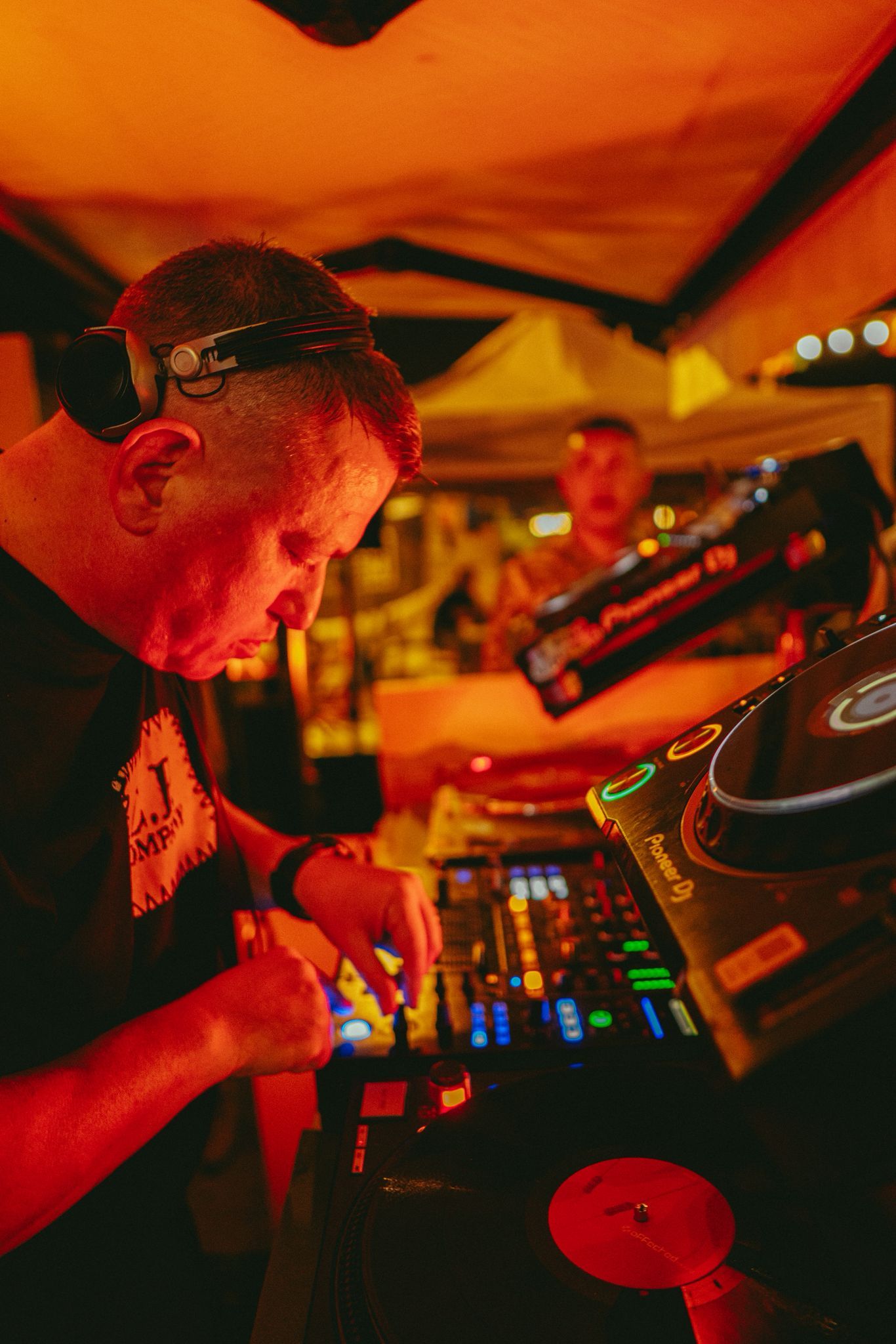
Published
Part 1
Name: Rob Pearson
Occupation: Producer, DJ, label founder at Evasive
Nationality: British
Current release: Rob Pearson's new Turnin' Things Up EP is out via Evasive (buy on beatport).
If you enjoyed this Rob Pearson interview and would like to stay up to date with his music, visit him on Instagram, Soundcloud, and Facebook.
Where does the impulse to create something come from for you? What role do often-quoted sources of inspiration like dreams, other forms of art, personal relationships, politics, etc., play?
The impulse to create can come from a variety of sources for me.
I often find myself with a head full of rhythms and ideas, especially after a great night out hearing music from DJs and producers I admire. That doesn’t mean I’m trying to copy what I’ve heard — in fact, I probably wouldn’t even remember everything clearly. But the experience of hearing a fresh set of tracks, whether new or old, played by someone who knows how to take you on a journey, leaves its mark.
Who I’m with on nights like that also matters. Being around friends and positive people I enjoy spending time with puts me in the right headspace to create music. The vibe in the room is crucial.
I also draw a lot of inspiration from films and well-crafted TV shows — not just in terms of samples or phrases I might lift from them, but more from the way these visual and audio stories make me feel. The emotional impact of the medium, the way it can shape mood or evoke a certain atmosphere, often sparks something for me.
My environment plays a big role too. I’m always absorbing what’s around me, and I like to capture sounds and atmospheres from random places. I’ll make notes in my iPhone or use a handheld recorder (I had an Edirol model that I’ve carried around for more than 20 years — it’s seen better days, but still works). I’ve recently upgraded to a newer Tascam model, which I also take with me when I travel to different cities or countries. Listening back to some of those random recordings often sparks an idea when I’m in the studio.
Life experiences also have a big influence. I often draw from situations I’ve been through, and those moments can shape the vibe of a new track. I’ve even ended up using them as strange track titles, letting life’s randomness guide me in ways I wouldn’t expect.
For you to get started, do there need to be concrete ideas – or what some have called a 'visualisation' of the finished work? What does the balance between planning and chance look like for you?
It really depends on my mood. Sometimes, I have a clear vision before I even start — I might know the tempo I’m after, the groove I want, or whether I’m going for a 4x4 beat or something with breaks or an electro vibe. Other times, I’m just in the mood to create and play around with sounds, samples, synths, or groove boxes.
The gear I use can vary from day to day. One day, I might be deep in the box, working in Ableton, Logic, or Cubase, or even experimenting with iPad music apps like Ableton Note, Korg Gadget, or virtual synths. Other days, I want to get my hands on real machines — Roland TR8s, my old SH101 or my racks of 80s and 90s synths and outboard processing gear - tactile instruments with faders I can move and dials I can twist. It’s like developing a relationship with certain instruments; they can feel like old friends or exciting new acquaintances that you’re eager to get to know better.
Generally, I find that this kind of playful experimentation sparks ideas for a track. Sometimes, I’ll keep the ‘playing’ part completely separate from the actual production process. Once I’ve had my fun and captured some interesting sounds or ideas, I can go back and work with them when I’m ready to create something new.
There’s also the element of working with labels, who might want a new track that sounds similar to something I did in the past — maybe something from years ago, or even just a few releases back. In those situations, I have to decide if I’m comfortable revisiting that headspace and whether I’m up for making a track that fits that vibe again.
It’s a more methodical process, but honestly, it can be just as enjoyable as the more spontaneous approach.
Is there a preparation phase for your process? Do you require your tools to be laid out in a particular way, for example, do you need to do 'research' or create 'early versions'?
I don’t always follow the same routine when it comes to preparation — it really depends on the track and the mood I’m in. Sometimes I start completely from scratch, just jumping in and seeing where it takes me. Other times, I’ll load up one of my templates that has sounds I’m familiar with and enjoy working with.
There’s no strict formula, but I tend to have certain drum sounds, synths, or basic elements I return to because they feel right for getting things moving quickly. Having those building blocks already there helps me hit the ground running.
When I’m working solo or collaborating, I might get a track’s core elements down in a solid three-hour session. It’s not about perfection at that stage — it’s about capturing that initial spark of creativity. I’ll throw down the main groove, get a rough arrangement together, and then step back and let it breathe.
After that, I like to let the track sit for a bit, see how it feels over time. One of the best ways to do that is to test it out in my DJ sets. I’ll play it live, see how it stands up, and make sure it can hold its own in the mix with the crowd.
After playing it out, I’ll go back to the track and refine it. This is where I add the finer details — extra drum edits, tweaking the automation, or even throwing in unexpected sounds or elements that might make the track pop a bit more. It’s like fine-tuning and letting the track grow in a natural way, allowing it to evolve and take on its own character.
Even if the track’s pretty much there after the first session, I’ll spend a couple more days working on it, getting it to that point where I’m completely happy. It’s that extra time spent adding the “sprinkles and gold dust,” as I like to call it.
The final step is always the mixing and mastering process. This is when the track really comes into focus and I get to refine it further. It could take me a full day per track, sometimes longer, depending on how much work it needs. I’ll listen to it in different environments — on headphones, in the car, on a club system — to make sure it translates well across different spaces.
That’s when the track feels truly complete, and I’m ready to send it out into the world.
Do you have certain rituals to get you into the right mindset for creating? What role do certain foods or stimulants like coffee, lighting, scents, exercise or reading poetry play?
I like to set myself up for the day the night before. Having a tidy studio space is important — it’s like clearing away the physical clutter to make room for a clearer head. When I walk into the studio in the morning, I want the space to feel calm and organised, so I can focus entirely on what I’m about to create. A clear, uncluttered environment definitely helps with that.
A few times a week, I start the day with a personal training session from 6:30 am to 7:30 am. I’m not naturally a morning person, so this routine took some getting used to, but now I can’t imagine my day without it. Whether it’s the gym or a 5k run, that early burst of physical activity does wonders for my mind. It wakes me up, gets the blood flowing, and definitely fuels my creativity. Once I’m back home, showered, and ready to dive into work, I make myself a coffee, which is always an essential part of the process. By 8:30 am, I’m in the studio, ready to get started.
My previous studio in South London didn’t have any natural light for almost two decades, which I was used to back then. But since I moved into my new studio space in 2013, having windows has made a huge difference. I can’t imagine working in a space without them now — natural light plays a big part in setting the mood for the day.
Sometimes, especially during late-night DJ recording or broadcasting sessions, I like to shift the energy of the studio with different lighting. I’m into using coloured LED lights — purple’s my go-to. It’s a vibe that works for me and helps create a more immersive, focused atmosphere, especially when I’m in the zone and working through the night. The right lighting can really set the tone for how I approach the creative process.
In terms of food or other stimulants, coffee’s definitely the main one, but I also try to stay mindful of my energy levels. When I’m deep in a session, I might have snacks at hand, something simple but energising like a piece of fruit or nuts now I'm trying to stay healthy these days. It’s all about finding that balance — I don’t want anything too heavy, but I need to keep my energy up.
I wouldn’t say I have any specific rituals like reading poetry, but I’m always open to the idea of using different elements to help shift my mindset when I’m starting a new track. It’s all about creating the right environment, both physically and mentally, so I can just let the music flow.
Tell me a bit about the way the new material developed and gradually took its final form, please.
This new EP is a bit of a mixed bag in terms of its content, but that’s what I love about it. Each track has its own story, and they all came together in different ways.
The opener, “Turnin’ Things Up,” is a completely new track that fuses the classic tech house sound I’m known for with some of the newer production techniques I’ve been experimenting with. It represents where I’m at right now in terms of my sound — almost like a bit of a reset.
In a way, I’ve had to go back to move forward. I wanted to revisit that big bass drop I was known for around 20 years ago, but I didn’t just want to repeat myself. The challenge was to combine that nostalgic energy with something fresh and forward-thinking. The track developed pretty easily once I was in the right zone.
“Tarantula Bites” is a slightly darker-toned track I made about 5 or 6 years ago. I’ve been playing it in DJ sets for a while and getting great reactions, so it felt like the right time to give it a proper studio polish.
I found the original project file on an old MacBook during a bit of a spring-cleaning session and decided to bring it into 2025.
The name comes from a memory I have on a family holiday in Javea, Spain, where I had to fish a bunch of Tarantula spiders out of the swimming pool. It’s funny how personal experiences can translate into track names.
“Absorb the Vibration” is another track from that same period. I actually created this one in an afternoon while I was on holiday, just in between swimming in the pool and playing with our two sons.
As a typical Brit who’s prone to sunburn, I’d duck inside every so often to escape the heat and add little bits to the track. The track was originally called “The Beat Creator”, and I remember hammering away at the groove, layering my favourite warped sounds on top of a rolling bassline.
The vibe that day was just perfect — I was in a great headspace with my wife and kids, staying at our wonderful friend Oz’s villa.
That relaxed, happy environment really helped shape the track. Music often comes best when you’re in the right headspace, and that holiday vibe definitely influenced the finished product.
Lastly, “The Way You Do It” is another new production, and it fits perfectly alongside the two older tracks. This one came together really naturally when I was in that flow state.
The bassline has a bounce to it that felt right for the record. Once I had the bass and drums down, the rest of the sounds just seemed to fall into place.
It was one of those tracks where I just had fun adding little details, those ear-candy elements that make a track feel special. It was another one of those moments where the track just flowed effortlessly.