Published
Name: Web Web
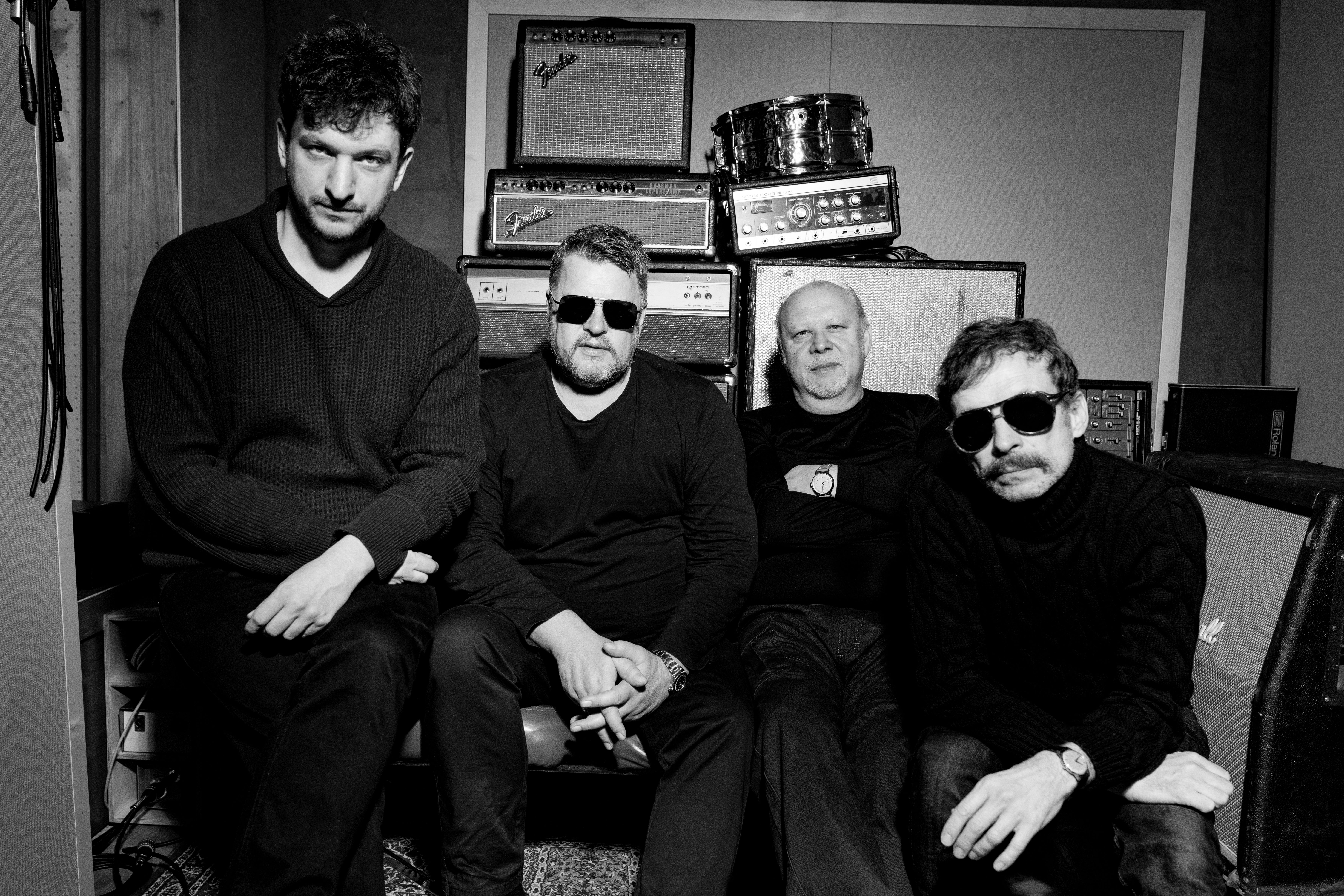
Members: Roberto Di Gioia (piano, synth, percussion), Tony Lakatos (saxophone), Christian von Kaphengst (upright bass), Peter Gall (drums)
Interviewee: Roberto Di Gioia
Nationality: Italian-German (Roberto), German (the rest of the band)
Current release: The new Web Web album Plexus Plexus, featuring JJ Whitefield, is out via Compost. It is the follow-up to Web Max II, which we talked to Roberto and Peter about at the time.
Global Recommendation: You HAVE to visit the Olympic Park built in 1972. One of the most beautiful buildings in the world.
Over the course of his career, Roberto Di Gioia has worked with a wide range of artists, including Jan Bang, Nils Petter Molvaer, Peter Kruder, Max Herre, and Eivind Aarset. For an even deeper dive, also check out our previous Roberto DiGioia interview.
[Read our Jan Bang interview]
[Read our Nils Petter Molvaer interview]
[Read our Nils Petter Molvaer interview about Certainty of Tides and Orchestral Meditations]
[Read our Eivind Aarset interview]
[Read our Peter Kruder interview]
What were some of the musical experiences which planted a seed for your interest in jazz?
At the age of 12, I listened to John Coltrane, Count Basie and the Modern Jazz Quartet at boarding school. We had a music room where each of us brought records. Some brought Kraftwerk vinyls, others The Ramones, or Hendrix.
I brought Beatles records, and my best friend brought jazz records.
What does the term jazz mean today, would you say?
I really can´t tell you. The term jazz never really changed its meaning, did it?
As of today, what kind of materials, ideas, and technologies are particularly stimulating for you?
Just good music.
Where do most of your inspirations to create come from – rather from internal impulses or external ones? Which current social / political / ecological or other developments make you feel like you need to respond as an artist?
I don't see myself as an artist, but as a worker.
Inspiration comes from work alone, not from waiting.
Tell me a bit about the sounds & creative directions, artists & communities, as well as the colleagues & creative hotspots of your current hometown, please. How do they influence your music?
I only work with close friends. We respect each other and don't argue.
At home, I work completely alone, concentrated. In the studio with one or two musicians at most. Otherwise there's too much talking and discussing about music.
What role do electronic tools and instruments play for your creative process?
I use them just like analog instruments.
Thanks to technological advances, collaboration has become a lot easier. What have been some of the most fruitful collaborations for you recently and what approaches to and modes of collaboration currently seem best to you?
Of course it's easier to communicate, to send music back and forth.
But creative work, being together, is still something else. Thank God.
Jazz has always had an interesting relationship between honouring its roots and exploring the unknown. What does the balance between these two poles look like in your music?
It's a difficult question that I can't really answer because I honestly don't think about it at all. I just follow my intuition.
How much potential for something “new” is there still in jazz? What could this “new” look like?
Even more difficult question! I think it's like eating. Or in photography. Or any other invention.
At some point, you reach a point where it's no longer possible. At some point, the best pasta was made, the best photo, the perfect Fender Rhodes. Why invent a new guitar when there is a Fender Stratocaster or a Gibson L-5?
For many artists, life-changing musical experiences take place live. How do you see that yourself?
Yes, I see it that way too. Three weeks ago I met Klaus Voormann, the bass player for John Lennon, Carly Simon and Randy Newmann. He designed the Beatles album cover for Revolver.
To experience this incredibly lovable and humble person live, to hear personal stories about George Harrison from his mouth, touched me so deeply that I am still completely inspired.
If I had seen Hendrix live, or Coltrane ... I would probably have become a gardener.
How, would you say are your live performances and your recording projects connected at the moment? How do they mutually influence and feed off each other?
Not so much because I like being at home in the studio and playing live is simply exhausting - as a family man and a dad.
What, would you say, are the key ideas behind your approach to improvisation?
Intuition.
Are there approaches, artists, festivals, labels, spaces or anyone/-thing else out there who you feel deserve a shout out for taking jazz into the future?
All the musicians who carry on the legacy deserve a special mention.
The Montreux Festival intends to preserve its archive of recordings for future generations. Do you personally feels it's important that everything should remain available forever - or is there something to be said for letting beautiful moments pass and linger in the memories of those that experienced them?
I had the good fortune to perform there a few times, with Klaus Doldinger in the 90s.
We got to know Claude Nobs, who invited us to his estate. He told us about his archive, the largest in the world, and showed us the mountain inside which the archive is located.
It is incredibly important that these valuable documents and records exist. Imagine if there were no ancient writings, paintings by Archimboldo, works of art by Michelangelo, etc. we would be lost.