Published
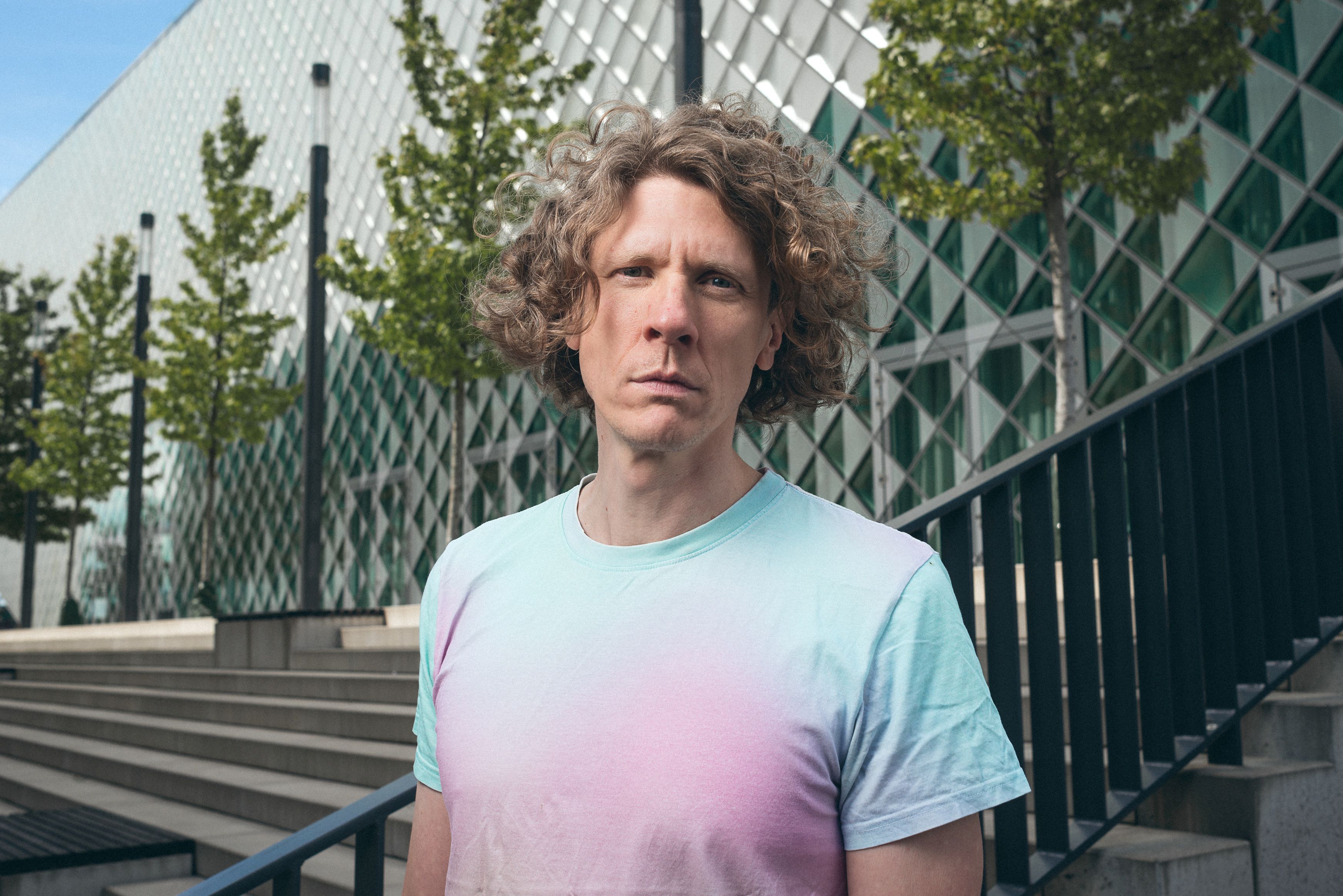
Name: Roman Rofalski
Occupations: Composer, improviser, pianist, educator
Nationality: German
Current release: Roman Rofalski's new album Ravel Reimagined is out via Puddle.
Recommendation for Berlin, Germany: You should go have pizza at Il Casolare near Admiralsbrücke. Best pizza, best team, best location.
Shoutouts: Based on my own background, I enjoy when avant-garde improvised or electronic music mingles with contemporary classical music. So things that the ICE Ensemble does with contemporary jazz musicians, or projects where Ensemble Modern collaborates with artists like Alva Noto or Hainbach, are worth mentioning.
I also enjoy the work of Enno Poppe and Ensemble Mosaik a lot. Then there are labels like PAN and Subtext, which push boundaries with every release.
My last visit to Berlin Atonal was splendid — there is a lot of interesting work happening in all sectors.
[Read our Alva Noto interview]
[Read our Hainbach interview]
If you enjoyed this Roman Rofalski interview and would like to stay up to date with his music and upcoming live performances, visit his official homepage. He is also on Instagram, Soundcloud, bandcamp, and Facebook.
The borders between producers, sound artists, and even songwriters are becoming increasingly blurry. What does being a composer mean today, would you say?
As a composer, one should ideally have active experience in the fields mentioned above. If you know personally how a musical setting feels and what is important in it, you become more efficient.
Also, if you keep in mind that your compositions actually serve a purpose and are not only self-sufficient artistic acts, your musical output changes quite a lot.
Many people perceive classical music and contemporary composition as having high barriers of entry, both for listeners and musicians. What have your own experiences been in this regard?
I still think you should not write music to please the masses.
But the way of presenting it — on stage as well as in an educational context — becomes more and more crucial. You're not selling out your artistic ideas when you start thinking about how to reach people as an artist.
As of today, what kind of materials, ideas, and technologies are particularly stimulating for you?
What happens on our planet and in our society always has an impact on the kind of music I create — willingly or not. Besides this, my musical history is quite diverse and is constantly longing for things to be rediscovered and/or combined with new music I am listening to.
Technology-wise, when you are using electronic instruments, different devices stimulate different artistic decisions. For example, Fractal, the first half of my record released on Oscillations, is highly influenced by ways of using prepared piano together with the editing techniques of Ableton.
Awaiting PM, the second half, is based on and built around my good old Akai MPC2000 — a drum sampler from the 1990s that was widely used in various hip-hop and techno settings back then.
I rediscovered its beauty and asked myself how to use it for my own purposes: how to make some sort of beats that fit the times we are living in and the musical ideas I have developed, having both a techno background and a history of performing contemporary music.
Tell me a bit about the sounds & creative directions, artists & communities, as well as the colleagues & creative hotspots of your current hometown, please. How do they influence your music?
I live in Berlin, which became famous for breeding techno in the early 1990s. This music and its social and technological background are still immanent in its scenes.
Luckily, many other musical styles — from jazz to metal to avant-garde performative practices — have started learning from each other. Artists from different countries and scenes visit or reside in this city. It is rough, not exactly beautiful, and this has an impact on the music being made here.
This is something I personally benefit from a lot. Having friends who drag me to see shows by musicians I do not know — or would never have gone to — is a great source of inspiration.
Plus, I am a child of the 90s, and even if it’s only once in a while, visiting the wonderful Tresor club or an event at OHMenriches my musical life a lot.
Composing has always had an interesting relationship between honouring its roots and exploring the unknown. What does the balance between these two poles look like in your music?
Here, Ravel Reimagined is a good example. I have a background as a classical piano player. Those hours of practice and that state of devotion have changed my DNA — even if I sometimes wish they hadn’t.
So dealing with this heritage is something I need to do. One requirement for this production was to have mastered — if one can even say that — the original works, and to be able to drop in and out of the original material and use it “correctly” in my improvisations.
This is not something I consider mandatory for art in general. But for this specific project I wanted to make a musical statement about how to use Ravel in 2026. And if you want to do this properly, you have to know how it was used in 1904.
Looking at Awaiting PM, I consciously wanted to step away from “classical piano improv” towards more electronically based sounds. But when using the MPC you cannot step away from its history: its workflow helped create hip-hop (or hip-hop created the MPC).
Even if you don’t want it, the music created on it refers to this. And that reference — and what we do with it — is highly interesting to me.
How much potential for something “new” is there still in composition? What could this “new” look like?
Tough question. Right now people have access to music from all over the world and are trying to combine different things in exciting ways.
I really like the NTS radio show that Zulu does. He collects records from African artists, Egyptian musicians, hardcore electronics, drum’n’bass, pop, and combines everything in a very tasteful way. Listening to his sets, one is always learning something new.
Some of my jazz records incorporate the demand for the musicians to play computer-like (for example “Monday” on Awaiting PM).
Some make the computer sound like a human (“Perpetuum” on Fractal).
Some combine the two (“Fractal Waves” on Fractal).
But this “new” is still limited and not radical. If I had a concrete answer, I would probably be creating very different music. I guess that with every record I make, I am searching and exploring possibilities.
What role do electronic tools and instruments play in your creative process? What does your creative space / studio look like?
My studio is a quite spacious room next to my living room. So it always has a cozy atmosphere — although it comes with the downside of easy distraction.
I have a grand piano and a job that is based on using it (teaching piano). So this instrument is always there, both physically and psychologically. The first decision to make is always: use it or not?
Like all synth nerds, I own quite a range of electronic devices. But whenever I acquire something new, I test whether I can integrate it into my workflow and the projects I am currently working on. If not, I am happy to sell it again in order not to clutter my life more than it already is.
With every new device I try to spend time with it and see where it takes me. All electronic instruments — just like a violin or a saxophone — have different user interfaces you have to learn your way around. This leads me to make musical decisions that I would not usually make, and that is what drives me forward.
One could say that all my recent records are somehow based around a particular electronic device or instrument.
Working with long forms, complex concepts or new vocabulary is potentially more challenging today because they require us to remember things that happened perhaps minutes ago – while most of us struggle to focus even on what's happening right now.
Do you always have to remember exactly what happened in a track 13 minutes ago?
With long forms, it is often more about creating a feeling or a motion that is heading somewhere — or perhaps nowhere. Development can take place over two minutes or twenty minutes. The mechanisms are the same; the impact can be different. I tend to lean more towards feeling these aspects rather than necessarily understanding them.
Coming from a very academic background — and teaching at a university — I know that the intellectual demand of complex music can sometimes be challenging and even block access to it.
Beethoven’s Hammerklavier Sonata is something you really have to work on to understand, because its formal construction is unbelievably complex. But it is also about tension and release, and being able to sense and enjoy that is equally important.
For many artists, life-changing musical experiences take place live. Few works these days, however, are performed beyond their premiere.
I think composition nowadays has partly shifted from pen and paper to digital audio workstations. Both approaches have their own benefits.
Because of this, I think it is legitimate to have a piece that is performed for a special occasion — for example a premiere — and afterwards remains primarily in the digital realm.
Since I am an active performer and improviser, pieces that I know will be performed several times after their premiere tend to have a certain “jazz vibe.” By that I mean that they leave openness for the performers to transform and develop the piece over time.
To some, the advent of AI and “intelligent” composing tools offers potential for machines to contribute to the creative process.
I think that with machines increasingly taking over parts of music creation, some jobs will become obsolete. Some composers in the film and commercial field might no longer be needed.
For artists, it is already difficult to sell their music, and AI probably will not fundamentally change this — neither for better nor worse.
Personally, I am interested in starting to interact and work with the machine, because it might offer unexpected input that could take me somewhere else.