

Name: Les Hommes
Members: Rory More (organ), Tarek Abou-Chanab (congas and percussion), Vladimiro Carboni (drums)
Interviewee: Rory More
Nationality: British
Occupation: Composer, improviser, organist
Current release: The new Les Hommes album Sì, Così is out via Sudden Hunger.
If you enjoyed this Rory More interview and would like to stay up to date with his music, visit him on Facebook.
What were some of the musical experiences which planted a seed for your interest in jazz?
London jazz club culture in the very early ‘90s … the atmosphere that surrounded it, the sense of renaissance.
And the fact that so many of the ‘modern’ mid-century cats were still alive and playing. That was a really big deal.
How do jazz and jazz culture factor into your artistic processes and the music resulting from them?
The ability to swing and groove, combined with a killer sensibility for melody, feels unobtainable, because the greats were such immeasurable masters.
Yet, we’re driven to keep reaching for it … as Ken Nordine said “Reaching into ‘in’”. It feels like the ultimate art form, so we pursue it.
What does the term jazz mean today, would you say?
Ha ha … good question. Maybe ask the promoters who book the bands! Some of the stuff coming through annoys a lot of people, because it’s more beats than jazz.
But I understand the need to re-appropriate the elements of jazz and make something new. I think in the ‘90s we saw a shift where you don’t need to be a technically good musician to record jazz-styled music. So we had the whole jazz-and-sampler thing happening for example. Things have felt different since then in terms of who’s releasing recorded original music and calling it jazz. But to others, if you can’t play a standard, you’re not in the club.
It’s definitely become a more amorphous term, where the word ‘jazz’ pulls in many directions. But that’s a good thing.
Jazz was about a lot more than just music in the 60s and 70s, from politics to fashion. For you personally, is jazz still a way of life – and if so, in which way?
It was such a massive part of the Civil Rights movement, that to not acknowledge that, would be to not understand the art form.
If it falls from within your grasp, even for a short amount of time, then life feels a bit dry.
Many people perceive jazz as genre with high barriers of entrance, both for listeners and musicians. What have your own experiences been in this regard?
I think people have misunderstood it for too long.
Bossa nova was the perfect example of jazz as accessibility. It’s not always easy to play, but then other times it is. Certain players take simple pieces to the outer limits, others players sit on one or two chords for ages and draw you in. The problem is that people aren’t exposed to enough of the right kind of jazz.
An elderly woman at a wedding I was DJing at a few years, stood transfixed, mouth wide open in amazement and wonder and asked me what I was playing. I said “It’s called "Little Sunflower" and it’s by Dorothy Ashby”. She’d never heard anything like it, and she was a very ordinary-looking woman … a bit like what your aunty looks like at a wedding, if you know what I mean.
To her, it was a whole new auditory experience.
Derek Bailey defined improvising as the search for material which is endlessly transformable. As of 2024, what kind of materials are particularly stimulating for you?
I’m lucky, as lots of my friends are jazz and groove DJs … so for the last 35 years I had constant exposure to EVERYTHING.
Right now though, I like what my friend Greg Foat is doing, Tamil Rogeon (from Australia), Badbadnotgood are mind-blowing. And I really like Gregory Porter’s take on the Morricone classic ‘Se Telefonando’.
[Read our Greg Foat interview]
[Read our Badbadnotgood interview]
What, would you say, are the key ideas behind your approach to improvisation?
Listen to your friends’ record collections and keep listening and study the bits you really like.
If, like me, you play the electric organ, listen to the blues greats like Jack McDuff. It’s all there.
How would you describe your relationship with your instrument – is it an extension of your self/body, a partner and companion, a creative catalyst, a challenge to be overcome, something else entirely?
Well, as a vintage organist, I am one with it. I can’t pretend I’m not. If the slightest thing is not functioning properly, I feel it.
And it has 330 volts of direct current running through it. That has a big impact on how you feel about it. Playing it is a massive challenge every day.
Jazz has always had an interesting relationship between honouring its roots and exploring the unknown. What does the balance between these two poles look like in your music?
How do you make a 1958 vintage Lowrey organ sound modern? It’s quite difficult. Do I scrap it and buy a synth instead?
Finding a way to make something that was originally aimed at a white middle-class America sound progressive and new isn’t that easy, coz if you hit the wrong button, you sound like you’re playing at a fairground.
But there are ways … you have to start with the most simple sounds, and somehow make them more complex without using gimmicks.
What are currently direction in jazz or jazz-adjacent communities which you personally find interesting?
The international lounge scene, if there is such a thing, was always about jazz, despite what people may think. Killer soundtracks, killer library …
It’s still where a lot of the good vibrations lie.
For many artists, life-changing musical experiences take place live. How do you see that yourself?
If I knew then, what I know now, I think there would have been more life-changing experiences. It helps to have mentors when you’re young to make that happen.
How, would you say are your live performances and your recording projects connected at the moment? How do they mutually influence and feed off each other?
The live show is intense, sometimes frenzied. We haven’t reached that feeling in the studio yet.
The studio always feels safer, and it’s not easy to communicate who we are as much.
There are various models to support jazz artists, from financial help to mentorships/masterclasses. Which of these feel like the best way forward to you?
None of the above to be honest. We never had any support when we started out.
I think today’s young players have more opportunities, and that’s good. So good luck to them. It’s a tough game.
Are there approaches, artists, festivals, labels, spaces or anyone/-thing else out there who you feel deserve a shout out for taking jazz into the future?
Mixcloud, and the DJs that champion people like us, deserve credit.
The Montreux Festival intends to preserve its archive of recordings for future generations. Do you personally feels it's important that everything should remain available forever - or is there something to be said for letting beautiful moments pass and linger in the memories of those that experienced them?
I believe we should absolutely ‘keep the tapes’.
Les McCann’s performance at Montreaux … we all know which one … is testament to the magnificence of the art form.
Who wouldn’t want to see that!?

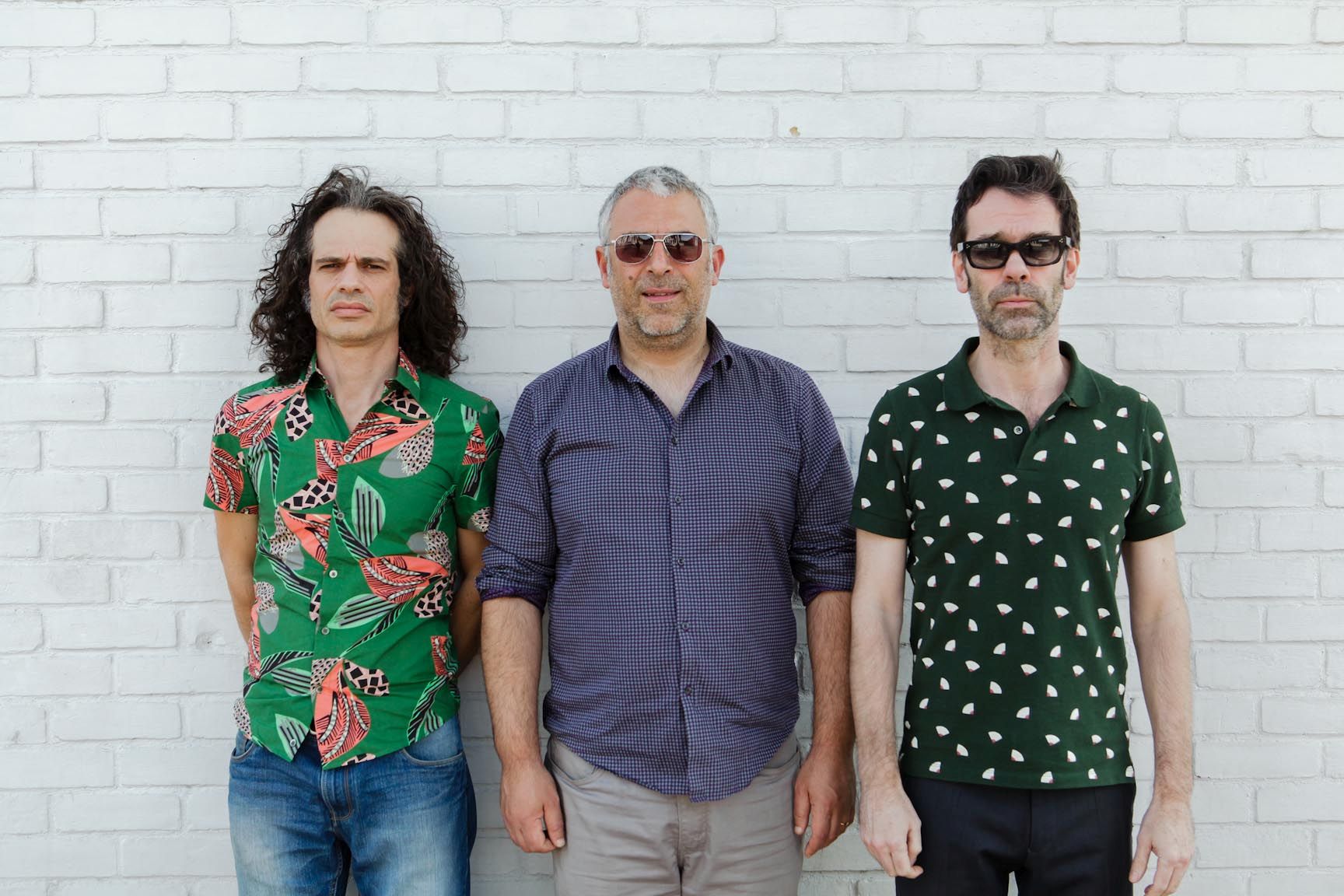 Les Hommes Interview Image (c) the artists (Rory More pictured right)
“The live show is intense, sometimes frenzied. We haven’t reached that feeling in the studio yet.“
Video
