Published
Name: Rose Room
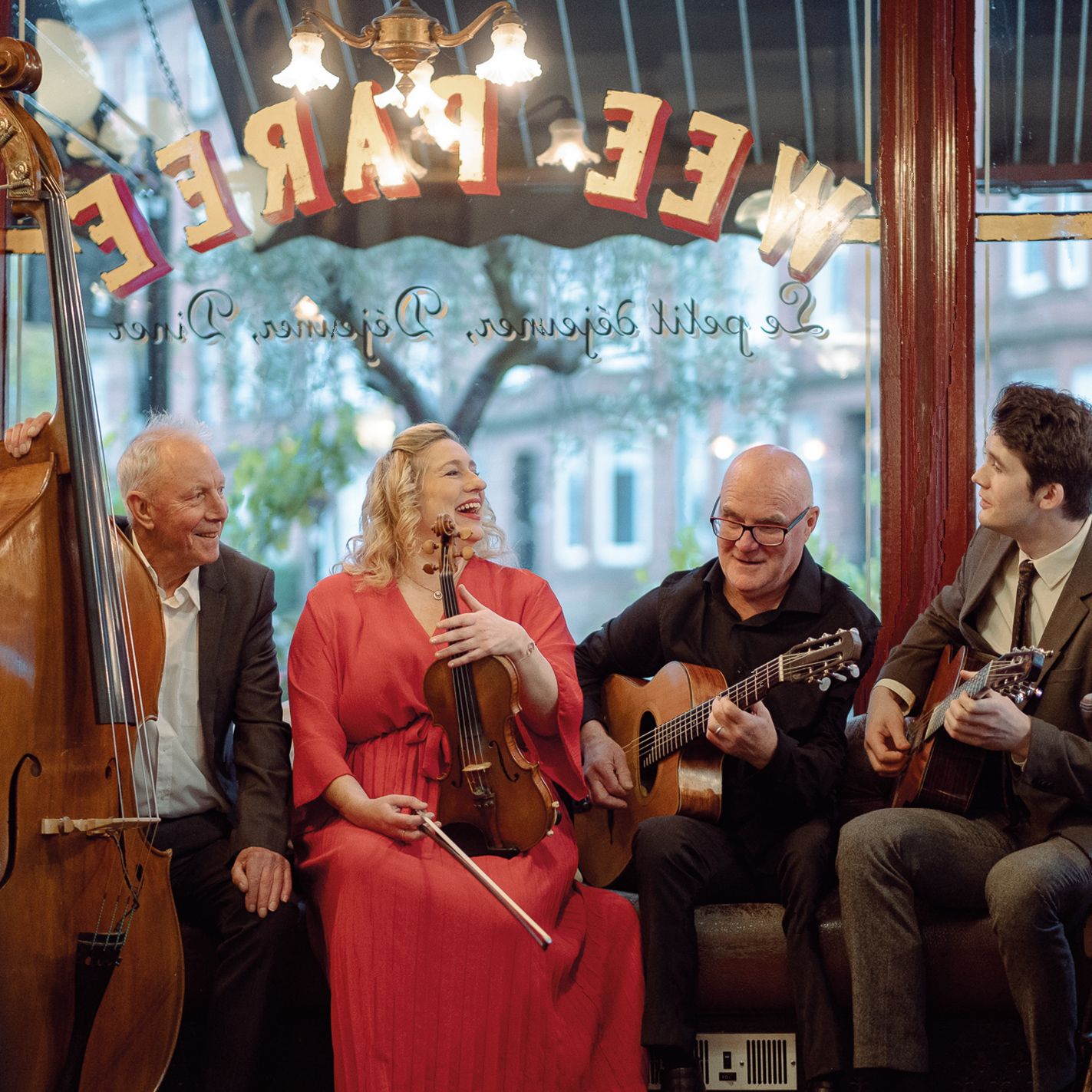
Members: Seonaid Aitken (violin, vocals, string arrangements), Tam Gallagher (rhythm guitar, vocals), Jimmy Moon (double bass), Conor Smith (solo guitar, backing vocals)
Interviewee: Seonaid Aitken
Nationality: Scottish
Current release: Rose Room's new album It's Been A Long, Long Time is out now.
Solo and sideprojects of Rose Room's band members: I have my own ensemble which I write string arrangements for (I’m also a freelance arranger/ composer), and so I’m happy to be able to lend those skills when it comes to augmenting our sound on recordings and in shaping our general arrangements for the band.
I also have a ‘Grappelli & Ella’ duo with our guitarist, Conor, and a full band ‘Grappelli Night’ show. I think studying Grappelli’s later material has certainly helped me open up my language as a soloist in Rose Room.
Conor has a project called the ‘West Coast Hot Club’ which has a Western Swing feel with him on guitar and pedal steel. He also arranges for that which has given him the confidence to offer arrangement ideas for our band.
If you enjoyed this Rose Room interview and would like to know more about the band, visit them on Facebook, and bandcamp.
For a deeper dive, read our earlier Rose Room interview.
Why do you like playing in a band rather than making music on your own?
I love how there’s a shared experience on stage - we’re in it together as a team and, although we all have our own responsibility within the group to play our part and entertain, the collective result is more powerful than a solo venture.
It can be exciting and varied in each show as the communication between musicians - especially in improvisation - can take a different direction depending on the occasion, venue, audience or our mood.
The energy is always there when there are four of us!
What, to you, are some of the greatest bands, and what makes them great?
In our style of music, our idols the Quintette du Hot Club de France are the benchmark for us. As an ensemble, they manage to create an energy, punchiness and vibrancy in their sound. But, the soloists have the freedom to dance over the top of that driving sound/bed of rhythm.
The Rosenberg Trio are the modern incarnation of the Hot Club set-up and, with fewer players, they are still at the top of their game as far as virtuosic playing and tight arrangements go - they push the boundaries of Gypsy Jazz, which is exciting.
How did the band come together?
Back in 2010 I was into Folk music but starting to dabble in Gypsy Jazz after a guitarist friend of mine bought me a John Jorgenson CD.
We were looking for a new folk session to go when we found a jam session advertised in the Southside of Glasgow called the Hot Club of Glasgow. I was the first violinist to attend (amongst many guitarists) and Tam - who was in a duo called Swing Guitars - heard about me and came along to listen. We chatted at the bar during the break and he asked me if I wanted to be in a band. I got a good vibe from him so I said “yes”!
I later discovered that he’d run to Jimmy’s guitar shop the next day and told him he needed a bass player to complete the band with his duo. Thankfully, Jimmy said yes, too! We rehearsed in Jimmy’s front room thinking we’d try and get some pub gigs …
15 years later we’ve won two Scottish Jazz Awards for ‘Best Band’, released four albums, opened The Gypsy Jazz Festival of London and played with some of our musical heroes including Stéphane Grappelli’s guitarist of 11 years - Martin Taylor MBE.
What were some of the reasons, do you think, that you wanted to play in this constellation?
Our main inspiration is the Quintette du Hot Club de France - featuring Django Reinhardt and Stéphane Grappelli. They had one more rhythm guitarist than us, but we manage to achieve the sound with just two guitarists!
We also added vocals into the mix to create a wider appeal to our music - we find that through songs we can instantly connect with an audience while augmenting our sets with instrumentals satisfies the jazz lovers and Gypsy Jazz aficionados.
How has the interaction within the group changed over the years? How do you keep things surprising, playful and inspiring?
I think we have just streamlined everything over the years. We don’t need to have great discussions about things - we know what each other’s role is, and we just crack on with what needs to be done. It’s a pretty slick operation which works well!
Musically, Conor and I try to challenge each other in our soloing - especially when trading solos. We’ll often put in quotes, or try out improvisation tricks/techniques we’ve been discussing in the car en route to the gig. It’s great fun especially when we have a run of gigs!
And for the whole band, we like to change out numbers for ones we’ve maybe not played in a while - or tailor the set to the venue/event we’re playing at. It keeps things fresh.
How do your different characters add up to the band's sound and in which way is the end result – including live performances – different from the sum of its pieces?
Our rhythm guitarist, Tam, is a grafter - and that comes out through the energy, power and consistency in his playing. Although he wouldn’t admit it, he’s also a sensitive soul and he plays delicately in our slower numbers.
Jimmy, our double bassist, comes from a Country/Folk background. He’s also a businessman so his solid, assured, no-nonsense approach to bass lines leaves a lot of space for the other instruments in the band.
As the bandleader, I’m a bit of a perfectionist when it comes to musical arrangements and getting the right chord/inversion to convey the music. So, even though I crack the whip at times, it’s all geared towards achieving a professional, slick performance that shapes the songs/tunes in a classy way and provides a beautiful backdrop for our violin and guitar improvisations.
Our solo guitarist, Conor, is far from a show-off, however, his playing is quietly confident and effortlessly virtuosic. The amount of practise he does really pays off in a gig - he’s always thinking of different ways to approach solos, and I think we provide a platform for him to shine. He makes us sound good, so it’s a win-win situation!
Is there a group consciousness, do you feel? How do you experience it?
We always strive to be entertaining and convey to the audience that we, as the artists, are having a good time, too!
It’s important to us that our music reaches everyone in the audience so we carefully craft our set list with well-known songs vs niche instrumentals and try to get the balance right with slow vs fast numbers, for example.
The reward is getting great energy back from the audience.
In a live situation, decisions between band members often work without words. From your experience and the performances of your current tour, what does this process feel like and how does it work?
It’s easy for us to shorten a tune or decide who takes solos/when we trade solos just with a simple glance! We’re good at reading each other on stage. And the less chat amongst the band on stage, the less the audience feel alienated.
I think it’s way more professional to just make a quick decision and for everyone to follow - I’m the front person, so if we need to cut out a tune or add one, I’ll make sure I quickly tell everyone the next tune then do a suitable (long-dish) introduction for everyone to have enough time to get into that head space/find their chart.
Most bands eventually break up. What makes you stay together? What are essentials for a successful band?
Although Rose Room takes up a substantial part in our gigging calendar, this is not a full-time job for any of us. We all have our own creative endeavours outside of the band which I think is important - to challenge our musicianship/creative brain in other ways which will inevitably feed back into our music-making within the band.
I think knowing what our roles are within the band and playing to our strengths is the key to being successful.