Published
Part 1
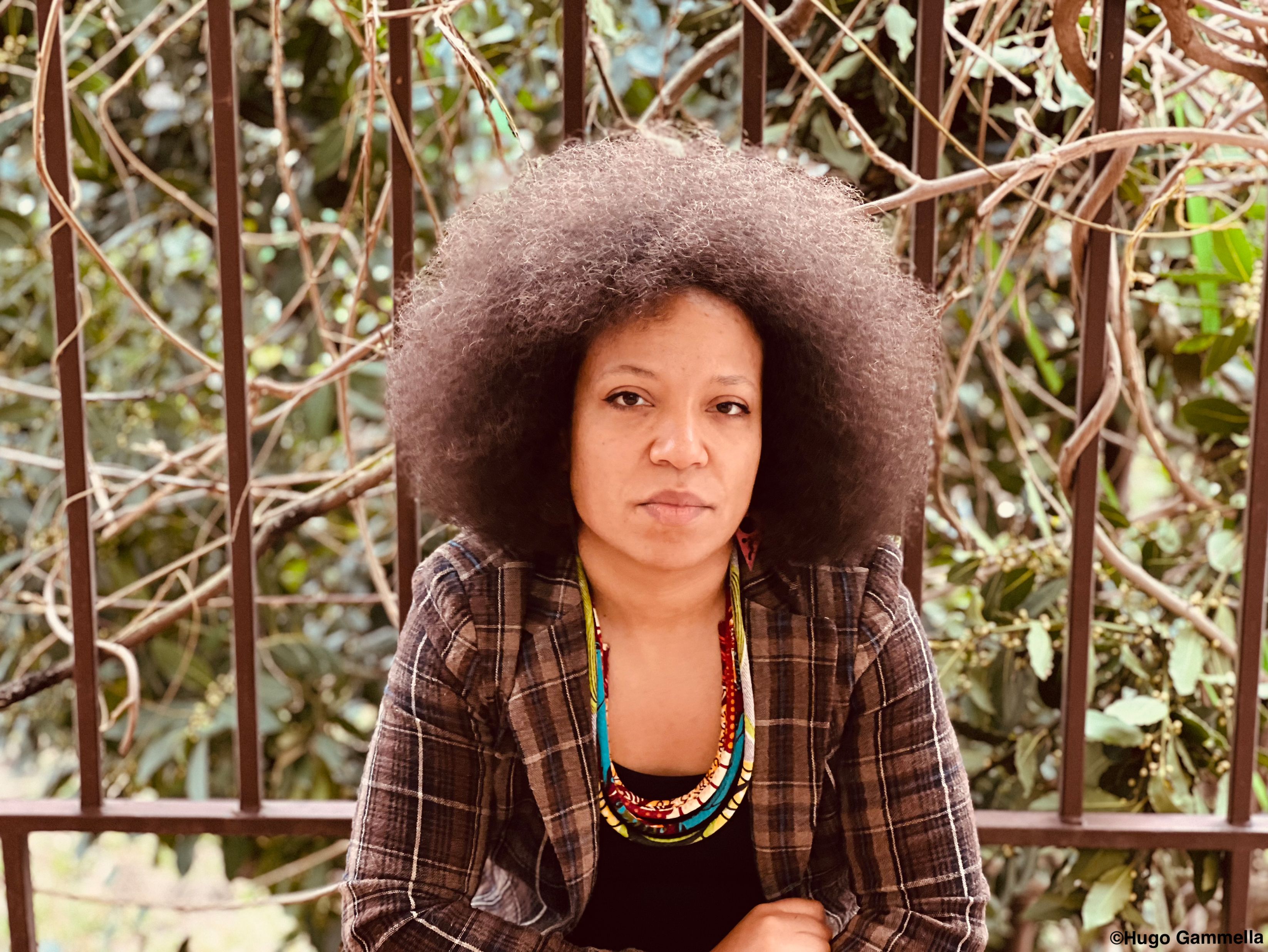
Name: Sakina Abdou
Nationality: French
Occupation: Saxophonist, flutist, improviser
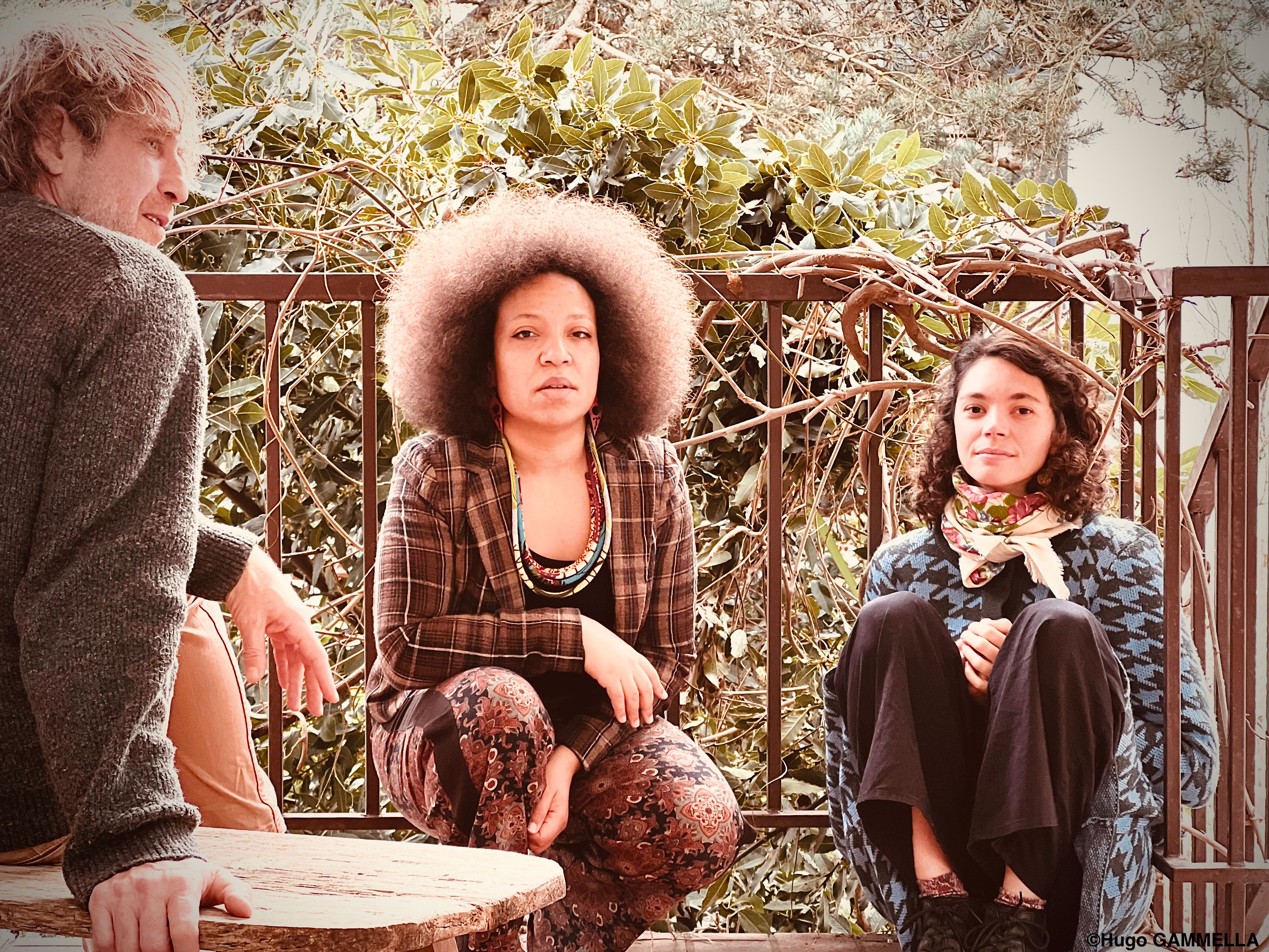
Current release: Sakina Abdou teams up with Marta Warelis and Toma Gouband for the album Hammer, Roll and Leaf, out via Relative Pitch.
[Read our Marta Warelis interview]
If you enjoyed these thoughts by Sakina Abdou and would like to know more about her music, visit her on Instagram, and Facebook.
For a deeper dive, read our earlier Sakina Abdou interview.
What were some of the musical experiences which planted a seed for your interest in jazz?
Having lacked connections with my Nigerian family during my childhood, I immediately felt African music and jazz as an expression of a lineage and a community. It was a symbolic representation of the culture that my father had such difficulty sharing with my brothers, sisters, and myself, and for me it seemed be the sole language with which he could convey warmth.
I don't claim to know this language very well or to speak it fluently, but at least I feel I understand a little of its essence, and hear it from the inside.
I discovered music with my father, who had a nostalgic relationship with it. He had emigrated to France when he was 20 and never went back for the rest of his life. Listening to the records that he had enjoyed in his youth in his native country was the only way he’d found to get home.
I had no idea what his home was like, as I had never visited it at the time, but I jumped on the train with him by my side. It gave me a taste for far off places, and an attraction to the unknown. Far off places and the unknown became familiar territories in which I felt at home.
As I grew up I turned fantasy into invention and turned to improvised music in the broadest and most inclusive sense, and in this moment, it is the only place where I feel a complete sense of belonging.
The music that I make today is a kind of language that I have constructed with these half-woven threads, as well as through contact with all the European teachers and musical experiences that have taken me in and made me feel welcome.
How do jazz and jazz culture factor into your artistic processes and the music resulting from them?
I quickly realized that jazz was an affirmation through expression of black identity in a context of domination, racism and discrimination.
I saw my father get up early and work hard and yet, for various reasons beyond his skin color (but that being part of it), end up being worn down by the system. The only refuge he found was in his deep and sacred daily listening to music, particularly jazz. Music has always seemed to me to be the ultimate salvation. The first weapon and the last healing.
A taste for revenge runs in my veins. Revenge through affirmation. Even after a lifetime of psychoanalysis, I probably would never have enough time to get rid of this need to exist through expression and seek to make it undeniable (if not to others, at least to myself). With jazz and music in general, I'm looking for a place where I can gather enough strength to make something triumphant.
Growing up, I was witness to a sense of powerlessness and a kind of disillusionment that to this day leaves me lacking strength in the world we live in, a world that is in absolutely no way in line with my values. I haven't yet found a way to overcome this in ways other than music, but I admire the activists around me who do it.
I hope to communicate their energy as I receive it, and in some way unite with them.
What does the term jazz mean today, would you say?
At school, I was taught several definitions of the word “jazz.” What I remember most is that one generation of artists produces music that has a particular meaning in a certain context, and then the next generation tries to take over.
There are those who try to reproduce and preserve, and those who try to appropriate and transform. The two camps bang on about each other, saying that some are reactionary and obsolete and that the others don't make jazz and are thieves. All this quietly mutates and fractures over several decades, passing through a whole host of potentially crystallized definitions.
Today, I don't really know what “jazz” means. Perhaps it's more a claim to an affiliation than a list of theoretical characteristics. After several generations of this mixing and branching out in various ways, I don't know if what I'm doing is jazz. But I hear it in a certain way as jazz, and that's enough, in theory, for it to be jazz to a certain degree.
I also believe that history is not written in the present tense. I don't care which box my music fits into, the important thing for me is that it's alive, sincere and personal. The future will have its own view of our era and the music that shaped it. I leave it to the future to appreciate, judge and arbitrate what the word “jazz” meant in our time, and even if the publishing industry chooses a winner and sets it up as an institutional truth.
In the end no one will agree, as always, which is as distressing as it is wonderful.
Jazz was about a lot more than just music in the 60s and 70s, from politics to fashion. For you personally, is jazz still a way of life – and if so, in which way?
These years were marked by Black Power and segregation. Music was part of a general emancipation movement.
The only thing that really shocks me where I live today is the paradox that pushes us to turn our gaze towards history and elsewhere, while obscuring the present and the here and now. We are taught at school just how important and essential black American issues have been for “jazz,” and at the same time the professional reality seems to me to completely neglect this social and cultural question in my environment.
I still can't understand this social equation in the French jazz world, which means that the condition of blacks and Afro-descendants can be such a strong and pervasive issue when it's turned towards the past and elsewhere, and so absent and devoid of any awareness when it's turned towards the present and here.
We hold the Afro-American community up as a model, presenting its actors and actresses as symbols and images of past struggles, but there are almost no black French actors and very few working class children on stage, and nobody's shocked. In theory this forms a rather ugly triangle and in three dimensions, a strange sociological pyramid full of projections whose rungs are impossible to climb.
I really get the impression that, beyond the theoretical and musical characterizations, the word has been abused to its core, and that the relationship between the past and the present is completely paradoxical and on the order of a shared collective fantasy.
Many people perceive jazz as a genre with high barriers of entrance, both for listeners and musicians. What have your own experiences been in this regard?
I think that what creates distance or proximity is life itself, the quality of the shared moment, the situation.
It's true that some art forms are self-referential and only aimed at the “initiated.” However, I believe that the same content can be addressed at everyone, as long as we consider each person’s diversity and potential curiosity. So I design the content and the way of transmitting it independently.
I like water and I like rum, but if I drink rum expecting water, I’ll find it disgusting, and if I drink water expecting rum, I’ll be disappointed. In the same way, I don't think there are any fixed barriers apart from those we design and put in place socially.
I can't find any prerequisites for listening, laughing, thinking or reflecting. Only opportunities. Every listening experience is valuable. It doesn't necessarily grasp all the issues, but it's always the expression of a perceived reality, which is a consubstantial value of any art form.
Today, improvised music and jazz venues are emptying out, which means we've lost our appetite just as much as we've forgotten how to talk to each other, address each other and share a conversation. This involves institutions, producers, venues, audiences, artists and, more generally, the way in which music is invested in life in general.
To imperatively submit to one's idea of what an audience can receive, or to ignore it altogether, seem to me to be two sides of the same societal problem, two reactions to the suffocating stranglehold of the dictates of contemporary profitability in the age of consumerism and a certain idea of “entertainment,” two reactions that sidestep a necessary, universal relationship of sincerity, generosity and humanity in the process.
Personally, I try to consider the audience without trying to flatter them, but without snubbing them either.