Published
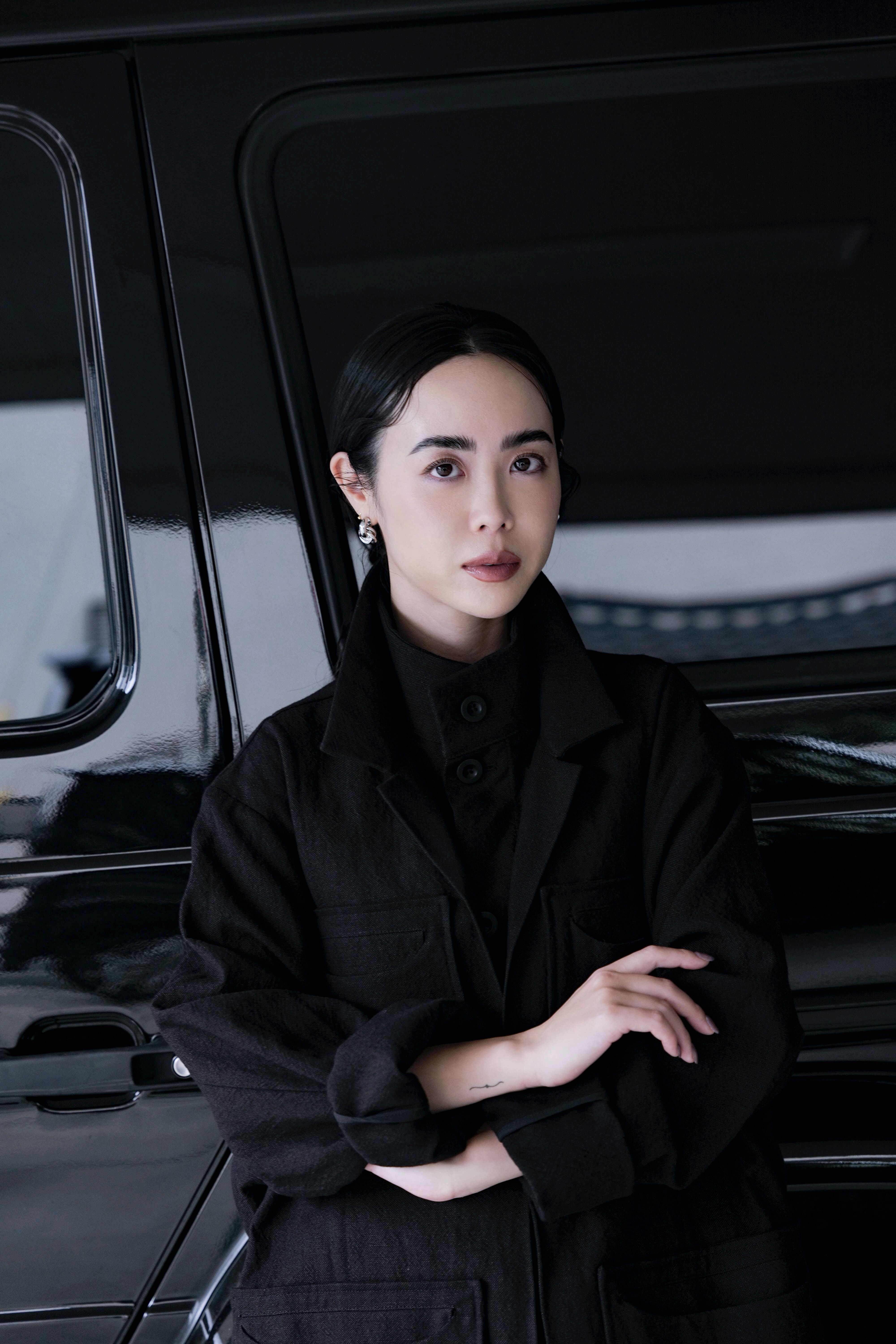
Name: Sakura Tsuruta
Nationality: Japanese
Occupation: Producer, composer, educator
Current Release: Sakura Tsuruta's What Are You Drinking? EP is out via Third Place.
Recommendation for Tokyo, Japan: I’d recommend one of my favourite bars in Shimo-Kitazawa called “Kurage” (which means “jellyfish”) — they serve the best lemon sour I’ve ever had.
Topic I am passionate about but rarely get to talk about: I’m really passionate about teaching, especially supporting up-and-coming talent. My youngest private student is 12 years old, and I love helping others along their creative journeys.
If you enjoyed this Sakura Tsuruta interview and would like to find out more about her music, visit her official homepage. She is also on Instagram, Facebook, and Soundcloud.
The path to becoming a producer is a process - but from many interviews, I am under the impression that there are nonetheless one or a few defining moments. If this was the case for you – what were they and why were they so incisive?
I was practicing music therapy in hospice and palliative care when I started producing music as a way to balance doing music for others with doing it for myself. It became an escape - a way to unplug during my own time from the emotionally heightened environment - and I got hooked.
Music therapists often use acoustic instruments in music therapy, but I brought in laptops and MIDI controllers. The level of accessibility that music technology offered these patients as a means of self-expression inspired me to make music for myself and helped me start forming my own voice.
Tell me about one or two of your early pieces that you're still proud of (or satisfied with) in terms of production – and why you're content with them.
I feel sentimental about all of my tracks, but I would say that “Trust” from my first EP is one of the most memorable, as it laid the foundation for my later albums and their sound worlds.
In how far, would you say, was your evolution as an artist connected to the evolution of your music set-up and studio? Were there shared stepping stones?
I think there was definitely a stepping stone in my journey. As I kept releasing music and performing live, I gradually adapted my setup to better engage with my audience and increase the fluidity of my performances.
I move back and forth along the spectrum of how much my laptop plays a role in a live setting. Sometimes I perform without a laptop at all, and other times I use it as an interface to connect and sync all of my equipment. Through this process, I realized that the prep work I do for my live sets often feeds back into the tracks I create.
Unfinished tracks and loops that work best in performance settings sometimes later evolve into fully realized studio tracks—and incorporating a performative element in the studio, where I can just jam, often sparks new ideas as well.
There are artists who can realise their ideas best with a traditional – or modified – piano interface, others with a keyboard and a mouse, yet others by turning knobs or touching screens. What's your preferred and most intuitive/natural way of making music and why?
I prefer using a keyboard because I come from a classical background. However, I tend to get more interesting ideas from pad controllers, which allow me to play unusual chords and unexpected combinations of sounds.
That said, I’m always more drawn to tools that work intuitively, like an acoustic instrument.
Tell me about the space of your current studio/workplace and how you've set it up to optimise creativity.
To be honest, my studio is a bit of a mess right now and really needs a major declutter and reorganization. With touring and constantly moving my equipment around, I feel like it’s time for a complete reset in how I use my creative space.
That said, I try to surround myself with objects that inspire me - things that spark joy and help me feel more connected to the music.
From the earliest sketches to the finished piece, tell me about the production process for What Are You Drinking?, please.
I wanted this EP to feel lighter and more playful than my previous releases, so much of it came from jamming on my hardware, experimenting in Ableton Live, and exploring sounds more freely.
Many of the tracks began as small snippets or loops, which I gradually expanded and shaped into full structures that made sense as complete pieces.
Late producer SOPHIE said: “You have the possibility with electronic music to generate any texture, and any sound. So why would any musician want to limit themselves?” What's your take on that?
I love the possibilities that technology brings to the music-making process. I’m a huge advocate for it, and one of the reasons I’m so drawn to electronic music is that it constantly evolves alongside new tools and compositional methods - there are always fresh ways to create.
Of course, this also comes with the challenge of keeping up and learning new technologies as they emerge, but for me, that’s part of the fun. I especially enjoy connecting with other musicians to talk about new gear and sharing information about obscure Max for Live devices that feel like hidden gems.
Tell me about your aesthetic preferences for picking effects like reverb, delay, compression, chorus etc … - what was the role of these effects in the production of What Are You Drinking?
I’m such a sucker for spatial effects like reverb and delay - I probably overuse them!
For this EP, though, much of my focus went into shaping the overall sonic world: getting the vibe right and making sure each sound fit within it.
Many of the textural elements came from sampling and then manipulating parameters like reverb, delay, and chorus over long stretches of time. I recorded these explorations and then pulled out the snippets that best complemented the tracks.
The current production process allows for fast and infinite variations. Can you tell me about how you deal with this potential for the infinite and what ultimately decides on how many iterations to create and which version to release?
I always find it difficult to finish a track or when I decide that it’s done - but the defining moment for me is always that there is nothing else to fix after listening to it from beginning to the end.
Tell me about the role collaboration played in your recent productions – and how you see the potential for machines as collaborators compared to humans.
I haven’t collaborated with anyone on a production per se, but I recently worked with marimbist Ria Ideta on a performance project to create synergy between the acoustic and electronic elements of music.
I’ve always felt that music technology is my companion and ally in music-making — I can’t really imagine creating music without it anymore. It will always be a part of my process.
Production, as opposed to live performance, can be a lonely process and feedback from listeners isn't always tangible. What is it about it that gives you satisfaction?
Learning about new tools and approaches to make music, and continuing to evolve my sound as an artist.
We can watch videos on production, take producer courses, and exchange deep insights on gear forums. Amidst these options to improve one's chops/skills, how do you keep things playful?
I actually find these educational opportunities quite fun. I’m involved in educational content from the educator’s side — I teach music production privately, as well as lead online and in-person workshops for larger groups.
I enjoy sharing my creative process with others and helping them develop their own.
AI is already capable of making something most people would recognise as music. I am curious, though, and will keep this question somewhat broad on purpose: What do you think that means?
I think it challenges us to question how new technology fits into our lives and coexists with us.
Just like the technologies that came before AI, it doesn’t replace human craftsmanship. For example, photography didn’t stop painters from painting, and home listening technologies such as vinyl never stopped music lovers from going to live performances. If anything, they increased the value of human interaction and real-life experience.
Similarly, I believe AI will elevate the value of genuine, high-quality, unique, and original music - the kind that feels humane and meaningful.
Creativity can reach many different corners of our lives. Do you personally feel as though producing a piece of music is inherently different from something like making a great cup of coffee? What do you express through music that you couldn't or wouldn't in more 'mundane' tasks?
For me, music-making captures a snapshot of emotion and weaves it into a story.
I love creating something that allows people to experience it in their own ways, resonating differently with each listener.