Published
Name: Sara Persico
Occupation: Producer, sound artist
Nationality: Italian
Recent release: Sara Persico's new full-length album Sphaîra is out February 4th 2025.
Recommendations on the topic of sound: I enjoyed reading Sound Unseen by Brian Kane on acousmatic sound, along with several writings by Michel Chion. Recently, I also enjoyed watching the video interviews released by the Red Bull Music Academy with Rashad Becker and Joan La Barbara.
If you enjoyed this Sara Persico interview and would like to know more about her music and work, visit her official homepage. She is also on Instagram, and bandcamp.
When I listen to music, I see shapes, objects and colours. What happens in your body when you're listening? Do you listen with your eyes open or closed?
I’m not sure if it has always been this way, but listening to music can sometimes feel incredibly visual for me.
It often depends on how focused I am; I especially enjoy listening while travelling by train or plane, caught in that in-between state of being awake and asleep. It’s as if the music shapes my dreams.
Most of the time, I listen with my eyes open.
Tell me about some of the albums or artists that you love specifically for their sound, please.
Right before and during my time at the conservatory, I listened to a lot of jazz and free jazz. One of the artists who occupied the biggest space in my heart was Miles Davis—In a Silent Way, Bitches Brew, Live Evil. I remember one time I accidentally played the vinyl of Live Evil in reverse and listened to it for a while—it still sounded amazing.
At that time, the voices I listened to the most included Jeanne Lee (her contribution to Archie Shepp’s Blasé and her record Conspiracy), Abbey Lincoln (We Insist! Freedom Now Suite with Max Roach), and Billie Holiday (I must have watched videos of her live performances countless times, wondering about that look she had, especially while singing Strange Fruit and Fine and Mellow). Another significant discovery was Stepmother City by Sainkho Namtchylak.
[Read our Sainkho Namtchylak interview]
In more recent years, some of the artists whose sounds have deeply resonated with me include Roly Porter (Aftertime), everything by Mica Levi, Valerio Tricoli, Coby Sey, Aho Ssan, just to name a few. I’ve also been drawn to music from Príncipe Discos (DJ Lycox, DJ Danifox, Nuno Beats) and Nyege Nyege Tapes (too many to name).
I also find a lot of inspiration in listening to music created by close friends.
Do you experience strong emotional responses towards certain sounds? If so, what kind of sounds are these and do you have an explanation about the reasons for these responses?
I think the more we focus on sound in our life, the more it has an impact on us on both a sensory and emotional level. Sound and memory are deeply connected—perhaps that’s why listening to certain noises can feel so intense and powerful at times.
As I write this, I’m reminded of the rain in Uganda: one day in Kampala, it rained so heavily that the sound of the water woke me up around 5 or 6 a.m. I went out to the balcony and just stood there, listening, until it stopped. It felt like being surrounded by a waterfall, the sound was incredible, and I kept smiling.
I miss living in a place where nature is so present in daily life. It is calming, grounding.
There can be sounds which feel highly irritating to us and then there are others we could gladly listen to for hours. Do you have examples for either one or both of these?
The most frustrating feeling related to a sound that comes to mind right now is a song from a movie soundtrack I once heard during a DJ set at an illegal rave in a forest near Paris a couple of years ago. I can sing the melody (and when I do, it tends to repeat obsessively in my head for hours), but I still haven’t been able to identify the composition.
It’s not a pleasant feeling … I’ll keep trying.
Have you ever been in spaces with extreme sonic characteristics, such as anechoic chambers or caves? What was the experience like?
My forthcoming album, Sphaîra, draws from field recordings I captured at the Dome of Tripoli (Lebanon), an experimental concrete theater designed by Oscar Niemeyer but never completed due to the civil war that began in 1975.
When I first visited in October 2022, I wasn’t sure what to expect. Perhaps that’s why, when my friends and I stepped inside, we were completely overwhelmed by the dome’s acoustic potential. It’s the kind of space you could spend hours in.
The delay and reverb linger in the air, creating strange oscillating waves; metal panels hanging from the ceiling can be “played” like instruments; the chaotic sounds of Tripoli are transformed and filtered through its rumbling presence. Even a whisper somehow travels across the vast structure, reaching someone on the opposite side.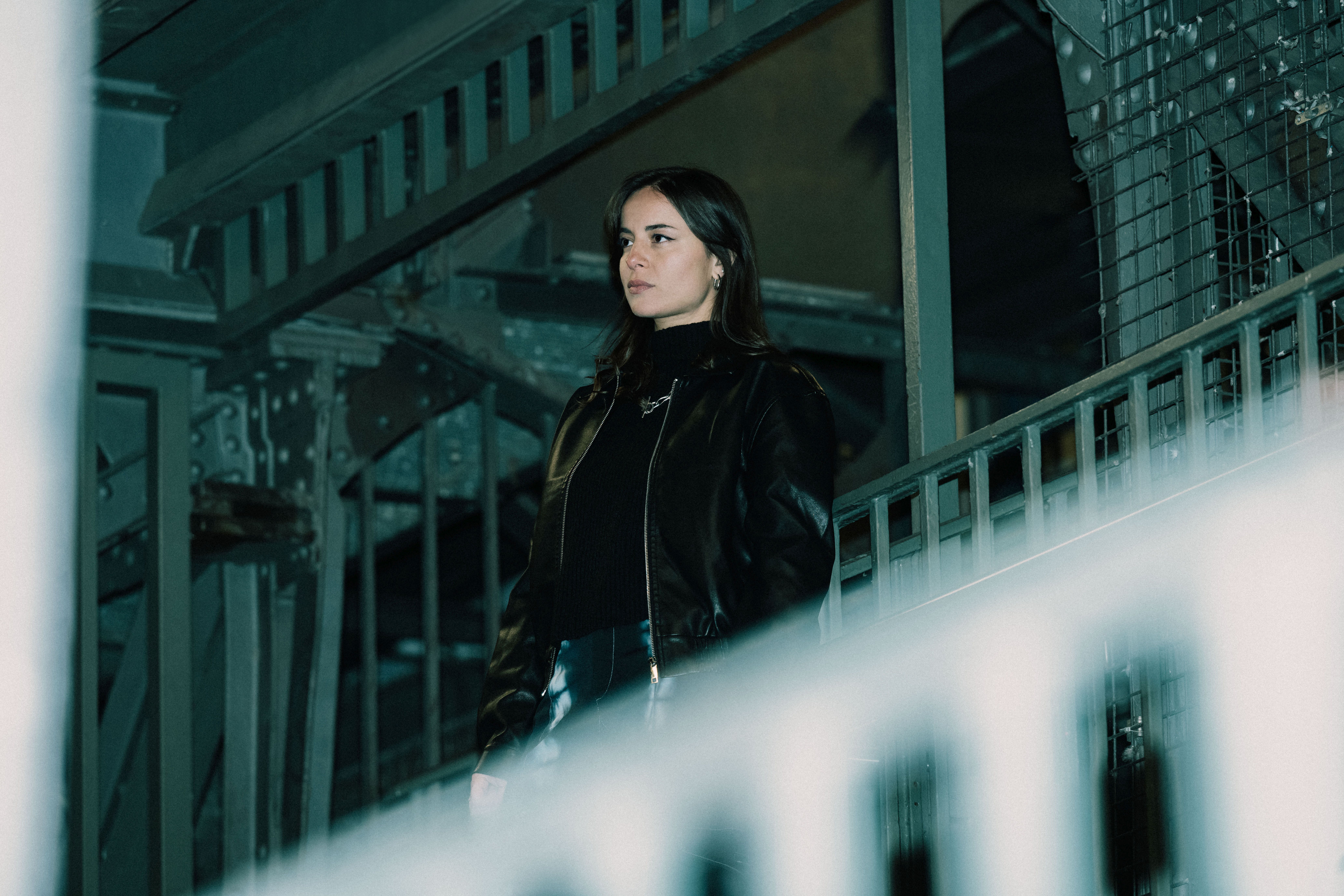
Sara Persico Interview Image by Camille Blake
What are among your favourite spaces to record and play your music?
I tend to record music primarily while travelling. Life in Berlin can sometimes be hectic, and since I’m often on the move, I’ve had to adapt to being flexible and creating music in different contexts. Over the past few years, I’ve recorded a significant amount of sound material during my travels and residencies (like the ones in Portugal, Lebanon, and Uganda).
However, it’s usually in my studio or at home where I re-work all the recorded material and ideas, shaping them into compositions.
Do music and sound feel “material” to you? Does working with sound feel like you're sculpting or shaping something?
Sound feels “material” in many ways: during live experiences, listening to music can become a physical sensation, touching and vibrating through your body. It’s surprising and almost magical how deeply this can move and shake you.
Once you start recognizing the physicality and spatiality of sound, it irreversibly transforms the way you approach making music.
Sound, song, and rhythm are all around us, from animal noises to the waves of the ocean. What, if any, are some of the most moving experiences you've had with these non-human-made sounds?
I just remembered a moment in Porto in 2022 when I was walking through a beautiful park on a hill where peacocks roamed freely.
As I got closer, one of them started shaking its feathers vigorously, and I thought, “I had no idea the mating sound of peacocks resembled the sound of leaves rustling in a forest.”
We can surround us with sound every second of the day. The great pianist Glenn Gould even considered this the ultimate delight. How do you see that yourself and what importance does silence hold?
I believe music is about timing—there’s a right moment to listen to it, and that includes silence as well.
Sometimes I find myself discovering a piece of music and getting frustrated with myself for not having known it sooner. But then I realize that if I had heard it before, I might not have appreciated it in the same way.
Seth S. Horowitz called hearing the “universal sense” and emphasised that it was more precise and faster than any of our other senses, including vision. How would our world be different if we paid less attention to looks and listened more instead?
I’m not really sure. The visual world is so captivating and often weaponized.
It would definitely be interesting to live in a world where we gave more attention to sound, covering our eyes and letting our ears guide us for a while. It almost sounds like a science fiction movie, though.