Published
Name: schntzl
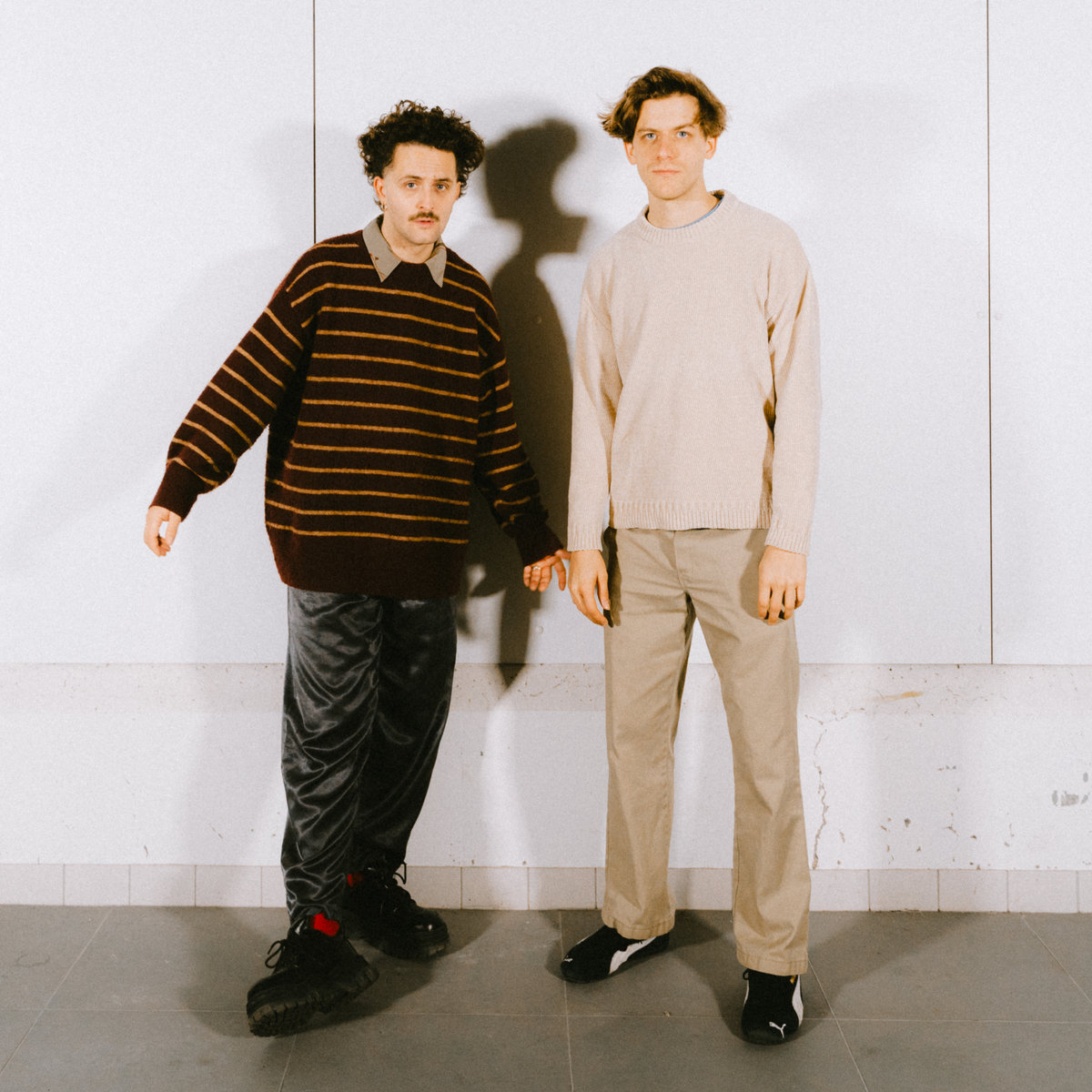
Members: Hendrik Lasure (piano, electronica), Casper Van De Velde (drums, electronica)
Interviewee: Casper Van De Velde
Nationality: Belgian
Current Release: schntzl's new single “Magicland” is out via VIERNULVIER.
Recommendation for Brussels, Belgium: Kiosk Radio in Parc Royal.
If you enjoyed this schntzl interview and would like to stay up to date with the duo and their music, visit their official homepage. They are also on Instagram, bandcamp, and facebook.
What were some of the musical experiences which planted a seed for your interest in jazz?
I had two teachers in the music school who introduced me to jazz-ish music. We played songs by Magic Malik, Dave Holland and such in the combos.
My father had a lot of records of Jimi Hendrix and The Doors. From there, we started listening to Miles Davis, Art Blakey and so on.
What does the term jazz mean today, would you say?
I feel like there are two ways of interpreting that word.
One is the historical one, which refers to a music style and culture from the 20th century. The other one is how we reuse that term to describe music that has a sense of improvisation in one way or another.
In that sense it's a very broad term and I’m not sure if it will or should survive.
As of today, what kind of materials, ideas, and technologies are particularly stimulating for you?
Lately I’ve been particularly interested in loops. A loop can be so strong. Repetition is what can give meaning to something, a simple phrase, and in that sense can be a very accessible way to step in an improvisation for example.
I’ve made a duo record with Pierre Bastien, and he uses loops by sculpting mechanical robotic instruments, that play loops by movement. That was very inspiring for me.
Where do most of your inspirations to create come from – rather from internal impulses or external ones? Which current social / political / ecological or other developments make you feel like you need to respond as an artist?
I feel like what drives me most is an inner urge to create that can get activated by lots of things.
I’m not sure if the music I make is a direct response to specific developments, but an underlying stream of why I love to improvise is because it brings your attention to the current moment. It’s a mindful thing.
Mindfulness is something we can all benefit from nowadays, so perhaps unconciously that’s what I’m trying to communicate to people.
Tell me a bit about the sounds & creative directions, artists & communities, as well as the colleagues & creative hotspots of your current hometown, please. How do they influence your music?
There is currently so much going on in Brussels on a creative and social level, that’s immensely inspiring. There are communities of performers, activists, filmmakers, poledancers, improvisers, DJs, ... and people who experiment in different fields.
A couple of years ago I started going to some punk concerts at Chaff of Cafe Central and to improvised concerts at squats or small bars like Cobra Jaune.
This combination made me want to form a group where I could combine the intense energy of punk, hardcore and gabber, with free impro. So I formed my band Croptopcore, and that is exactly what we do.
There is so much to go see, listen, experience here, you just have to tap in. But also because there is such an abundance, it can be difficult to stay mindful and find rest.
What role do electronic tools and instruments play for your creative process?
On our latest schntzl record Holiday, I experimented with robotic percussion beaters and midi controllers. But after the recording I lost my interest in them.
I love electronic sounds, but the computer can be such an overwhelming instrument if you don’t have a clear idea of what you want to express. That’s why I choose not to use the laptop on stage as a matter of principle, to stay connected to the sound and not lose myself in the screen.
This restriction forces me to be creative with other tools, and so I recently discovered the CDJ. I’m not a DJ but I love loops and so I use that instrument for that purpose.
Thanks to technological advances, collaboration has become a lot easier. What have been some of the most fruitful collaborations for you recently and what approaches to and modes of collaboration currently seem best to you?
Last year we worked together with Carl Stone for a concert in Bozar in Brussels. We’re big fans of his music, especially his later albums like Stolen Car, but also his early sampling music.
We reached out to him with the question of remixing an acoustic album of ours, our EP from 2022 called ‘Amsterdam!’. He didn’t have time at that moment but liked our music, so we stayed in contact.
When we were in Japan for a tour in 2024 we met up in Tokyo and started talking about the idea of doing a live remix concert. Bozar was willing to support this and so this happened last November.
I feel like collaborations like this are meaningful because they exist in the physical world. If something only happens through online communication, like passing recordings back and forth, some significant interaction gets lost.
[Read our Carl Stone interview]
[Read our conversation with Carl Stone about Production, Technology, and Creativity]
Jazz has always had an interesting relationship between honouring its roots and exploring the unknown. What does the balance between these two poles look like in your music?
We have a very progressive approach toward our own music, and very often we’ve put exploration before anything else.
As we’re becoming more mature, I think we’re valuing the power of playing something that is also somehow recognizable to people, something to hold on to, some reference to what people might know.
It’s way stronger if you can introduce new ideas to people when you actually have their attention.
How much potential for something “new” is there still in jazz? What could this “new” look like?
There is always potential for something new, I think that is the core of jazz.
People get excited from hearing something fresh and unexpected, which can be found in small things. As long as musicians keep on mixing styles, and instruments, there will be “new” music.
For many artists, life-changing musical experiences take place live. How do you see that yourself?
I’ve always learned so much from playing on stage.
It’s where you take risks that you have to bring to a successful conclusion, because there is someone listening. It’s from those risks that you learn something new, a new path in your playing which can broaden your vocabulary.
How, would you say are your live performances and your recording projects connected at the moment? How do they mutually influence and feed off each other?
Personally I’ve always favoured playing live over recording. It’s a zone where there can be a lot of danger and excitement - but is also forgiving. Recording music crystalizes those moments, which can sometimes feel untrue. Like a photograph.
In our latest process of recording with schntzl we took way more time to record, spread our across several months. This way it feels more like sculpting and daring to look in the mirror, analysing what you made and being critical about it.
It drifts further away from a live experience, but that makes it interesting.
Ímprovisation is obviously an essential element of jazz, but I would assume that just like composition, it is transforming. How do you feel has the role of improvisation changed in jazz?
I don’t really know how improvisation in general is changing.
I think improvisation has always been key to many styles of music, tribal or classical. You bring to the table whatever lives inside you at that moment, either supported by a very broad background of musical theory or history or not, and confront this with whoever you’re playing with.
The more music you know, form noise to sound to scales, genres, the more vocabulary you have to express yourself, and by doing so influence other people. Like this, music and improvisation can be an everchanging language.
What, would you say, are the key ideas behind your approach to improvisation?
My approach often just consists of stepping into the circle by doing something that comes from me, my language, and then seeing how that affects the rest. How it counteracts, flows, morphs.
That gives fireworks to the brain, to feel how different ideas influence each other and can co-exist in the improvisation.
Are there approaches, artists, festivals, labels, spaces or anyone/-thing else out there who you feel deserve a shout out for taking jazz into the future?
I think it’s just anyone who is involved in making music happen in every way, is what is taking jazz and music into the future.
The big people, big labels, big festivals of course, but especially everyone that is acting in all the different layers underneath, taking risks to make a vivid underground scene.
The Montreux Festival intends to preserve its archive of recordings for future generations. Do you personally feels it's important that everything should remain available forever - or is there something to be said for letting beautiful moments pass and linger in the memories of those that experienced them?
Thinking about the mountain of data is so overwhelming sometimes that it can be freezing: Why add more to that already enormous pile of music?
It wouldn’t hurt me tremendously as a musician if the live aspect of music would grow in favour of recorded music. If people had to experience music together by going out. But having said that, I also love to listen to a record all by myself and really feel it or putting some music on to set the mood.
It's no black or white thing and there will be people who are very passionate about history and preserving and people who want to experience musical moments and people where all of those things live at the same time.