Published
Name: Scratch Massive
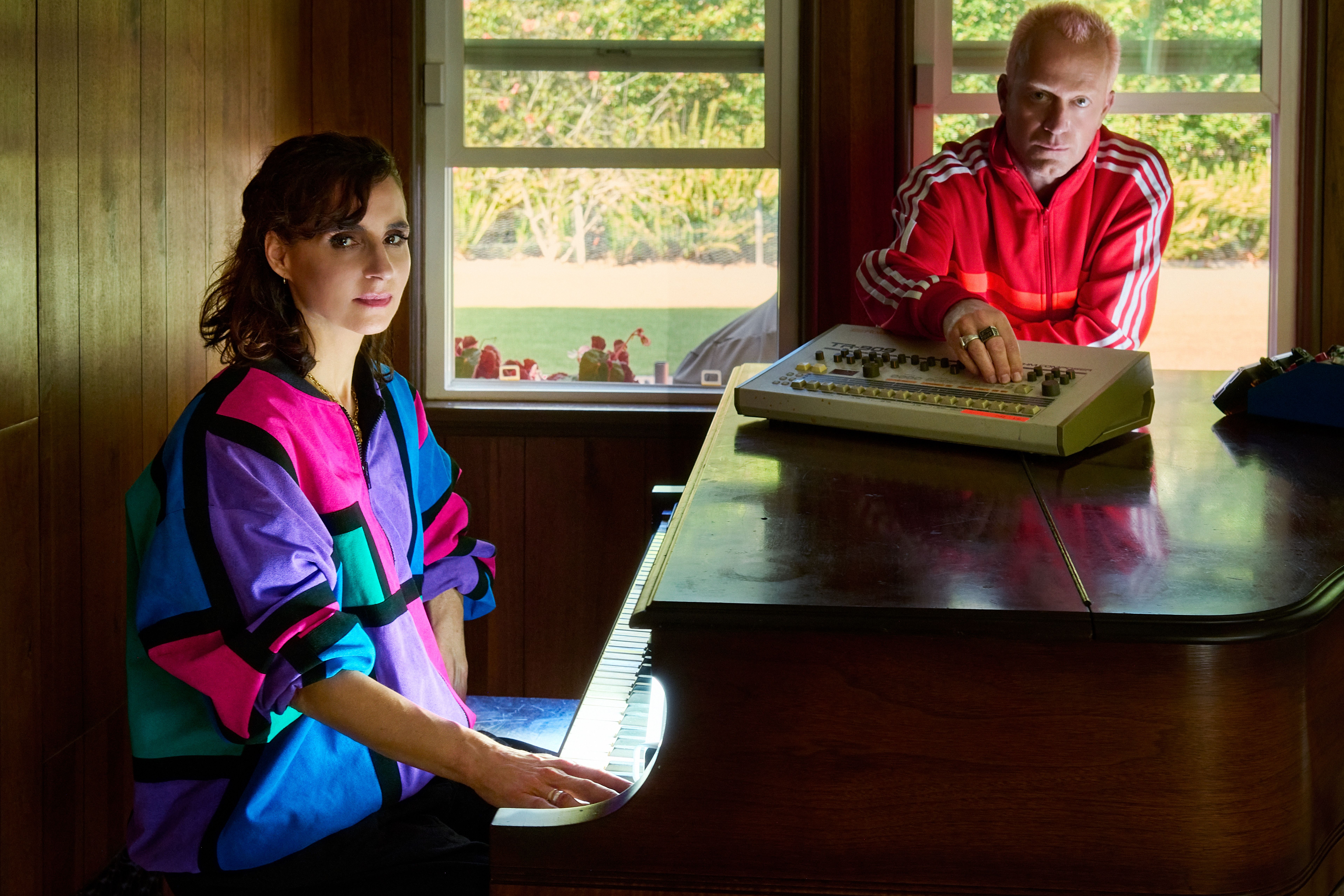
Members: Maud Geffray, Sébastien Chenut
Nationality: French
Occupation: Producers, composers
Current release: Scratch Massive's "You Can't Hide (Carl Finlow Remix)" is our via bORDEL.
Global Recommendations: We are living between Los Angeles and Paris. I will say for LA, its all the vintage stores for clothing and vintage gear / synths stores. For Paris, it’s art, the museums and galleries, the nightlife which is very attractive and full of excitement.
If you enjoyed this Scratch Massive interview and would like to find out more about their music and upcoming live dates, visit them on Instagram, and Facebook.
Are there examples of minimalism in music – and outside of music - that impressed you early on?
Of course there is a lot of minimalism in music. If we think about Steve Reich, Philip Glass as the pioneers and also more recently the work of Richie Hawtin with his moniker Plastikman.
His album Consumed will stay a reference of minimal art in music.
[Read our Richie Hawtin interview]
Were you ever interested in minimalism as a style – from the Philip-Glass-variety to solo instrumental work to minimal techno? If so, tell me a bit about your interest in this.
Minimalism is a beautiful way to approach art in music. It’s very hard to have just a few elements and let them blend together without being boring.
The challenge when you are working in a minimal way is to have a very strong core that works on its own with few variations.
Many artists are becoming more minimalist in their music as the years go on, focusing on the “essence.” How is that for yourself and how would you describe your development in this regard?
Obviously when you start your first release, you are tempted to add the maximum flavour in your production, maybe for the fear of missing something or showing all the richness of your music / background.
But album after album, you start to cancel a lot of things to try to get only the essence of your sound. It’s not easy but one day you'll have a sound that people can recognize.
What were some of the starting points for your most recent release?
Our new album Nox Anima started with a few tracks based on piano, very minimalistic and then we built a story around those first tracks.
We like to process an album like a scenario in a film. We like to tell a story through the track names we offer to the audience to listen.
Thanks to sampling and digital synthesis, there are endless possibilities for sculpting the sounds and overall sound design of a piece or album. What are your considerations in this regard?
We are now in a possession of some good gear and software to do anything we want. In that way, we have become very much architects of sound.
We can shape and create dynamics. Structuring tracks with a lot of tools has made the production process so much easier.
Would you say that you approach your creative tools with a minimalist mindset? Or do you need a wide choice of instruments and tools to make music?
Through the years you sell and buy a lot gear or software. But the more years you spend creating, the more you tend to know which piece of equipment or program needs to be in your studio or not.
The less you have, the better you understand them and know how to use them at 100% of their capacity - instead of having more and using just 30% of them.
A choice has to be made for also feeling comfortable in your environment.
What were some of the most important pieces of gear or instruments for this release?
Roland Jupiter 6, Hydrasynth ASM, Perkons and LXR from Erica Synths, Analog 4 from Electron, Ableton live, Fab Filters …
French producer Guillaume Duchastel told me: “Minimalism is about more than owning fewer things. It’s about focusing on what truly matters.“ What are some of your strategies for separating what matters from that which doesn't?
It's about knowing what to use so as not to add too many channels. One good bass is better than two small bass parts added to the mix, the sound is clearer and makes for a better mix and the track becomes brighter and easier to understand.
Focus is not about piling on. It is about improving or canceling or erasing those sounds that don't have any use or are doubling something that is already there.
With so much incredible music instantly available, are you finding that you want to take it all in – or that you need to be more selective? How do you pick the music you really want to invest in?
It takes of course more time to dig with all the music that comes out every day/week. But it's exciting to see all of this music being released.
You have to find the right path all the time before getting lost, but there is a lot of help from the platforms, journalists, bloggers to help you also find directly what you need. Thanks to them :)
Would you say that minimalism extends into other parts of your life as well?
Of course it does, from your clothing, the furniture in your house. It's the same process as in the music I would say.
I remember collecting a lot of stuff in my former houses and then, after moving to some new places, putting so much stuff in the trash to keep just the necessary, the essence of what you need.