Published
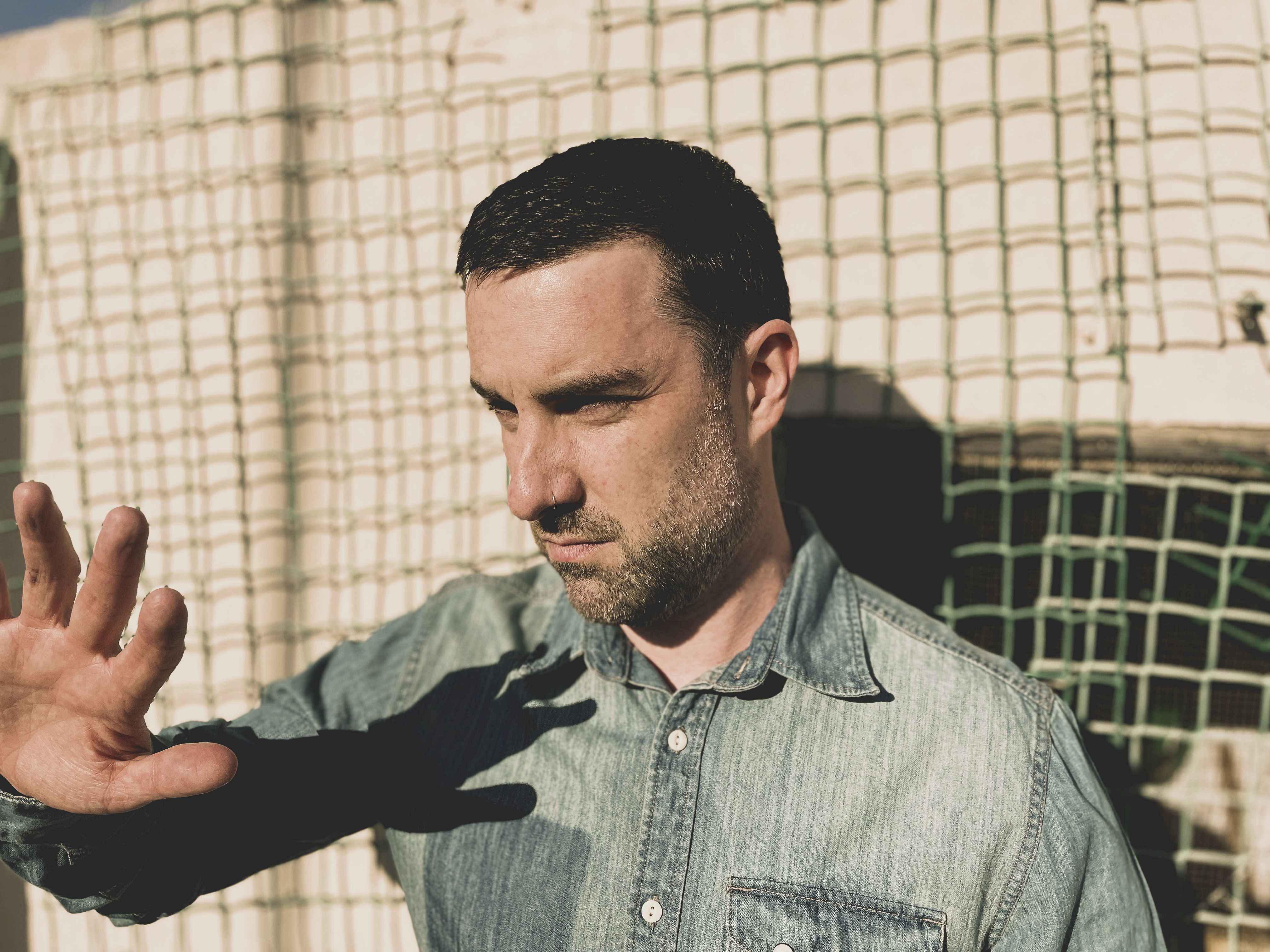
Name: Paul Rose aka Scuba
Nationality: British
Occupation: Producer, DJ, podcast host at Music Not Diving
Current release: Scuba's new EP "Archives | Meteors" is out September 26th 2025 via Last Sasha's Last Night on Earth imprint.
[Read our Sasha interview]
If you enjoyed this Scuba interview and would like to stay up to date with his music, visit his official homepage. He is also on Instagram, Facebook, and Soundcloud.
In an interview from around 2021, talking about the state of dance music, you said that, “periods of great adversity are known to yield great creativity, so we might be entering a golden age.” Personally, I'm still waiting for that golden age. What's your own take on the development of dance music since then?
I think it’s probably fair to say that if a golden era of creativity was ushered in during the pandemic, it didn’t happen in music.
Unless you consider recycled UK garage and sped-up tech-house masquerading as techno be to evidence of high-level creativity of course!
In that same interview, you said that dance music hadn't “gone anywhere in 10 years.” I completely agree, even taking into account the countless great releases that have undeniably come out. Do you have any thoughts on the reasons for this?
There must be a ton of contributing factors here. But I suspect that a very big one is the decline of individual local scenes which have space to experiment in small clubs and venues without the pressure of selling advance tickets.
It’s fine having something develop online, and that side of things was crucial for example in the development of dubstep in the mid 2000s. But if you don’t have an IRL version of the scene too, which happens regularly and which gives physicality to the music then it’s going to be difficult for really interesting things to happen.
Another big one is that more promoters are booking up and coming DJs on the basis of their social media numbers or their marketability rather than the music they are making. There is very little incentive for new artists to concentrate on really pushing the envelope musically right now, and that’s very visible in how boring most of the music is.
Almost no-one has broken though since the pandemic who is genuinely new (or no-one good anyway!), even people like Sammy Virji and Salute were releasing tracks well before 2020.
I believe you once singled out 1994 as the single best year ever for electronic (dance) music. What made that year great from your point of view, compared to, say, 2024?
I think maybe I said that was the peak of innovation, as in the frenzy of tons of new things happening at once. In the ten years leading up to that there was just a ridiculous amount of development happening simultaneously, and after 94 most of the activity was about refining things which had already emerged.
My actual favourite period of music is probably a bit later than that but looking back that seems to be the point at which consolidation began to set in.
Not to say that was the end of innovation though. Of course plenty of new things happened after that but the pace began to slow down.
What are examples for artists, performances, and releases that really inspired you recently and possibly gave you the feeling of having experienced something fresh and new?
I came up in the early Dubstep scene and that was unlike anything else I’ve experienced since, in terms of the variety and level of inventiveness that was going on. So I’m thinking of watching one of Shackleton’s very early live sets, or listening to Skream’s 2005 promo mix on the bus, or Mala’s very early DJ sets at DMZ ... that sort of stuff is tough to beat.
Earlier on, when I was just getting into electronic music, I always reference watching Orbital at Glastonbury as a 15 year old. And more recently Donato Dozzy sets and Atom & Tobias live at Labyrinth in Japan.
And actually another set at Labyrinth a few years earlier was Function at the peak of the whole Sandwell District thing. And of course Andy C back in the 96-98 period!
[Read our Orbital interview]
[Read our Atom TM interview]
[Read our .tobias interview]
Sometimes, the term “Retromania” has been used to describe the development of music after the past-paced and “futuremanic” 90s. My impression is that it's more complicated than that. How do you see the relationship between the past and the present in electronic music today?
I think that’s a reasonable way of characterising the last fifteen years or so. My explanation for that is the above point about local scenes, but also the way music tech has developed in that period.
Since the early 2000s, most of the development in that area has been focused on making it easier to recreate sounds that someone else has already made, and easier to put them together into a finished track. Almost nothing has happened in the development of NEW sounds.
This is most obvious in the continued dominance of the 808 kick, and how it completely took over a previously highly creative genre of music in hip hop. But it’s also absolutely plain to see in how house and techno has developed.
Almost every step forward in tech has been a tool to cut out some previously tricky corner which in the past served as a way of making producers think, or to weed out the ones that were incapable of that thought. The result of that is a ton of terrible music, and the ‘democratisation’ of music distribution has led to a lot of that music being released into the world when it should’ve been instantly deleted.
Tech has been very bad for music, in other words. Or music as a whole anyway – of course there is great music still being made and released in isolation, but the ratio of good to bad has declined precipitously.
You've worked as a DJ for what I think are now two decades. Would you say your own view of your role as a DJ has significantly changed? What sets a great DJ apart from the fold would you say?
When I moved on from dubstep and widened out what I was playing, which was around 2010, the major lesson I learned was that the real skill in DJing is getting people to dance to music they think they don’t like. If you can do that consistently then you’re very good.
Most DJs today don’t even try to do that.
I recently spoke to several Twitch DJs who all loved the platform as a liberation from the more restricted club experience. Does this form of re-imagining DJing interest you in any way?
It actually does, and I interviewed El Hornet from Pendulum on my podcast recently who is a big Twitch streamer.
Ultimately I don’t have the bandwidth for it right now though. The weekly podcast is enough!
There is more music out there which could potentially go into a club set than ever. Has that made digging for new music harder or easier from your point of view?
There is an enormous amount of DJ-tool type stuff which works fine in a club and you can build into a good set, no problem. But there is far less, proportionately anyway, that really makes you sit up and take notice.
For the reasons already stated. And yes of course this makes digging more difficult.
When digging, what are you looking for? Is the process all about taste for you, or is it about “going beyond taste?”
When picking tunes for my DJ set there’s a technical barrier – so the track has to sound good enough in terms of the mix etc, otherwise it’ll fall flat – and then there’s the question of where it’ll fit in the set overall.
So having some pretty boring DJ tools is fine, even necessary. But of course you need the WTF moments too.
I just play what I like though really, and the tunes that I think will combine into something that’s hopefully more than the sum of the parts.
Potentially, each DJ set could be different today. This of course also means less tracks are going to get repeat plays, arguably reducing the potential for big, universal anthems that everyone will recognise and celebrate. How does this change the club experience?
This is definitely true and an interesting one as, on paper, you could quite easily make the argument that it’s a good thing.
But in practice it means that to get that moment on the floor where everyone knows the track you have to play something really really obvious, and I think this has fuelled the pop edits culture which has gone way too far in my opinion.
It’s never ok to play the Spice Girls, sorry.
There have been various concepts of expanding the club experience, including moving/vibrating floors, surround sound set-ups, Silent Clubbing, “DJing in parts,” adding visual projections and light shows etc. Which of these offer creative potential, would you say?
All of these ideas (apart from silent clubbing) just sound like a distraction from the music to me.
People need to get comfortable with dancing to very loud music in a dark room with a low ceiling again. That’s what the music is for, ultimately. Or the good music anyway.
Did you see a show or concept where you thought, this could be a gamechanger or something really different that I also want to try out?
Honestly – no.
I saw your DU2 performance which I thought offered a great expansion/re-envisioning of the album outside of a DJ set or improvised live gig. What's your evaluation of this approach with a little more experience and what are your current plans for performing live?
That was the first live thing I’ve done since the big installation shows back in 2012/13. And I enjoyed it a lot actually, and way more than those big shows that had to be programmed pretty carefully due to all the visual production.
We are working on something for next year that will build on that a bit …
Is the future of performance in events where people are so thrilled that they put down their phones or is the future of performance in events where you engage people by allowing them to make use of their phones?
I hope we can get back to a healthier ecosystem of small clubs, in which phones aren’t encouraged.
But large events where there visual side is the main focus? People are always going to want to film that stuff, or get involved somehow. No-one has really nailed audience participation in that kind of show, and maybe it’s just not possibe.
Personally I’d rather just watch and listen.