Published
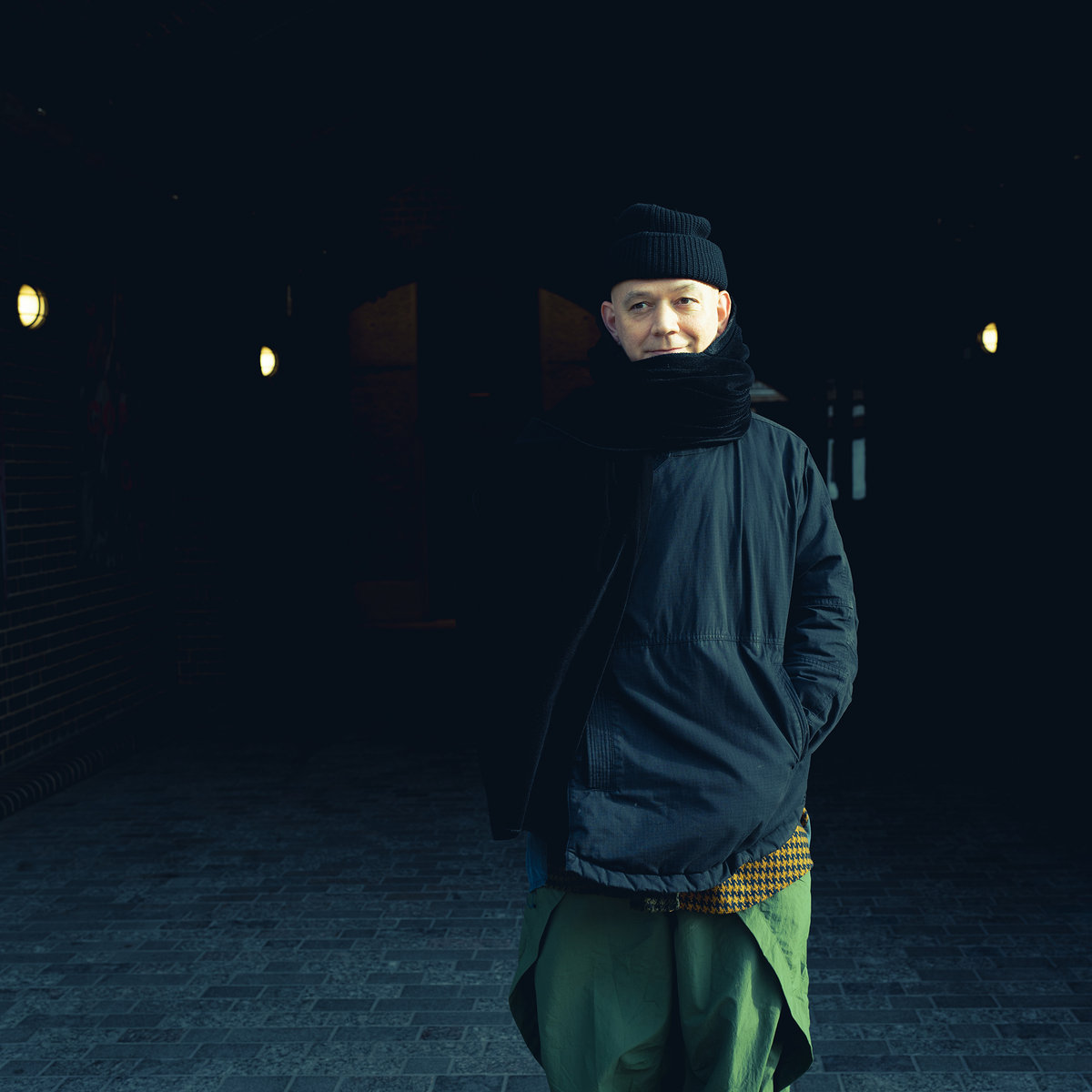
Name: Sebastian Rochford
Nationality: British
Occupation: Drummer, percussionist, composer, improviser
Current release: Sebastian Rochford's new album Finding Ways is out November 7th 2025 via Edition. Next to Sebastian on drums, it features contributions by Anders Christensen (bass), Ruth Goller (bass), Tara Cunningham (guitar 1-8), David Preston (guitar), Simon Tong (guitar), Leo Abrahams (guitar), Matt Hurley (guitar), Adrian Utley (guitar), John Parish (guitar/lap steel), and Seye Adelekan (acoustic guitar).
Solo Drumming Record Recommendations: I think my favourite drummer for solo work has to be Milford Graves, but most of all, I listen to tabla players like Ustad Ahmedjian Thiraka, Pandit Swapan Chaudhuri, Ustad Allah Rakha, Ustad Zakir Hussain and Sukhvinder Singh, who I also adore his Jori playing.
Recommendation for London, UK: I love walking for hours in London and would also recommend going to more local neighbourhoods/communities out of the centre, which there are so many of, so much delicious food to try and friendly, heartfelt people.
If you enjoyed this Sebastian Rochford interview and would like to stay up to date with his music, visit his official homepage. He is also on Instagram.
It seems as though most aspiring artists are drawn to the drums and percussion for one of two reasons: Creating sound/noise and creating rhythm. What captivated you?
To be honest I don’t know.
I feel like I can’t remember not wanting to play drums, like it was there from the start.
When I listen to music, I see shapes, objects and colours. Others experience emotions. Everything around drums, on the other hand, is based on touch, vibration, and movement. Does this mean that your own perception as a listener is also more connected to touch, vibration, and movement? What happens in your body when you're listening?
I very much hear melody in drums/percussion and this really affects how I play and listen to music.
For me, all music and instruments are essentially arranged frequencies / vibrations, and as drums and cymbals also have this, I can experience colours, shapes and emotions from them. The tuning and pitches of my drums and cymbals are very important in how I connect to and perceive the music. I definitely feel like a sensual person, so that is a part of my music making and playing.
When I was sixteen, I was taken to my mother’s country of India for two months. While I was there, my parents used to take me to a village and leave me with a tabla teacher, as they thought it would expand my perception of music and I guess also introduce me more directly to the culture of her home. I have listened to classical Indian music ever since.
This experience I think really changed my idea of the drums, also for their melodic qualities in the music, as tabla are tuned to the key and have specific compositions. My mother passed under two years later, so tabla also contains a deep sense of comfort and emotion for me.
What was your first drum set like and what are you using today? What, to you personally, are factors in terms of build and design that you appreciate in drums and percussion instruments?
My first drum kit was an old Premier, that you could only have one choice of skin, that was thin and tinny and I didn’t have the possibility of a bottom skin. It sounded so opposite to the music and drums I was listening to, but I was so grateful to my parents for this gift that I had waited years for and it filled my heart playing it.
In terms of design, I often get sounds in my head that I can't find and am so grateful and privileged that my favourite cymbal company Bosphorus make custom cymbals for me.
Late Rush-drummer Neil Peart said: “The equipment is not an influence. It doesn't affect the way I play. It's an expression of the way I play.” What's your take on that?
I have a huge respect for Neil Peart, but I think I feel the opposite of that.
I feel like I listen to how the kit sounds, try to work out how I can tune and play it, to make it sound emotionally how I want it to sound. For me, each kit is a different conversation and responds differently to different touches and dynamics.
I do also think though, that you can make pretty much any kit sound good by tuning and touch.
The drums and percussive instruments are an integral part of many cultures, and traditions. Which of these do you draw from in your playing – and why?
I’m definitely like many others influenced by other cultures in my playing, also from playing with musicians from different places.
Playing with Rokia Traore on her own music and traditional Malian music was such a deep experience for me. I could see a lot of connections between traditional West African music and musics like jazz, blues, RnB and hip hop, I also felt like a beginner and I loved that.
Now I feel the rhythms I learnt and was inspired to play with her are a part of me and my playing.
The same with playing alot with musicians from Caribbean heritage and Brazilian musicians here in London.
As someone who has dual heritage, London has been a beautiful place for me in this way.
What were some of the main challenges in your development as a drummer / percussionist? Which practices, exercises, or experiences were most helpful in reaching your goals?
I think going from playing hardcore/grindcore/death metal to jazz was quite an extreme change in some ways, going from loud, bass drum heavy playing to much quieter, less constant bass drum patterns, where the ride cymbal is driving the music.
I had heard jazz from childhood and my mum encouraged me to do focused listening on it, asking me questions, also telling me to go and listen on my own, then come and sit with her and tell her my thoughts and feelings about it. So, I feel like I knew the music, but playing it was something else. A whole other technique and invented by pioneering genius and masters of their instrument.
I definitely stand behind practising slowly, as slow as you can and then a bit more.
What is the relationship between harmony, rhythm and melody? How do non-percussion instruments contribute to the overall rhythmic texture of a piece?
I think I don’t split things like this.
Everything has a melody and rhythm and can suggest harmony. Like a beat with hi-hat, snare drum and bass drum can be a kind of arpeggio, add another element while taking another way, can shift that arpeggio. So, “non-percussion” instruments can also be percussive.
When I’m playing, what another instrument is playing affects what I play, because we are both contributing to the whole. So I think it’s fun to play with that, leaving stuff out because another instrument has that covered, having a dialogue with it.
Do you feel that honing your compositional / songwriting skills has an effect on your drumming skills?
Yes I feel everything as a part of the whole and when I play drums, I’m always thinking compositionally.
How are you making use of the timbral and textural potentials/possibilities of your drums and percussion instruments when making music?
I think a lot about this.
When I’m making my own music, I sometimes take a year thinking about how the sonic and colour of the drums fits into the music, to intensify the emotional intention of what it is I’m trying to express.
I think about the same things, when I’m playing on other’s people music. I aim to make each thing I do personal and present.
How has technology, such as drum machines and sequencers, impacted the way rhythm is created and perceived? Has it been a concrete influence on your own approach?
Yes this has been a big part of my inspiration in playing the drums pretty much since I started to play. Beats that are made electronically often have a different flow and movement to them, that can be challenging and inspiring to play, as it opens you up.
I like super modern sounds, but also like earthy raw ancient acoustic sounds. Sometimes the influence of modern digitally made music, makes me use more ancient sounds in harmony, make my kit a collection of different sounds, facilitating frequencies, but changing the palate.
Physical strain is a particularly serious issue for many drummers. How does it manifest itself, how do you deal with it and in how far does it affect your creativity?
For me, it’s really important to keep practising rudiments regularly, but also finding new ways of interpreting/improvising with them, and using the rudiments to facilitate my improvising.
I also think, when playing any instrument, being relaxed helps technique.
Many recording engineers have remarked that the drums can be particularly hard to capture. What makes drums sound great on record and in a live setting?
Oh, to be honest I haven’t heard that. What I have heard from engineers is that, if a kit is tuned nice and the drummer’s internal balance, dynamic and groove is good, then it’s easy. That it’s the drummer that makes them sound great.
I spoke once to someone who recorded John Bonham, and they told me that the great sound was just capturing what he actually sounded like. There are many ways of micing a kit that I love, but I also really like minimal micing.
One pop record I played on, they ended up using a recording I had made, where I just put one $100 ribbon mic over the top of my drums.