Published
Name: Damien Lecoq aka Serguei Spoutnik
Nationality: French
Occupation: Producer, songwriter, vocalist
Current Release: Serguei Spoutnik's new album TRANSCEND is out now.
Local Recommendations: I divide my time between Le Mans and Rennes in France. In Rennes, there is a residential building called Les Horizons that I find fascinating. It’s this strange modernist and huge structure that almost feels like a science-fiction object emerging from the city.
Things I am passionate about but rarely get to talk about: I’ve always been fascinated by spying and observation systems. My first EP, Subject, Verb, Complement, was entirely built around that idea. During lockdown, I composed music using stolen images from surveillance cameras found online.
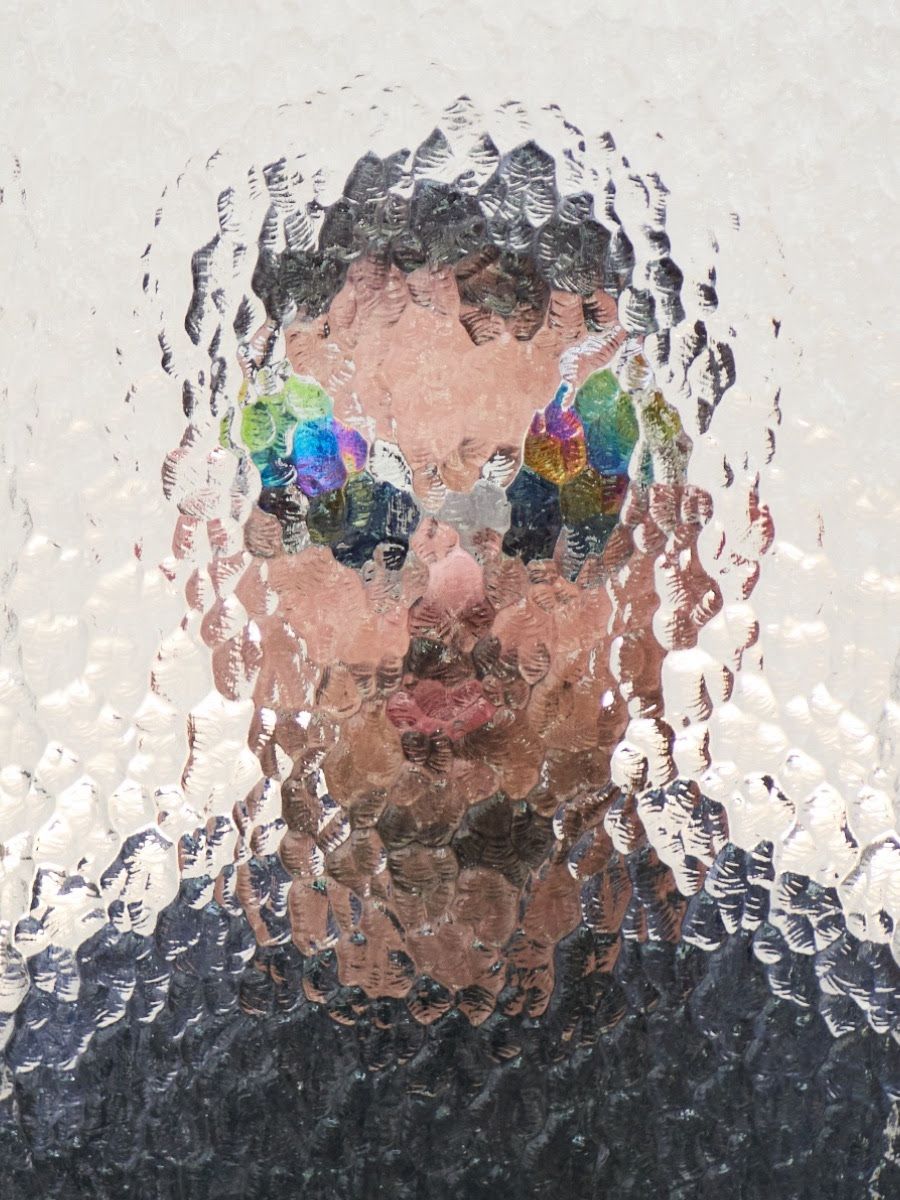
I think I’m fascinated by the strange emotional tension between intimacy and distance, between watching and being watched. Surveillance technologies are usually associated with control or coldness, but I often perceive something unexpectedly human, fragile or lonely in these fragmented images of everyday life.
If you enjoyed this Serguei Spoutnik interview and would like to know more about his music and upcoming live dates, visit his official homepage. He is also on Instagram, Facebook, and bandcamp.
When it comes to experiencing strong emotions as as a listener, which albums, performances, and artists come to mind?
I love the degraded “tape sound” aesthetic of 1991 by 1991. There’s something fragile and nostalgic in those textures, like damaged memories or distant transmissions.
Artists like Jenny Hval (Blood Bitch) or Oneohtrix Point Never (R Plus Seven) affect me differently: their music can feel destabilizing in a very positive way, as if it opens new emotional or mental spaces I wasn’t expecting.
More recently, I saw a live A/V performance by EYE and C.O.L.O that created a completely different sensation: intense, immersive and almost physical, like the fun violence of a roller coaster.
I’m very drawn to works that blur the line between beauty, instability and sensory overload.
There can be many different kinds of emotions in art – soft, harsh, healing, aggressive, uplifting and many more. Which do you tend to feel drawn to most?
I’m very drawn to contrast. I love conceptual, minimal or experimental works, but I also deeply love simple and direct emotions.
Some of the music that moves me the most can be extremely accessible, almost naive emotionally, while still feeling strange or unique in its sound design.
I think I’m looking for a balance between experimentation and sincerity, between abstraction and something immediately human.
I have had a hard time explaining that listening to death metal calms me down. When you listen to a song or composition, does it tend to fill you with the same emotions – or are there “paradoxical” effects?
I think music acts like a mirror for emotions. If an emotion resonates deeply while listening to a piece of music, it probably means that this emotion already exists somewhere inside you, even if it was hidden or unconscious.
Sometimes music allows repressed emotions to surface. Other times, it creates a safe space where you can project and release darker feelings. In that sense, listening can become almost meditative.
I think you can learn a lot about yourself by paying attention to the strongest emotions that emerge while listening to music.
In as far as it plays a role for the music you like listening to or making, what role do words and the voice of a vocalist play for the transmission of emotions?
The human voice is probably the most emotional instrument to me because it’s very hard to fake sincerity through it. In a way, I think music should extract something deeply hidden inside ourselves, something honest that usually remains buried.
For a long time, my own personal truth felt difficult to access or express directly. That’s probably why I became so attached to vocoders and heavily processed vocals. Paradoxically, artificial transformation became a sincere way for me to reach something more truthful emotionally. I hope I’ll eventually be able to let go of it, but for now it still helps me give life to certain words and memories.
On TRANSCEND, I speak a lot about altered memories and hidden childhood emotions through these processed voices. Even on my first EP, Subject, Verb, Complement, this was already one of the core ideas of the project: spoken word pieces with my voice heavily lowered and transformed, almost as if I needed another vocal identity to express certain things honestly.
When it comes to experiencing emotions as as a creator, how would you describe the physical sensation of experiencing them? [Where do you feel them, do you have a visual sensation/representation, is there a sense of release or a build-up of tension etc …]
That’s a very good question. I’m an extremely sensitive person in the sense of being highly receptive, almost like a sensor, but I’m not very emotionally demonstrative. I think I’ve learned to handle the huge flows of emotions constantly moving through me.
This intensity is probably what pushes me to make art in the first place: transforming something overwhelming into something constructive instead of simply enduring it.
Writing music, building an atmosphere or a concept, thinking carefully about lyrics and sound design - all of this helps me structure emotions and sensations, to shape them into something that can exist outside of myself.
When it comes to composing / songwriting, are you finding that spontaneity and just a few takes tend to capture emotions best? Or does honing a piece bring you closer to that goal?
The emotional core of a piece often appears very quickly for me. A first take, an accidental texture or an improvised melody can already contain almost everything emotionally important.
But refining still matters a lot. I like building a whole world around these fragile initial moments so they can fully exist and become shareable.
I think the challenge is preserving the sincerity and unpredictability of spontaneity while giving it a strong enough structure to survive repetition and recording.
How much of the emotions of your own music, would you say, are already part of the composition, how much is the result of the recording process?
For me, composition and recording are deeply connected emotionally. A melody or a chord progression can already carry an emotional intention, but the recording process gives it a body, a texture, almost a memory.
I don’t really see production as something added afterwards. It’s part of the composition itself.
For TRANSCEND, what kind of emotions were you looking to get across?
With TRANSCEND, I wanted to create something emotionally direct while still keeping a sense of distance and ambiguity.
A lot of the album revolves around altered memories, hidden childhood emotions. In a way, the album became a form of technological liberation of that youth.
The vocoders and processed textures helped me express things that would probably have felt too exposed or difficult in a completely raw form. I wanted the music to feel like emotions trying to escape through transmission systems, somewhere between intimacy and artificiality.
How do you capture the emotions you want to get across in the studio?
I try to create an environment that feels disconnected from everyday life, almost outside of time. That’s why I often work through one-week residencies, where I can fully immerse myself in a specific emotional and visual atmosphere.
Then I try to trust the present moment as much as possible. When a sound, a texture or a melody suddenly appears, my instinct is not to overanalyse it but to preserve and elevate the emotion contained in that precise instant.
What role do factors like volume, effects like distortion, amplification, and production in general for in terms of creating the emotions, energies or impressions you want?
Production and sound processing are not secondary elements to me, they are part of the emotional language itself.
On TRANSCEND, I also worked with a very close friend, Apollo Noir, who has a much more developed production vocabulary than mine. Because we know each other so well emotionally and artistically, it was a total pleasure to have him almost as a studio double during the arrangement phase.
He helped elevate the sounds and emotional textures I was searching for beyond my own technical limits.
In terms of emotions, what changes when you're performing live on stage, with an audience present, compared to the recording stage?
In the studio, emotions feel very internal and controlled. You can shape tiny details endlessly and build a very intimate world.
Live performance is much more fragile and physical. The body suddenly becomes part of the music, and imperfections become visible. There’s also a form of risk that can create very intense moments emotionally.
For TRANSCEND, I also chose to integrate guitar more prominently because I knew it would help me physically inhabit and interpret the album on stage. It creates a much more direct bodily connection with the music than programming or triggering sounds alone.
How does the presence of the audience and your interaction with it change the emotional impact of the music and how would you describe the creative interaction with listeners during a gig?
During a live performance, I almost see myself as an actor serving the artistic universe of the project rather than simply expressing my own emotions directly.
At that moment, I’m the one responsible for embodying the project convincingly enough for people to trust it and let themselves enter it emotionally without resistance or fear of judgment.
What kind of feedback have you received from listeners or concert audiences in terms of the experience that your music and/or performances have had on them?
Some people mention feelings of nostalgia, dreams or strange familiarity, as if the music reconnects them with something buried or difficult to identify clearly.
I really like that idea because I don’t want the music to impose a fixed meaning.
Would you say that you prefer to stay in control to be able to shape the emotions or do you surrender to them and allow the music to take over? Who, ultimately has control during a live performance?
I actually stay very much in control during live performances. Everything is precisely structured, with fixed BPMs and a carefully built framework.
I don’t really know how to perform differently for now, because in a way, I see live performance almost like building a space where people can safely immerse themselves for a moment.
The emotions that music is able to generate can be extremely powerful. How, do you think, can artists make use of this power to bring about change in the world?
I think music can change how people emotionally inhabit the world around them.
For me, art can create invisible forms of connection between people, almost like emotional transmission systems. That idea is very present in TRANSCEND through the imagery of antennas, signals and distant communications.
But an antenna alone is useless. It only exists as part of a much larger, complex and interconnected network. My own music is only a tiny individual element within this vast network, but perhaps still essential for transmitting certain emotions from one person to another.