Published
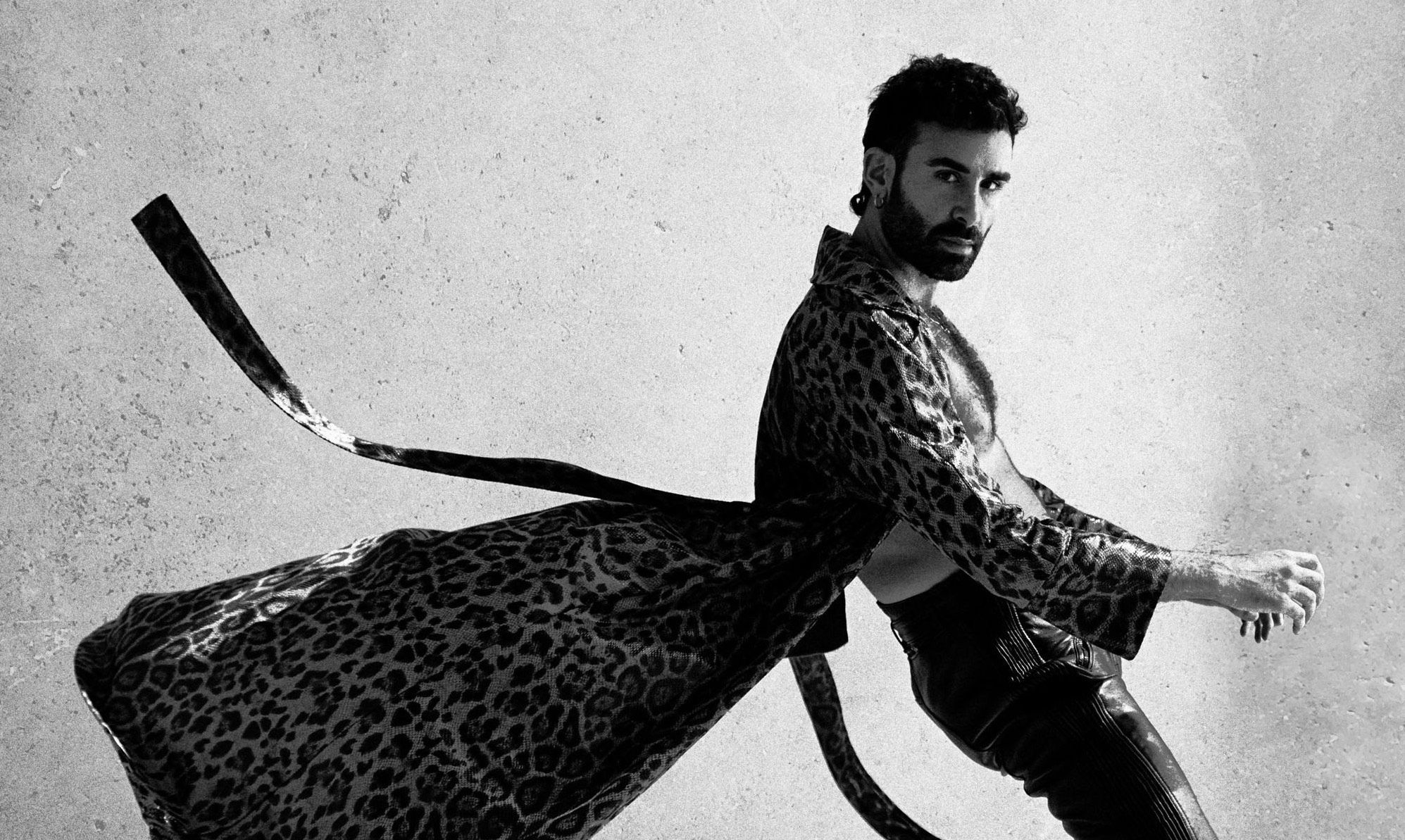
Name: Shay Shaz
Nationality: French
Occupation: DJ, producer
Current Release: Shay Shaz's new Tok Tok EP, a collaboration with COHN, is out via Butter & Wine.
If you enjoyed this Shay Shaz interview and would like to know more about his music, visit himon Instagram, Soundcloud, and bandcamp.
Do you think that some of your earliest musical experiences planted a seed for your interest in DJing? How and when did you start DJing?
I think music has driven me since I was about 3 or 4, in the early ‘90s. I was always dancing—anywhere, anytime.
From a young age, I was in theater and dance classes, and by 1998, my dad bought me my first Discman with a bunch of ‘80s music he loved. We always had vinyl at home—Depeche Mode, Pink Floyd, Queen, Madonna.
By age 12, I started discovering music on my own through the early internet era. I was clubbing and dancing as soon as I could, but I also needed money—so I got into hair and makeup, which gave me more financial freedom at the time.
But around age 25, I realized I had to go deeper. I needed to express myself as an artist. I started DJing in the most innocent way—just playing songs I loved at house parties with no mixer, dancing while people watched me.
Looking back, it’s kind of embarrassing—but also sweet. I didn’t know it yet, but I was already laying the foundation for the artist I would become: someone who lives for the dancefloor.
Today, DJs are rarely just DJs. Very often, they can be producers who are also DJs or DJs who are also producers. Where do you see yourself on this spectrum and what kind of potential issues and cross-pollinations does this create?
For me, production came first as a form of self-expression.
I started out working with a producer whose musical direction was quite different from mine, but it made me realize that I could tell full stories through a track—sometimes with lyrics, sometimes without. That’s when I understood: this is my job. To find my own sound and my own language.
When I perform, it’s never just about being a “cool” or “techy” DJ. It’s about creating an emotional journey for the crowd. Every set I play is like a story—with highs and lows, tension and release. I want people to leave feeling like they went through something with me, like we shared a real connection on the dancefloor.
Tell me about your collaboration with COHN on "Tok Tok."
We met through a mutual friend, and the moment we started talking, we felt a spark. Our musical worlds are different, but somehow they blended perfectly—his precision and deep groove met my energy and theatricality.
Working together reminded me how powerful collaboration can be when it’s built on mutual respect and excitement. This EP is just the beginning.
What were some of the most important insights you gained from teachers/tutorials, other DJs, or personal experience? What does it mean to be a “better DJ?”
I believe every DJ is different, and that’s the beauty of it.
For me, I started out as someone who was very emotional and intuitive, but not very technical. So I made it a point to learn the technical side—but even now, I’d say I’m still a DJ who leads with emotion and connection.
Reading the crowd is everything. Every city I play in, I know I need to adapt—to the time slot, the energy of the room, the people in front of me. I always check who’s playing before and after me, and try to get a sense of the crowd.
It’s never about forcing my sound; it’s about building something that feels right for that exact moment.
On the basis of one of your most recent gigs, tell me about how the preparation- and decision making process works during a gig with regards to the inclusion of key records, the next transition and where you want the set to go?
It really depends—this is actually a tough question.
For example, last June I had several gigs across Europe and my track “Freddie” had just been released. So I prepared a special version of it for two different shows, both as a way to promote the track and to open with the story I wanted to tell.
After that, I usually let the night guide me. I mark a few points in the set where I might want to play something new I’ve produced, or shift into a more sexy or groovy mood.
I’m always rotating new tunes into my sets, but I like to give myself a loose structure—beginning, middle, end—so I don’t lose the emotional arc I want to create in the moment.
How would you describe the experience of DJing, physically and mentally? Do you listen – and deejay – with your eyes open or closed?
Honestly, it’s deeply connected to the crowd—but also very much to myself.
Before every gig, I make sure to have a calm day. I eat clean, I work out, I meditate, and about two hours before I leave for the club, I listen to classical music—not club tracks. I try to give my body and mind real rest in the hours leading up to the set.
When I arrive, something shifts. I truly love the music I play, and when I get into it, it feels like I’m possessed—in the best way. I keep my eyes open, and I feed off the energy of the crowd. There’s this unspoken connection that happens 99% of the time—something electric.
But to reach that space, I need to come into it with full intention. Each gig is a ritual. It’s about preparation, openness, and total presence.
Do you engage with audiences/dancers – and how? Taking one of your online DJ mixes as an example, how does the experience and the way you deejay change when you subtract the audience?
In everything I’ve done—fashion, music, performance—I’ve always relied on feeling and imagination. I have strong dyslexia, but at the same time, I have this vivid sense of intuition and visualization.
Even when I’m alone in the studio or recording a DJ mix without a crowd, I can imagine the room, the energy, the reaction. I build the mix as if the audience is already there. And when I hit play and the moment sounds exactly like what I imagined—it’s a feeling I honestly have no words for.
That’s magic. And this is music.
How important is dancing for our wellbeing on a personal and even on a societal level?
Music is dance. It’s a language, a passion, a connection between all worlds. That’s why music exists everywhere—across cultures, across borders. No matter how much technology evolves, music is infinite.
And then dance comes in—it’s the release. It’s how the body speaks when words aren’t enough. You can feel if it’s real or not, if it’s authentic or just surface. And not every artist needs to dance—and that’s okay too. But for me, dance is where the soul shows up.