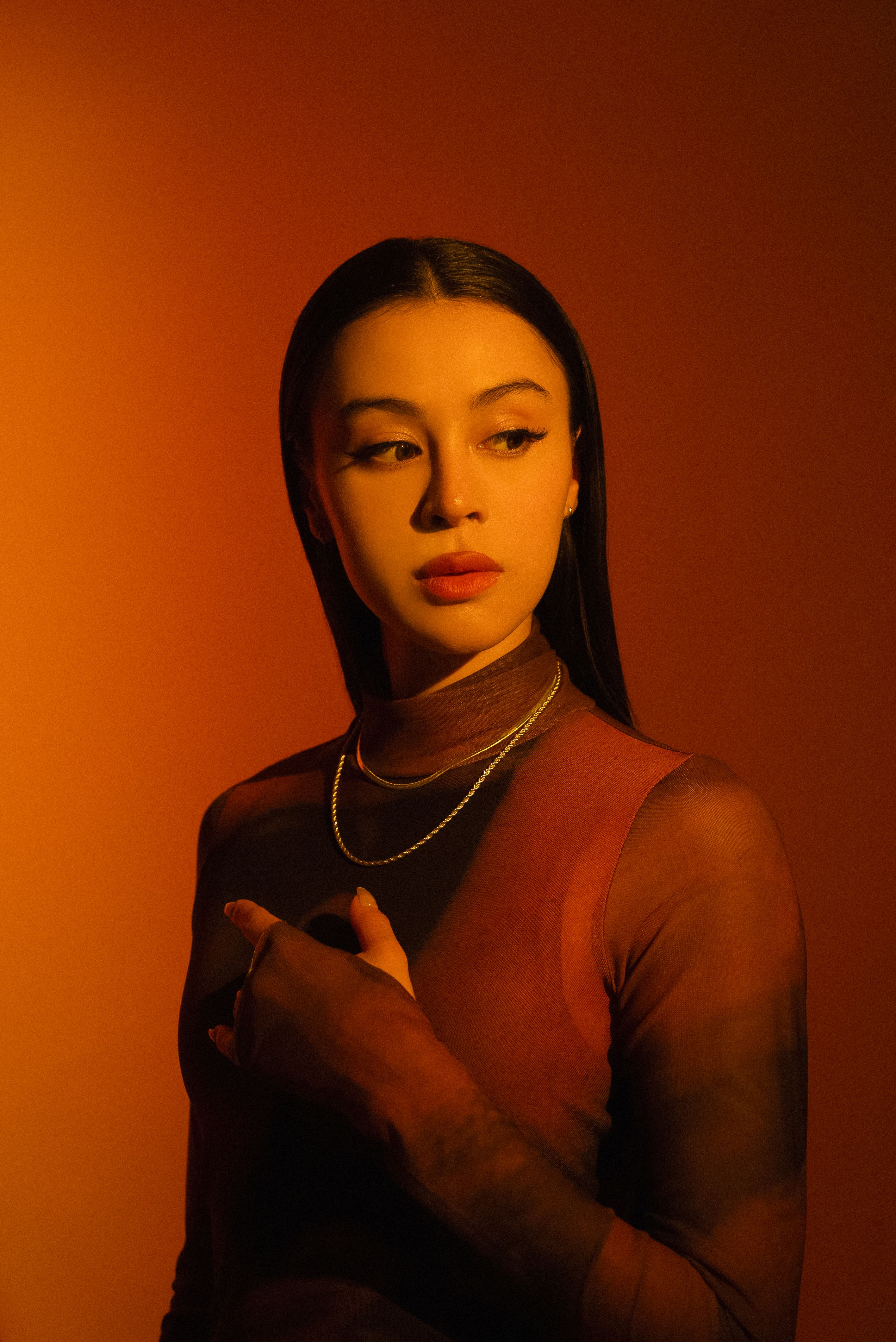
Published
Name: SHIMA
Occupation: Producer, DJ, vocalist
Nationality: Japanese
Current release: SHIMA's new album Welcome to SHIMAJIMA is out via Young Art.
Recommendations for Tokyo, Japan: I think everyone should go to Japan at least once in their lives. And if you’re there, I recommend going to Shimokitazawa if you’re into crate digging because they have a lot of old record shops.
Topic I am passionate about but rarely get to talk about: I’m very passionate about geopolitics and it’s something I’ve never been able to publicly talk about because of, as I'll mention in this interview, previous labels and managers prohibiting me from doing so. But I’ve decided to grow a backbone and stop limiting myself so much, because the stakes of everybody staying silent and pretending like certain things aren’t happening in the world are becoming increasingly higher and difficult to ignore. And maybe other artists & musicians will feel inspired to use their platforms in this way as well.
If you enjoyed this SHIMA interview and would like to know more about her music, visit her on Instagram, and Soundcloud.
The path to becoming a producer is a process - but from many interviews, I am under the impression that there are nonetheless one or a few defining moments. If this was the case for you – what were they and why were they so incisive?
I grew up playing piano and singing, so music was always a part of my life since early childhood. But the moment I decided to make my first beat was my sophomore year of high school.
I was on either a bus or a train (I can’t remember) listening to J Dilla, and for the first time I decided to pay really close attention to the drum pattern. Then on my walk home, I started to get an idea for my own little drum beat. I opened up GarageBand on my computer for the first time as soon as I got home and an hour or so later I made my first beat.
The next day I showed it to one of my friends at school and he told me “dude … you could become a beat producer.”
Tell me about one or two of your early pieces that you're still proud of (or satisfied with) in terms of production – and why you're content with them.
That first track I just mentioned is definitely up there. It’s still on SoundCloud from way back when.
I didn’t realize it at the time but in retrospect, I gotta say I think it’s a pretty good beat for someone’s first ever.
In how far, would you say, was your evolution as an artist connected to the evolution of your music set-up and studio? Were there shared stepping stones?
10 years into producing and I still have a very, very, minimal set-up. It hasn’t really updated since I first set up my home studio years ago.
I think the only recent “upgrade” that’s heavily impacted my workflow is switching from the old Intel Mac to the new M series mac. All of my vocals pre-M3 have a computer fan noise in the background.
I also like to have a million tracks and plugins running at the same time since I hate commitment and do not like to freeze & flatten just to save CPU.
There are artists who can realise their ideas best with a traditional – or modified – piano interface, others with a keyboard and a mouse, yet others by turning knobs or touching screens. What's your preferred and most intuitive/natural way of making music and why?
I have my Ableton Push and a basic MIDI keyboard at home. But since I started going on tour and travelling a lot, I got used to just producing on my laptop with headphones.
Tell me about the space of your current studio/workplace and how you've set it up to optimise creativity.
I actually put a lot of thought into decorating & furnishing my workspace so that it feels as warm, inviting & relaxing as possible.
I have the De-Fi platform desk in the natural wood color which I absolutely love, so I matched the rest of my room to also have a lot of natural wood and Japandi style decor.
From the earliest sketches to the finished piece, tell me about the production process for Welcome to SHIMAJIMA, please.
Welcome to SHIMAJIMA is the first project I’ve ever made where I was not being encouraged by some label or manager to make vocal-led pop music.
Though I started off my career as a singer, I’ve always felt like more of a producer than a singer/songwriter. So the early stages were really just getting to dive into dance music and really explore all the different production styles and techniques out there, as someone transitioning from pop to EDM since the production styles are so different.
I basically discovered my identity and my “sound” through making this album, and the growth between my first handful of demos starting this album 2 years ago and the final finished tracks is insane.
Late producer SOPHIE said: “You have the possibility with electronic music to generate any texture, and any sound. So why would any musician want to limit themselves?” What's your take on that?
I completely agree. Sound design is actually my favorite part of the production process for this exact reason.
And also why I always enjoyed production more than singing – chopping up and manipulating my vocals in crazy ways was always so much more fun to me than recording them.
Tell me about your aesthetic preferences for picking effects like reverb, delay, compression, chorus etc … - what was the role of these effects in the production of your current release?
Aesthetic preference as in like the GUI? If so, I have never once thought about that to be honest.
I actually used to make plug-ins for my job, so I know that a good looking GUI doesn’t mean anything in terms of the actual quality of a plug-in or software.
Producers work with sound in a very direct way for very long stretches of time. What are some of its qualities that you appreciate now more than before, and how do you try to bring these to the fore in your work?
Since I made the switch from pop to EDM, I now put a lot more care into mixing than I did before.
The reason being that pop is mostly consumed on consumer devices like airpods and little bluetooth speakers, whereas dance music is mostly heard on massive festival speakers.
The current production process allows for fast and infinite variations. Can you tell me about how you deal with this potential for the infinite and what ultimately decides on how many iterations to create and which version to release?
My project folders all have filenames like “final”, “final_2”, “final_2 (better kick)”, “actual_final” “REAL_actual_final”. It’s bad.
So actually, if someone would like to tell me how to deal with this, I could definitely use some advice.
Tell me about the role collaboration played in your recent productions – and how you see the potential for machines as collaborators compared to humans.
I had no features, co-producers or co-writers on this album. It’s hard to get people to collab with an unknown (at the time) artist. I did heavily sample Japanese folk music vocals though, which is a major theme in my project and a staple of my “sound”.
When it comes to AI, while I think it can be a very useful tool for mundane, repetitive tasks like organizing samples, I won’t ever use AI to replace real musicians.
Production, as opposed to live performance, can be a lonely process and feedback from listeners isn't always tangible. What is it about it that gives you satisfaction?
I actually love shutting myself in my room alone for hours and producing. I get to completely retreat into my own little world and imagine whatever I want.
If I could go disappear into a cabin in the middle of the woods and just produce without any contact from the outside world for a few days each month, I would.
We can watch videos on production, take producer courses, and exchange deep insights on gear forums. Amidst these options to improve one's chops/skills, how do you keep things playful?
I think those things are playful. Learning new tips & tricks on ableton or discovering a new plug-in is how I keep things fresh and exciting, personally.
I’m always looking for ways to expand my production techniques, especially since dance music is also always changing and updating.
AI is already capable of making something most people would recognise as music. I am curious, though, and will keep this question somewhat broad on purpose: What do you think that means?
I am unfortunately chronically online, so I like to think that I’m pretty tapped in on where the general public is on big cultural issues. And in this particularly divided time, one thing everyone seems to agree on is that we do not want AI to replace human creativity.
I think there is a very useful and legitimate place for AI in music, like cleaning noisy audio recordings, stem separation, doubling a vocal or guitar track perhaps, or maybe if you just need hours of background muzak for a hotel reception room or whatever, AI could work perfectly fine.
But I don’t see AI ever replacing real human art and artists as long as other humans are the main consumers.
Creativity can reach many different corners of our lives. Do you personally feel as though producing a piece of music is inherently different from something like making a great cup of coffee? What do you express through music that you couldn't or wouldn't in more 'mundane' tasks?
Personally I don’t think I could ever get the same level of satisfaction and emotional fulfillment from making a cup of coffee as making music, but I could see how that could be just as profound of an experience for someone else.
Music is just the form of expression I feel most drawn to, but if I had to pick a second, it would probably be film, which is great because as an artist that’s something I get to dabble in as well through music videos, live show visuals, and whatnot.