Published
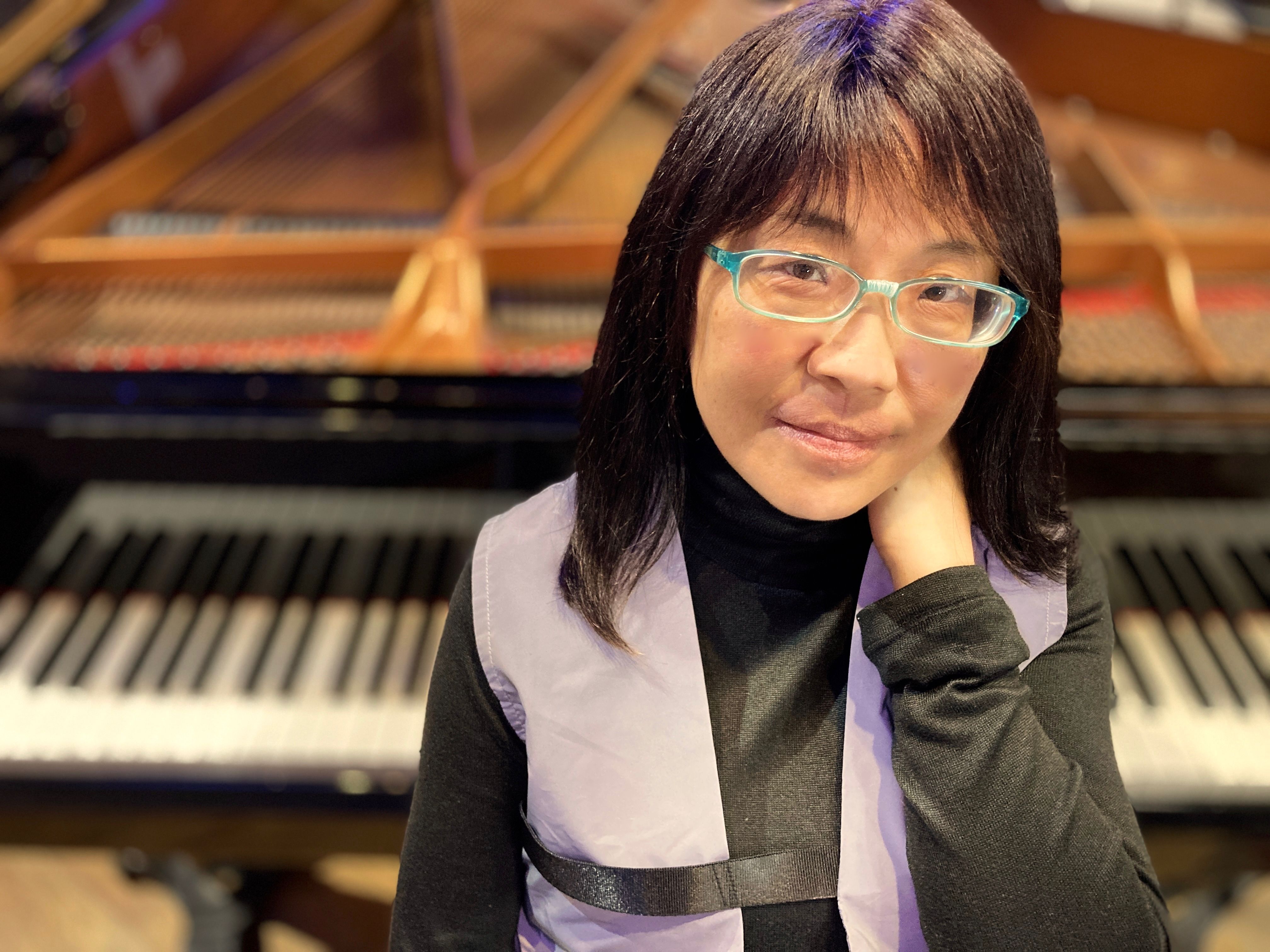
Name: Shoko Nagai
Nationality: Japanese
Occupation: Composer, pianist, improviser
Current release: Shoko Nagai's new album Forbidden Flowers is out November 14th 2025 via Infrequent Seams.
Topic I am passionate about but rarely get to talk about: I practice daily spiritual rituals, which include conversations with the universe, my higher self, ancestors and holy angels, connecting with them for guidance and to send out our wishes.
If you enjoyed this Shoko Nagai interview and would like to stay up to date with her music and live dates, visit her official homepage. She is also on Instagram, bandcamp, and Facebook.
What were some of the musical experiences which planted a seed for your interest in jazz?
When I was growing up in Japan, I learned to play all kinds of music — from classical pieces to contemporary jazz. But everything I did back then was about interpreting someone else’s work. It wasn’t really about creating.
Once I realized I could approach music in my own way, not just follow what was written on the page, that’s when I really got into jazz improvisation.
What does the term jazz mean today, would you say?
These days, the word ‘jazz’ can mean so many different things. It’s expanded to include influences from contemporary classical music to all kinds of world traditions. I think that openness is beautiful — it keeps the music alive and evolving.
But for me, it’s also important to stay connected to its roots, to remember where this music came from and the spirit that gave it life.
As of today, what kind of materials, ideas, and technologies are particularly stimulating for you?
I’m always drawn to contrasts in music — that’s where I find my inspiration.
I love exploring the space between structure and freedom, written material and improvisation, noise and pure tone, electronics and acoustic instruments.
It’s in those opposites that I discover new possibilities.
Where do most of your inspirations to create come from – rather from internal impulses or external ones? Which current social / political / ecological or other developments make you feel like you need to respond as an artist?
I’ve often wondered whether artists should reflect social, political, or ecological issues in their work. It’s something I’ve gone back and forth on for a long time.
But for now, it really has to come from the heart. I don’t usually look outward for inspiration — it has to start from something I genuinely feel inside.
Thanks to technological advances, collaboration has become a lot easier. What have been some of the most fruitful collaborations for you recently and what approaches to and modes of collaboration currently seem best to you?
To be able to send audio files of my compositional ideas to collaborators who live outside of the US has been very convenient and useful.
Jazz has always had an interesting relationship between honouring its roots and exploring the unknown. What does the balance between these two poles look like in your music?
For me, the spiritual roots of jazz lie in freedom — the freedom to express yourself beyond boundaries, beyond tradition, beyond what’s considered normal.
That spirit is something I always carry with me, and it’s what I hope my music will continue to reflect.
How much potential for something “new” is there still in jazz? What could this “new” look like?
I do not look for “new” things in music. Everything that can be done has already been done in some form.
What matters is expressing what’s true to oneself as an artist and finding his/her own way to combine existing elements into something personal.
How, would you say are your live performances and your recording projects connected at the moment? How do they mutually influence and feed off each other?
I see a recorded project as a kind of snapshot of the musical experiences I’ve explored in live performance. For me, it’s the act of playing live — the interaction, the energy, the moment — that inspires the ideas for the next recording.
Both processes mutually give me the motivation to write and perform better to grow as an artist.
Ímprovisation is obviously an essential element of jazz, but I would assume that just like composition, it is transforming. How do you feel has the role of improvisation changed in jazz?
It’s a tricky question. Is it really improvisation if a musician is just playing scales or licks they learned in school? Or if they’re copying their favorite players? We all go through that as part of learning, but only a few move beyond it.
At its core, improvisation is a deep learning experience. It challenges an artist to stay open to any idea, at any moment. Honestly, I feel that a lot of today’s jazz education risks reducing improvisation to just technical skill or interpretation.
My humble wish is to convey the true spirit of improvisation through my music.
What, would you say, are the key ideas behind your approach to improvisation?
Search deeper into yourself and be true to that feeling.
I also make a point to engage in things outside of music — going to movies, theater, museums, comedy shows, and so on. These experiences aren’t just entertainment; they spark ideas and perspectives that ultimately find their way into my music.
The Montreux Festival intends to preserve its archive of recordings for future generations. Do you personally feels it's important that everything should remain available forever - or is there something to be said for letting beautiful moments pass and linger in the memories of those that experienced them?
Any kind of documentation is definitely valuable for future generations.
At the same time, I also believe in the power of imagination — the kind that grows from memories and stories passed down by those who actually experienced the moments.