Published
Name: SHURR JR.
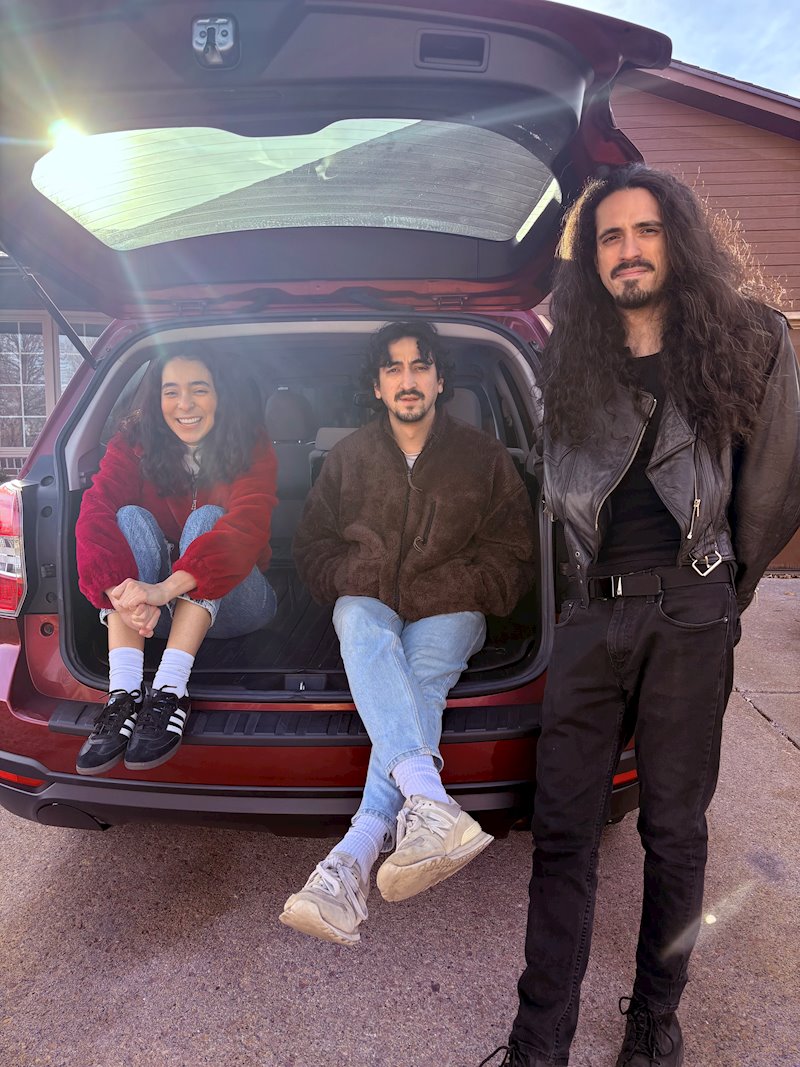
Members: Frankie Maxwell(drums), Nick Maxwell (guitar, vox), Kelly Maxwell (bass)
Nationality: American
Current release: SHURR JR.'s new single “Ink” is out via Max Trax. It is taken off their debut EP Red Shelter, slated for release March 28th 2025.
Recommendations for Sioux Falls, SD: Definitely check out Total Drag, our favorite record shop downtown. Also, Falls Park is a must-see. It’s beautiful, and there’s always something going on.
Topics we rarely get to talk about: Kelly: Musical theater; Nick: Nebraska Cornhusker Football; Frankie: Reading.
If you enjoyed this SHURR JR. interview and would like to know more about the band and their music, visit them on Instagram.
When it comes to experiencing the sensation of “energy” as a listener, which albums, performances, and artists come to mind?
Elliott Smith’s XO always comes to mind. There’s something about his raw, intimate sound that really grabs you.
Hotelier’s Home Like No Place is There also sticks out—such an emotional ride.
The Beatles playing Shea Stadium for the first time... that energy was wild. The Beths' Expert in a Dying Field is another one, full of fire and honesty.
Pinegrove’s live album is a perfect example too—just that perfect mix of rawness and precision. One take, pure magic.
There can be many different kinds of energy in art – soft, harsh, healing, aggressive, uplifting and many more. Which do you tend to feel drawn to most?
We’re drawn to that balance of soft and aggressive. Artists like Lucy Dacus can build something so soft, then hit you with this huge, powerful build-up.
It's all about finding that balance, you know?
I have had a hard time explaining that listening to death metal calms me down. When you listen to a song with a particular energy, does it tend to fill you with the same energy – or are there “paradoxical” effects?
Elliott Smith’s music is a good example.
It’s pretty dark, but his openness about his struggles actually gives a sense of hope. It’s kind of like hearing someone else’s darkest thoughts, and somehow that makes you feel less alone.
In as far as it plays a role for the music you like listening to or making, what role do words and the voice of a vocalist play for the transmission of energy?
Lyrics are huge for us. We like when the lyrics paint a picture.
Phoebe Bridgers does this so well on Punisher. Take the track “I Know the End” – when she says, "windows down, heater on, big bolts of lightning hanging low," it’s so vivid, you feel like you're there with her.
That’s the kind of storytelling that makes the whole experience more immersive.
When it comes to experiencing the sensation of “energy” as a creator, how would you describe the physical sensation of experiencing this energy?
For us, it’s like this growing feeling—like a surge that starts in your chest and spreads through your body.
It’s not something you can always predict, but when it hits, it’s like you’re in the moment, completely connected to the music and the people around you.
When it comes to composing/songwriting, are you finding that spontaneity and just a few takes tend to capture energy best? Or does honing a piece bring you closer to that goal?
It really depends on the song. Sometimes, it’s the raw, first take that really nails it. Our uncle always said there’s something special in those demo takes you can’t recreate.
But we also love the precision that comes with refining a song over time. It’s a mix of both, really.
How much of the energy of your own music, would you say, is already part of the composition, how much of it is the result of the recording process?
Our music is always evolving. It starts with something simple, but by the time we get into the studio, it's definitely a team effort.
Our upcoming EP Red Shelter(out March 28) is a good example. Nick originally wrote these songs for an acoustic project, but once Frankie got involved, we realized they could be big, rock anthems.
For your current release, what kind of energy were you looking for?
Same as above.
We wanted that big, raw, emotional energy, but we also wanted it to feel real, honest, and personal.
How do you capture the energy you want in the studio?
Our producer, Nate Van Fleet, was key in capturing the energy we wanted for this EP. We’d jam the songs, and he’d help us tighten things up while making sure we didn’t lose that raw feeling.
He really knows how to pace things, so nothing feels forced.
What role do factors like volume, effects like distortion, amplification, and production in general play in terms of creating the energy you want?
Live, we love distortion because it helps fill out the sound with just one guitar. But in the studio, we toned it down a bit. We didn’t want to drown out the instruments or the lyrics.
Again, it’s all about balance.
In terms of energy, what changes when you're performing live on stage, with an audience present, compared to the recording stages?
Live, you’re working with a whole different set of nerves. There’s the pressure of the crowd, but that pressure feeds the performance. When you record, it’s more about getting things just right because you know people will be listening to it over and over again.
Both are intense in different ways, but we thrive on that energy.
How does the presence of the audience and your interaction with it change the energy of the music and how would you describe the creative interaction with listeners during a gig?
The audience is everything. When we see people enjoying the music, singing along or vibing, it makes the whole thing feel more collaborative.
We’re all in it together, and that connection, that feedback, really shapes the energy of the show.
What kind of feedback have you received from listeners or concert audiences in terms of the experience that your music and/or performances have had on them?
One time, someone said they felt like it was a cathartic experience. We’re from Sioux Falls, SD, and a lot of local venues have said our sound is pretty unique for the area.
It’s always nice to hear that people connect with what we’re doing.
Would you say that you prefer to stay in control to be able to shape the energy or do you surrender to it and allow the music to take over? Who, ultimately, has control during a live performance?
We’ve got a lot of rehearsed energy going into our performances. We like to make sure everything’s tight, but when we’re on stage, it’s all about giving ourselves over to the moment.
The energy shifts with the crowd, and we definitely let that take over once we’re up there.
The energy that music is able to generate can sometimes be overwhelming. How do you think artists can make use of this energy to bring about change in the world?
Music has this way of making people feel seen and heard. It’s not always about changing the world in big ways, but in small, personal moments.
If we can make someone feel something, or help them through a tough time, that’s enough. The energy is powerful, and it’s a tool we use to connect with people.