Published
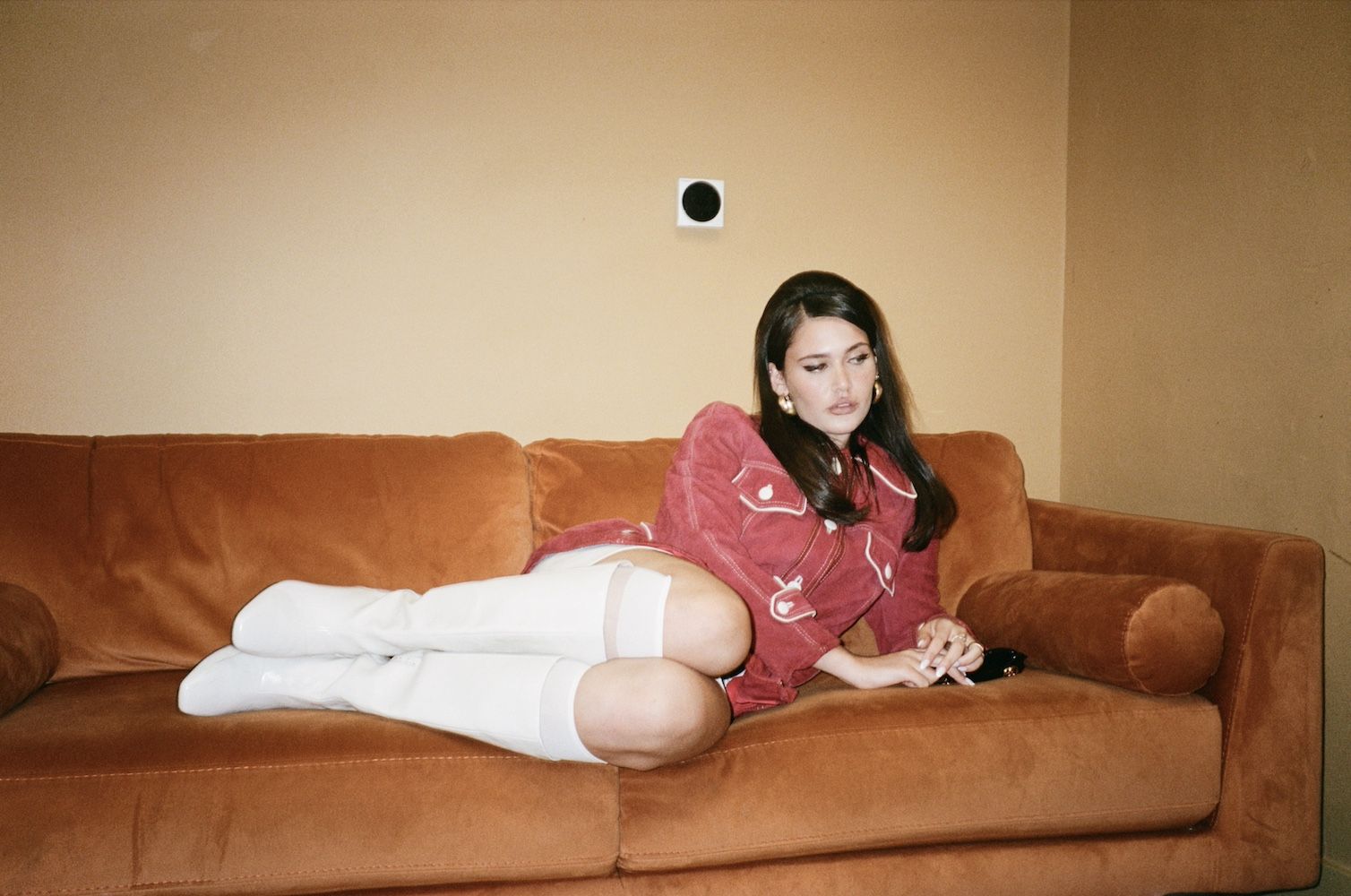
Name: Sienna Spiro
Nationality: British
Occupation: Singer, songwriter
Current release: Sienna Spiro's "Die On This Hill" is out now.
If you enjoyed this Sienna Spiro interview and would like to stay up to date with her music, visit her on Instagram, tiktok, and Soundcloud.
When did you first consciously start getting interested in singing? What was your first performance as a singer on stage or in the studio and what was the experience like?
I don't remember ever actually starting singing — it was just always something I've done. My dad brought me up on all the greats: Marvin, Aretha, Nina, Frank, Teddy Pendergrass, etc., and that's where my love for music began.
I remember my first time on stage was at school when I was very, very young. I was a really anxious kid and struggled a lot with confidence and being present, and I remember it was to sing a hymn in an assembly. The moment I sang on stage I felt such a weird sense of comfort I hadn't been able to find anywhere else, and a huge rush of adrenaline.
My first time in a studio was when I was 10. My mum found this singing teacher in Chiswick. I used to go to her house every Saturday and we'd just sing classics together. Her daughter had a little studio in the house, and after my lesson I'd go in and record songs I'd written or write more. It was the only thing I looked forward to all week.
It fed me for days to do that, and I'm so grateful to my parents for allowing me to do it.
If you're also playing other instruments, how does the expressive potential of these compare to your own voice?
I would actually love to get better at playing.
I was so stubborn when I was younger — I refused to take lessons and just wanted to teach myself (bad idea). I'm so restricted when I play instruments because I lack so much knowledge, which is sometimes cool because I end up coming up with things I might not have if I'd known the technical way to do them.
But it feels so cathartic and freeing when I sing, so I'd love to feel that same way on the piano in the future.
What were some of the main challenges in your development as a singer/vocalist? Which practices, exercises, or teachers were most helpful in reaching your goals – were there also "harmful" ones?
I have vocal nodes, which are small bumps on the vocal cords that make your voice sound really breathy — or in my case, raspy. I never knew I had them, but I believe I've had them for most of my life.
I actually love the texture it gives my voice, but it makes it incredibly hard to sing sometimes — and before I was diagnosed, I used to lose my voice all the time. I never really had any proper singing lessons growing up — the one I mentioned above wasn't one where I learned technique — so technically, I'm actually a terrible singer.
After I found out about the nodes, I basically went on vocal rest for a year. Before and after each show, I'd do about two to three days of no talking at all, which was really hard and miserable, but it made such a huge difference.
I also now have an incredible teacher, Yvie, who helps me so much. I think my lack of technical ability makes me a better singer, because I sing with more emotion. That's why I love the way Yvie coaches me — she never tries to pull that out of the performance.
What are the things you hear in a voice when listening to a vocalist? What moves you in the voices of other singers?
I always look for the character and emotion in someone's voice.
I learnt to sing through Frank Sinatra, who I think is one of the best vocalists of all time. An amazing quote by him that my dad taught me was, "You can't sing if you don't have anything to say. You have to tell a story — that's what singing is all about." And I think it's so true.
The way Frank sings is so intentional, expressive, and visual — you can almost see what he's singing. The way he throws his voice in certain moments, pulls back, or leaves silences — it's all storytelling. That's what really moves me when I see that trait in other vocalists.
How would you describe the physical sensation of singing? [Where do you feel the voice, do you have a visual sensation/representation, is there a sense of release or tension etc ...]
When I sing, I feel it all through my body.
It's such a cathartic experience — whether I'm singing something sad, happy, intense, or sweet, I feel everything, mainly in my chest, but I allow the music to run all over my body.
We have a speaking voice and a singing voice. Do these feel like they are natural extensions of each other, ends on a spectrum or different in kind?
I'm actually not sure what the connection is, but people always seem to be able to tell I'm a singer from my speaking voice.
I think sometimes singers speak more melodically or have a certain tone, but I'd be really interested to know what that connection actually is.
I'd love to know more about the vocal performances for your latest release, please, and the qualities of your voice that you wanted to bring to the fore.
I actually never saw myself as a vocalist growing up — probably because of my dad, ahahaha. I always thought I had to focus more on the writing and kind of neglected finding my voice.
But recently, I've been exploring it more, and on this song in particular, I really let my voice do what it wanted. I chose vowels that were satisfying to sing, and when I sing it, it feels so, so cathartic and therapeutic.
Strain is a particularly serious issue for many vocalists. How do you take care of your voice? Are the recipes or techniques to get a damaged voice back in shape?
Vocal rest, Honey and lemon and big boba straw!!
How has technology, such as autotune or effect processing, impacted singing? Has it been a concrete influence on your own approach?
I try to make my records as organic as possible. I only record in full takes now and try to avoid auto tune.
So in a way I try to avoid it. But I love when other people use it intentionally.