Published
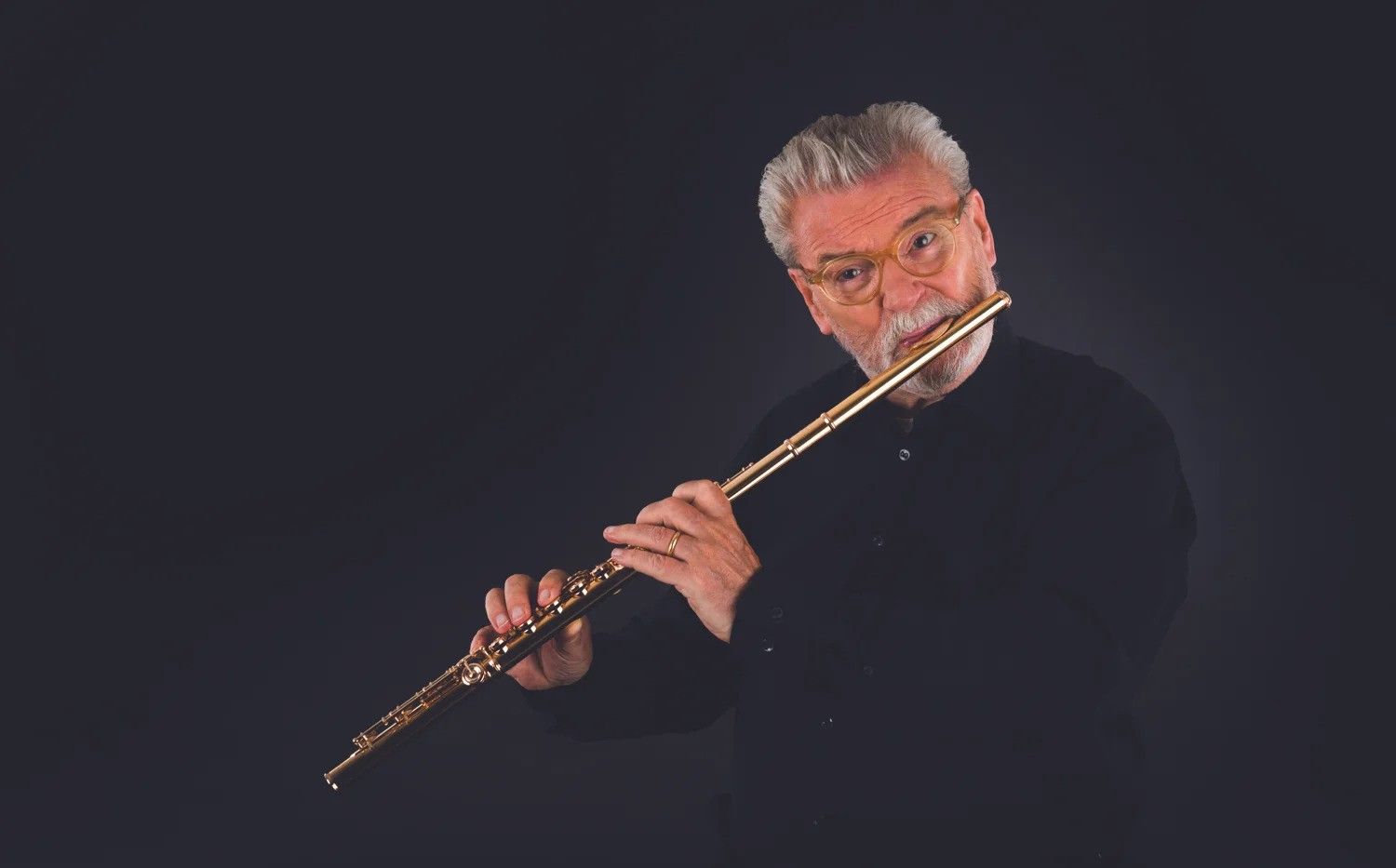
Name: Sir James Galway
Nationality: Irish
Occupation: Flutist, performer, educator
Current release: James Galways's most recent release is a recording of Bill Whelan's Orchestral Works, out via RTE Lyric FM. This interview was conducted in January of 2006 around the release of two albums, about which James Galway explained: “DGG, are going to put out a recording of me playing in the Berlin Philharmonic. These pieces taken from the period during which I was solo flute in the orchestra, all contain famous flute solos and are all conducted by Herbert von Karajan with the exception of one track which is conducted by Karl Bohm. The US release is scheduled for Feb. 14th. titled Ich war ein Berliner (modified from J.F.K.'s famous quote from his speech in front of the Berlin wall: "Ich bin ein Berliner."), James Galway and the Berlin Philharmonic. The second recording (release date to be confirmed) will be and all Mozart recording and with my wife Lady Jeanne and the young harpist Catrin Finch playing on it. David Overton the UK composer has written a piece specially for the recording and we will play it on the US tour. It is called the Magic flutes and is a really amusing piece.”
If you enjoyed this James Galway interview and would like to stay up to date with his music, visit his official homepage. He is also on Instagram, and Facebook.
Does playing live still give you the same thrill as it did at the beginning of your career?
It does.
How does it compare to recording an album?
There are still many things which one has to take into account in different venues, the acoustic, the air conditioning, the lighting and the stage hands. All of these are different in every venue and all contribute to the evening’s music making.
There is also your own personal condition. You might arrive a little tired and have to combat that on stage.
What constitutes a good live performance in your eyes? What’s your approach to performing on stage?
A good live performance on stage is one with total commitment of the executant. A performance where the players are totally committed to playing the music.
My personal approach is to close down all personal thoughts of the day and concentrate on the music. That it should touch the listener at all times.
You’ve championed new repertoire (by current composers) and called it “the future of classical music”. On the other hand, a lot of people seem to want to listen to the same melodies again and again. How do you reconcile these two poles?
The reason for people wanting to listen to the same masterpieces time and time again is quite simple. They are listening to music which they know and which, through its inventive qualities, is evergreen in its appeal. The new music I play has also strong original inventive content.
Take the Pied Piper Fantasy of John Corigliano, for example, where we have children involved and where the last part is written for tin whistle and orchestra. This has a strong appeal to any audience.
With the Galway Network [now the Galway Flute Academy], you are presenting your knowledge and experience to a whole new generation of musicians. What is the basic message you want to get across?
Not having taught the flute privately over the last few decades I have now come to the conclusion, using modern methods like the internet, to share what `I have learned over this time. I have found out a lot about interpretation, tone production, technique, instruments and all sorts of other things which I feel I should share.
The Galway connection is where I put my latest concerts, demonstrations of how to play and advice on getting instruments. Everyone is invited to share in the chat room and we have experts to answer questions about extended and jazz techniques.
In many of your interviews you emphasize the need for discipline and labor to go hand in hand with talent. How do you balance the need for joy in playing and the need for hard work?
The joy one experiences on the concert platform is a direct result of the hard work put in when one is in the studio.
Playing the flute for me is a form of self discipline. I am not competing with anyone but rather I am trying to master something. It is of course a great joy when one succeeds.
As you are one of the most prolific album artists out there: What do you tell those that feel there is no need to record classical music any more, that it’s all been done before?
There is a need to record classical music. There are a lot of very talented people out there and it would be a shame if we could not buy a recording of them doing their best.
Take for example la Traviata. It has been recorded many times but I think it would be a great shame if we never heard Anna Netrebko.
Or someone like your recent collaborator Catrin Finch.
Yes, I was asked to play and conduct a concert with Catrin and the London Mozart players. It was quite clear to me right there and then that she was an exceptional talent.
It is very nice to work with her and her youth and virtuosity bring a new sparkle to the repertoire.
What’s your view on the flute in pop and rock pieces, for example with bands like Jethro Tull?
Ian Anderson is a very unique entertainer. I think he is the king in this sphere.
The flute, of course, is not going to replace the guitar in rock or pop but it does have a good place there in the hands of the right people like Bill McBirnie, Hubert Laws and the late Moe Koffman who wrote the famous “Swinging Shepherd Blues.”
You have recorded with many pop and jazz artists yourselves. Which of them was most interesting to work with? Was there anything you could lean for your classical performances?
Playing with a pop group is another world. They are all different and have their own unique was of making music.
I don’t think there is anything to be learned from pop music to make the interpretation of classical music better. Completely different worlds as far as I know.
British composer Steve Jolliffe remarked “Creativity is a part of life, an expression of our thoughts and emotions. It is the individuals cry for freedom. There is no end to it.“ What does music mean to you?
Composers are quite different from performers. They are creators and we are interpreters.
Music over the years has become my life. Playing music, listening to music and practicing it is something which I look upon as food for my soul.
I have been blessed with the gift of music and am grateful to my God for the pleasure it has given me and others.