Published
Name: Snorri Hallgrímsson
Nationality: Icelandic
Occupation: Composer, producer
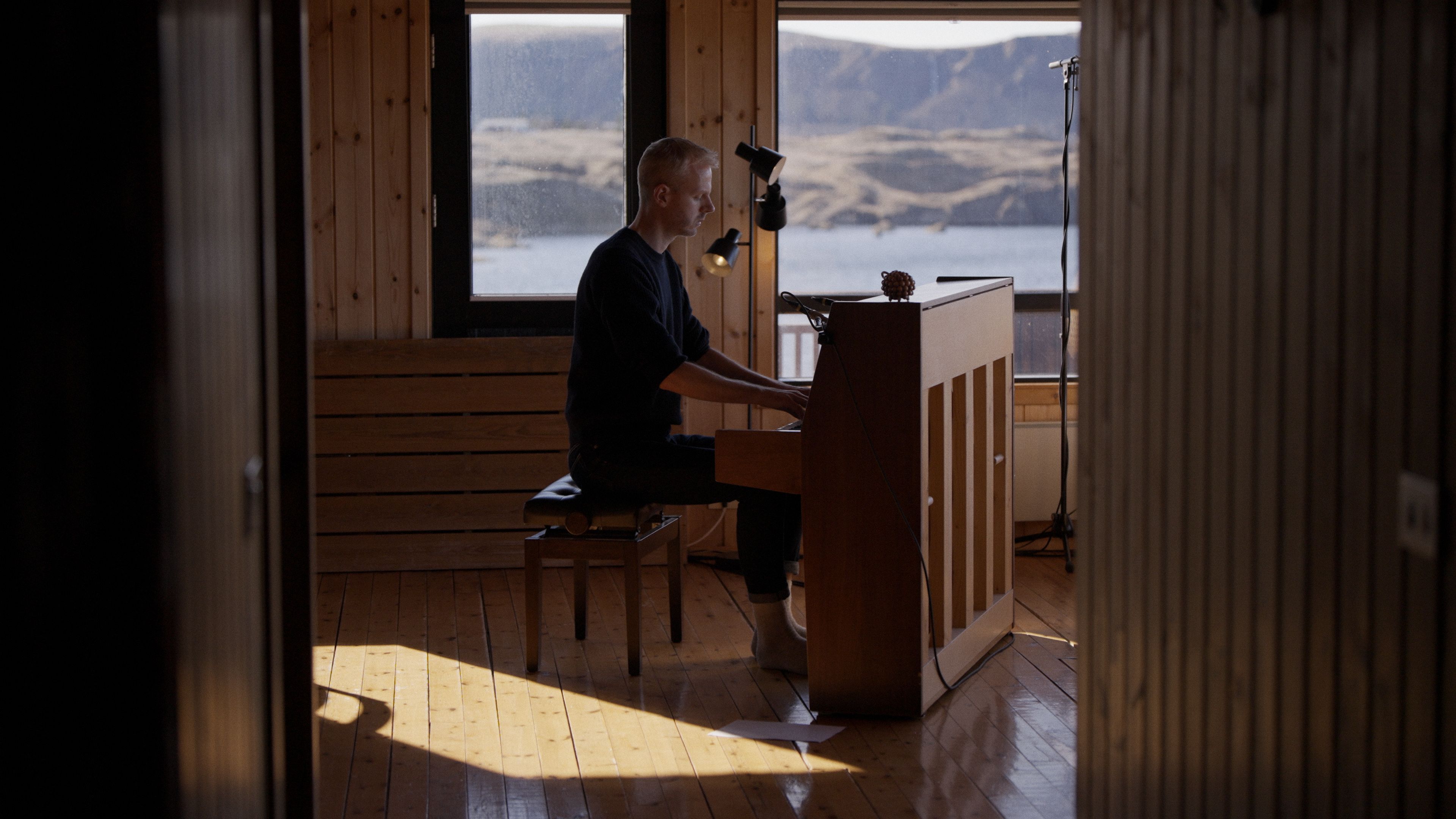
Current Release: Snorri Hallgrímsson's new album Nowhere Sessions is out via Deutsche Grammophon.
Recommendations for Reykjavík, Iceland: It's a cliché, but for a good reason: visit a local swimming pool (not the tourist-curated ones like a certain lagoon of a certain colour ...). There are 18 outdoor pools in the Reykjavík area alone where you can lounge in multiple hot tubs, have a swim, soak in a sauna etc., all with the luxury of not having your phone next to you. It's what makes life worth living in Reykjavík, especially in the winter.
Things I am passionate about but rarely get to talk about: Oohh this is exciting. Well I’ll use this opportunity to hype up the beautiful choir I’m part of called Kliður. Well it’s kind of a choir, but we’re more like a band because we only sing music written by people in the choir, often set to text by poets who’re also in the choir. We’ve got all kinds of artists: musicians, authors, poets, painters, designers, dancers, luthiers, filmmakers, yoga teachers, and even a few lawyers (the good kind, don’t worry).
I’ve been privileged to get to conduct Kliður alongside Gyða Valtýsdóttir the last few years. I just find it so beautiful that every Tuesday, a group of people who care about each other make the time to get together and sing each other’s music. With everything going on around us, this matters.
A side story: only a few days ago we had a small concert. An older lady came up to us afterwards and said “I loved it! You really sing with your hearts, even though you’re not that well trained!” Possibly the best compliment we’ve ever received.
[Read our Gyða Valtýsdóttir interview]
If you enjoyed this Snorri Hallgrímsson interview and would like to know more about his music and upcoming live dates, visit his official homepage. He is also on Instagram, and Facebook.
The borders between producers, sound artists, and even songwriters are becoming increasingly blurry. What does being a composer mean today, would you say?
It means different things to different people, thankfully. I personally believe in allowing experts to be experts, and I love working with people who are obsessed about their particular expertise, whether it’s musicians, recording and mixing engineers, sound designers etc.
Having said that, I am absolutely a jack of many trades and master of absolutely none – which is why it’s so important for me to work with other people who are masters at their craft. This also relates to how I work composing for film, but I’ve accepted that my role is maybe more that of a puppet master. The sounds are already there somewhere, the harmonies, textures and melodies may exist already, and it’s my role to combine and manipulate them in a new way to my own liking.
My identity as a composer, producer, songwriter – whatever you want to call it – is revealed through these combinations of different influences.
Many people perceive classical music and contemporary composition as having high barriers of entrance, both for listeners and musicians. What have your own experiences been in this regard?
It’s all relative to our own experiences and different backgrounds. But I do think we need to move away from the idea that something with a steeper learning curve, in any field, is automatically more valuable than the rest.
I’ve been on both sides of the aisle: I grew up in the classical world but mainly work outside of the contemporary classical space. I’ve had to unlearn a lot of the stigma, the prejudice, and the gate-keeping that subconsciously is instilled in you through traditional classical music training. Not all music is created for the same purpose, or to be enjoyed or consumed in the same dimension. Music should be for everyone, regardless of its genre and the background of the listener.
But in my experience, younger performers and composers of the more experimental classical scene, are incredibly open-minded and consciously aware of the importance of welcoming all kinds of music. So I am very optimistic in general that these barriers are slowly being chipped away at.
Where do most of your inspirations to create come from – rather from internal impulses or external ones? Which current social / political / ecological or other developments make you feel like you need to respond as an artist?
I can only speak for myself, and in my case creation itself fundamentally doesn’t require inspiration. It just constantly erupts from within itself, even during the most stressful of times. I often wake up thinking “What if I combine this and that to make this …”, or it might happen during the morning shower, or just before falling asleep etc. I can’t stop it and I feel it’s my job to keep this channel open.
But in my view creation itself is a political act of resistance, in a world which demands and rewards conformity and silence. Creating is imagining something different, something new, something radical, something unwanted by the powers that be. Creation is resistance, and resistance fuels my creations.
A few years ago I wrote music to an Israeli film called Innocence, which tells the stories of young soldiers who took their own lives rather than “being part of the side that creates evil in the world”, as one of them wrote in their journal. Working on that film and subsequently watching in horror at our failure to stop the genocide in Gaza, shattered my previous conditioned perception of the world, and continues to fuel my creative resistance.
A side note: good friends of mine in the band BSÍ made a fantastic album called Sometimes Depressed…But Always Antifascist.
Words to live by for an eternally melancholic musician.
Tell me a bit about the sounds & creative directions, artists & communities, as well as the colleagues & creative hotspots of your current hometown, please. How do they influence your music?
My current workspace is in a creative hub called Hafnar.haus in Reykjavík. It’s a community of creative people of all disciplines from all over the world; we eat lunch together every day, we share ideas, we procrastinate by chatting or playing chess or drinking too much coffee together.
I’ve been here for nearly three years now and continue to find new brilliant artists to collaborate with. Þorsteinn Eyfjörð is a genius multi-disciplinary artist who has worked with me as a sound designer on most everything I’ve released the last few years; Antje Taiga and Owen Hindley directed three music videos from my EP Longer shadows, softer stones; Alvin Hugi Ragnarsson and Bjartur Elí Ragnarsson directed the new short film to my album Nowhere Sessions; Elín Elísabet and Ragnar Helgi Ólafsson have both created artworks for multiple albums of mine, Leeni Laasfeld is a creative bundle of energy who helps me with my social media – all of these people are active members of this beautiful community. And I’m definitely forgetting a few, sorry if you’re one of them!
It's made my work life so much more enjoyable … and less lonely. It's an absolute luxury to get to collaborate in person over a cup of coffee with brilliant creative people.
Composing has always had an interesting relationship between honouring its roots and exploring the unknown. What does the balance between these two poles look like in your music?
Good question. If you’re afflicted by the aforementioned classical stigma, which I definitely have been in the past, your tendency is to discard everything that isn’t either fully true to its roots or exploring something completely unknown – or ideally both at the same time, somehow.
It's something I try not to think about. First and foremost I try to make music for myself, from a place that’s true to myself.
How much potential for something “new” is there still in composition? What could this “new” look like?
Endless. Going back to creation being a form of resistance – this idea that everything has been done already, to me this feels defeatist and only serves to maintain the status quo.
As long as we keep the channel open to our humanly creative impulses, new works of art will continue to be made, each of which will inspire a hundred more.
It is my impression that adding a conceptual, non-musical dimension to one's work is almost a prerequisite for commissions and grants. How do you view this tendency and how “conceptual” is your own approach to writing?
I relate. "Hello, I'd like money to make music please, thanks." … is what we're all basically saying in our grant applications. But I have sympathy for those who decide who gets a grant and who doesn't – they'll have to explain to whoever it is that actually has the money why they're giving it to me and not someone else. And they need us, the applicants, to make that sales pitch for them.
A part of me actually appreciates having to do this, because it forces you to at least make some sort of a plan, whether you follow it or not. And it can even help you to think about what you really want to say with your music. Grant applications have definitely helped me visualize what an album-making process is going to look like.
But this is me trying to make sense of a reality that is by no means ideal. We should allow ourselves to dream of, and strive for, a world where grants are unnecessary and art is appreciated beyond its financial benefits.
How, would you say are live performances of your music and your recording projects connected at the moment? How do they mutually influence and feed off each other?
I am very much a studio recording artist – I love being able to micro-manage every second of every sound you hear in a song until it moves me. And to write freely without feeling limited by what can practically be achieved in a live performance.
But at the beginning of my live career, I was trying so hard to replicate the studio versions of each song. Songs that often included orchestras, synths, drums, multiple pianos, multiple layers of my voice etc ... and I'm alone on stage most of the time. You see the problem. It took me a while to accept that I might never be able to perform a lot of my recorded music live, at least not in the way it sounded on my albums. And that's okay.
So my live sets now are their own entity, a different and separate experience from listening to my albums. Yes, I might still be performing the same music, but I've spent a lot of time making new arrangements that leave space for improvisation and allow me to simply enjoy myself on stage, without feeling stressed about it not sounding exactly like the studio version.
It's an ego vs confidence thing, and I've thankfully lost this insecure need that I used to have for the audience to know everything I'm capable of doing. How I'm performing in the moment is enough.
To some, the advent of AI and 'intelligent' composing tools offers potential for machines to contribute to the creative process. What are your hopes, fears, expectations and possible concrete plans in this regard?
This ties in with what I said earlier, about how thinking that everything has been done already only serves to maintain the status quo. It’s what those who try to sell you the next type of AI software will tell you: everything has already been done and AI is much better, faster and more efficient than you at sampling other artist’s work into something “new”.
I’m aware I sound like a luddite, but I can’t help feeling that AI is the antithesis to creation. And the notion that AI is inevitable, while it might be correct, that’s only because certain people wish it to be inevitable: those who don’t want us to imagine new things and new realities.
We can still choose to fight this inevitability and my sense is that the majority of creatives intend to do just so.
Are there approaches, artists, festivals, labels, spaces or anyone/-thing else out there who you feel deserve a shout out for taking composition into the future?
There are two festivals here in Reykjavík that do a wonderful job of breaking down the previously mentioned barriers, both in very different ways: Dark Music Days and State of the Art.
Dark Music Days is an annual contemporary music festival that showcases and celebrates new compositions of all styles, by composers of all ages, nationalities and genders. Each year I’m so in awe of the variety of new music being premiered at the festival, and I leave it feeling optimistic about the future.
State of the Art is a more recent festival, famous for breaking down barriers in more obvious ways – like performing baroque music at a night club or having two artists/bands you would never associate with each other perform each other’s music together. It’s a lot of fun, and a fantastic way of introducing all kinds of music to new types of audiences.