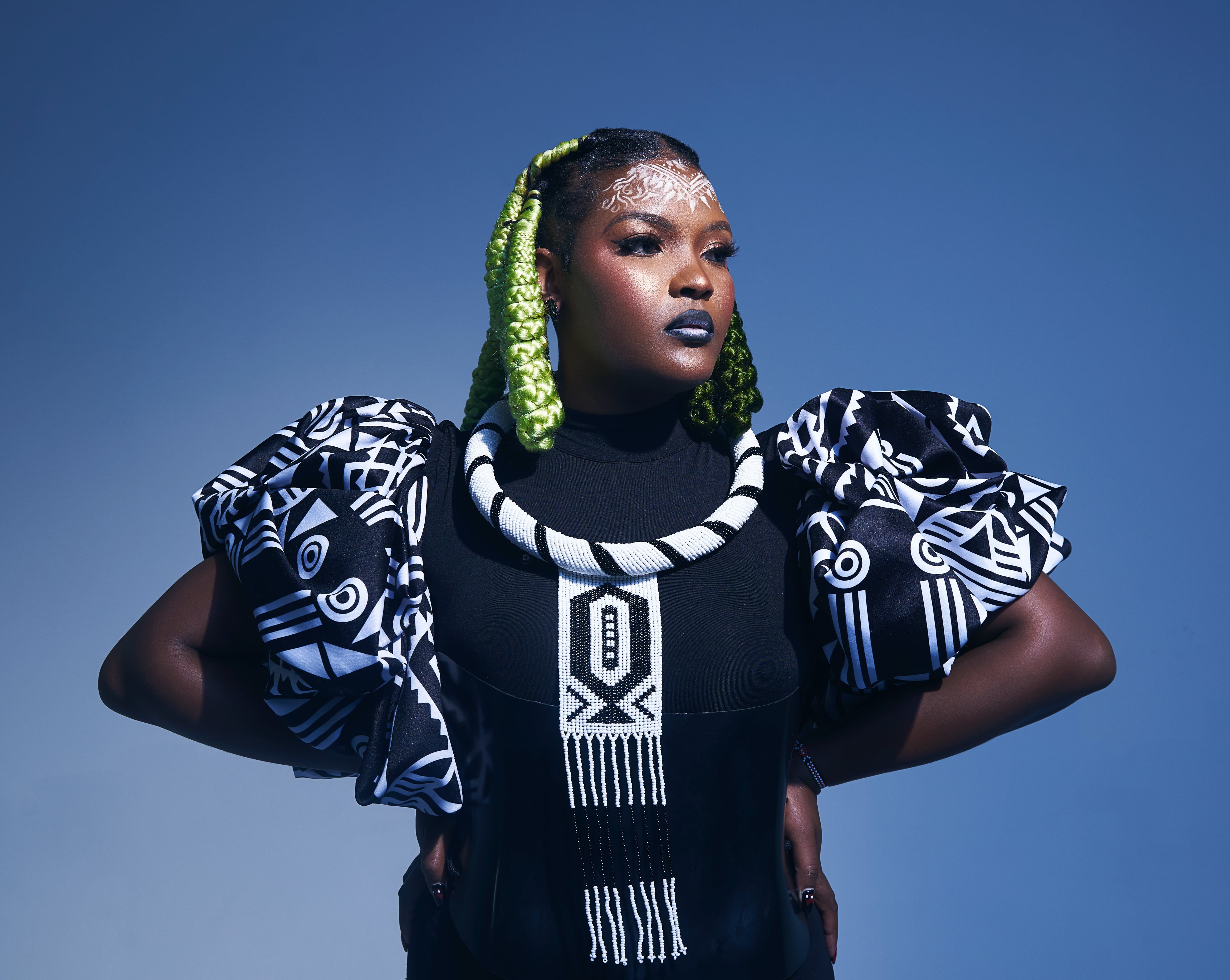
Published
Name: Sofiya Nzau
Nationality: Kenyan
Occupation: Singer, songwriter
Current release: Sofiya Nzau's new single "Meta," featuring Nzau, Fireboy DML, and Nomcebo Zikode, is out via Just African.
Pure vocal music recommendations: To answer the question, when I think of tracks that showcase my voice in one of its purest forms, ‘Mwaki’ comes to mind. It’s a song where I felt truly connected to my voice—letting it convey raw emotion and depth without heavy production. The beauty of a track like ‘Mwaki’ is how it allows the listener to hear every nuance, tone, and texture in my voice, creating a deeply personal experience.
If you enjoyed this Sofiya Nzau interview and would like to know more about her music, visit her official homepage. She is also on Instagram, and tiktok.
Do you think that some of your earliest musical experiences planted a seed for your interest in your voice and singing? How and when did you start singing?
Growing up, I was very musical. I used to sing a lot. We have a tea plantation, and with tea, you spend the whole day plucking, so it can get boring. My dad and I used to sing in the garden while we were working, singing with very loud voices. My dad sings really well, so it was either him singing or me singing. I also sang a lot in church—in Sunday school, junior youth, and senior youth.
After high school, I joined another church where I sang even more and started vocal training. That’s when I started to get serious and met people who were actually doing music as a serious business, people in bands with much bigger experience than I had. That’s also where I met my husband, who introduced me to recording studios, something I didn’t know about because, in the village, that’s not something you find. That’s really where I started singing professionally.
I’ve done a lot of traditional music, and I’ve listened to a lot of traditional and cultural songs. My music mostly includes stories I heard growing up, experiences I’ve had, and I love expressing them in a way that others will understand. I prefer that over trying to copy something outside our experience or culture.
I don’t know much about pop portrayals; I only know stories from the village, from places like the market or public transport. Those are the stories that inspire my music.
If you play other instruments, how does their expressive potential compare to your voice?
I used to play some traditional instruments growing up, like the drum and the triangle, which we call karengaringa. I play those two instruments well—they’re very traditional.
Even when producing music, I ask my husband if we can include them in the arrangement because it sounds better to me. It’s something that’s in my head, so I ask, “Let’s just put something in.” And he’s always willing to try it.
Singing is an integral part of all cultures and traditions. Which of these do you draw from, and why?
My music is mostly drawn from our traditions and cultures. I prefer being as honest and relatable as possible.
What were some of the main challenges in your development as a singing vocalist?
I was very skeptical about singing in my native language. I felt that if I did, I’d only be a local artist since only local people would listen to my music. But over time, I realized music isn’t always about understanding; it’s about the experience.
That was helpful because I struggled to sing in English—it’s hard to be authentic in a language that isn’t mine. But in Kikuyu, it’s easy; I’ve learned it, spoken it my whole life, so it’s comfortable for me.
Which experiences were most helpful in reaching your goals?
Agreeing with my husband to sing in Kikuyu was very helpful—it made my music authentic, original, and unique. That was amazing.
About harmony, rhythm, and melodies … I try to use melodies that sound as traditional as possible. I’m not trying to do pop; I’m creating traditional melodies. My melodies, rhythm, and harmony are very traditional. When you listen, you can hear the difference; it reminds you of traditional African churches.
This approach keeps my music unique and full of culture, which is something I’m very intentional about.
What artists inspire you?
I love artists who approach a song in different ways, who surprise me with their melodies and transitions.
That’s one reason I used to love Costa Titch and Kamo Mphela; they approached their verses, choruses, and hooks differently.
We have a speaking voice and a singing voice. Do these feel like they are natural extensions of each other, ends on a spectrum or different in kind?
To me, they’re natural extensions of each other.
I never understand how someone can speak differently than they sing.
What are the potentials and limits of your voice? How much do you want to control?
I can do whispers, falsettos, and relaxed vocals, but I’m not entirely comfortable with falsetto. I didn’t have much training, so I stick to where my voice feels comfortable without straining.
I don’t need to sound like someone else—I’m happy with what my voice can do.
When writing lyrics, do you feel a connection between your voice and the text?
Yes, this is especially clear when translating songs. Different languages create different sounds in the melody.
If I start with words, the melody flows naturally. If I start with melody, I have to fit the words into it, and sometimes that doesn’t work.
The way we pronounce words also affects how they fit into the melody, which is why accents make singing someone else’s song challenging.
How do you take care of your voice?
I take care of my voice by drinking green juices and staying healthy. I have allergies to cold, so I drink warm tea to prevent getting sick. Some people say tea isn’t good for vocals, but I love it—I think I’m addicted to tea.
I avoid straining my voice because I want to stay where I’m comfortable, not trying to sound like anyone else.
How has technology, like auto-tune, impacted your singing approach?
We don’t use much auto-tune on my voice, but it’s helpful to make everything sound balanced.
My husband experiments with my voice, and sometimes I ask him to make adjustments so it doesn’t sound too processed. We use what’s necessary.
What makes voices sound great on record and in live settings?
It’s all about balance—balancing your voice, breathing, and vocals.
Some artists can sing longer and maintain their voice better. It’s okay to have different strengths; not everyone’s voice is built to do the same things.
How does music connect people?
Music is a common ground. It brings people together in a way nothing else can. Music allows people to enjoy each other with just a good feeling.