Published
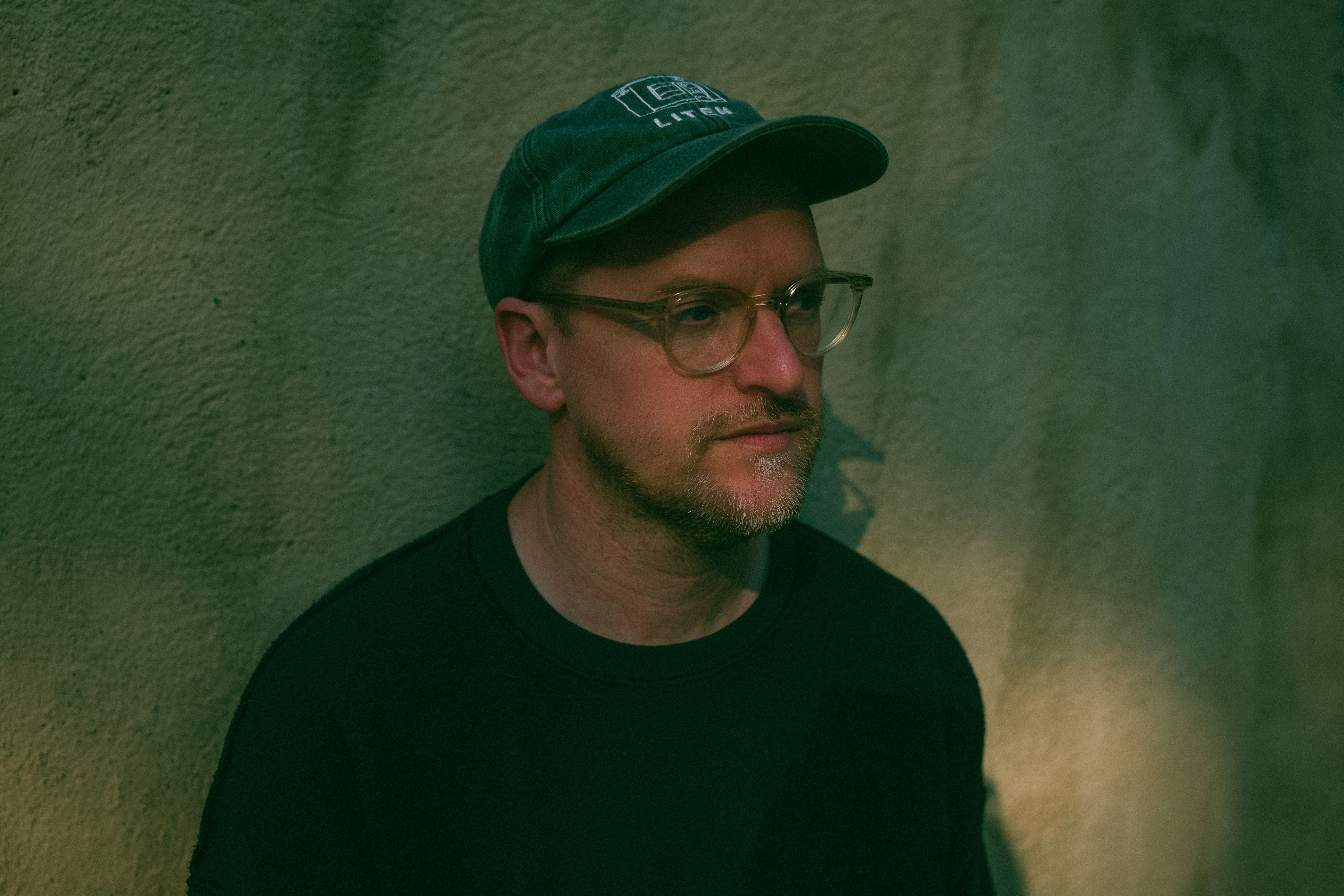
Name: Christopher Taylor aka SOHN
Nationality: British
Occupation: Producer, composer
Current release: SOHN's new album Albadas (Dawn Songs) is out via APM.
If you enjoyed this SOHN interview and would like to stay up to date with his music and upcoming live performances, visit his official homepage. He is also on Instagram, Soundcloud, tiktok, Facebook, and bandcamp.
Where does the impulse to create something come from for you? What role do often-quoted sources of inspiration like dreams, other forms of art, personal relationships, politics etc play?
It always used to come from needing to purge a feeling or make a journal entry but as I get older it’s less about that. Often ideas come to me when I hear something else, another song or sound etc, and very quickly within a few seconds my instinct tells me what’s going to happen next.
Because each of our instincts are unique, the thing I’m listening to rarely goes in the direction I think it will, and then I have an urge to explore what I thought was going to happen. It’s kind of like listening to a conversation get started about the plot of a movie and after hearing two sentences I say “ok I’m going to go write a movie”. It’s quite funny really.
For you to get started, do there need to be concrete ideas – or what some have called a 'visualisation' of the finished work? What does the balance between planning and chance look like for you?
My version of planning I think has to remain subliminal - if I get locked into a concept or plan too early, it can strangle the work because in my mind I can’t live up to my vision of what I want to do. I find it best to sort of let the garden grow and then once you see what you’ve got, you can decide what to cook with it. Which means the key to a good meal really lies in the year of growing before you decide on your recipe, you know?
There is a lot of silent groundwork we’re doing even when we don’t think we are “actively” creating, I think it’s best to see that time and work as very valuable.
Is there a preparation phase for your process? Do you require your tools to be laid out in a particular way, for example, do you need to do 'research' or create 'early versions'?
Not really, I think being organised and clean in the studio is a help because procrastination and avoidance LOVE a studio to re-cable or tidy up instead of facing the search for inspiration, and I have fallen for that too many times!
I think I have re-cabled my entire studio at least 15 times in the last five years. So I try to keep it as tidy as I can so that my brain doesn’t automatically go there when I start to procrastinate ...
Do you have certain rituals to get you into the right mindset for creating? What role do certain foods or stimulants like coffee, lighting, scents, exercise or reading poetry play?
I think that creating can be a byproduct of living creatively so the things you’ve mentioned are great ways of getting present in our bodies and surroundings and that can really help.
Creativity needs a few things to appear in my opinion;
Fuel - listening to music, consuming ideas and art, stimulating conversation etc,
Space - switching off our brains just enough to let our creative ideas become the loudest voices in our head, and
Opportunity - being in a situation that, should creativity spark, you can actually act on it.
Often we give ourselves loads and loads of Opportunity - we sit in our studios, we get in front of our laptops or canvases and expect creativity to show up - but without Space and Fuel, it shouldn’t be surprising that we can struggle to find inspiration.
Some of my best ideas come when driving alone in my car or walking, but they never would if I were listening to music or a podcast for example. So for me the rituals are more about constantly trying to remember to “feed” myself, and create enough space in my head.
For Albadas, what did you start with? If there were conceptual considerations, what were they?
The process for this record was a completely new one for me - if anything, the project revealed itself to me when it was already finished.
I was trying to write a more traditional, song based album but things just weren’t clicking somehow and what I would do was just mess around with a couple of synthesizers and improvise stuff whilst making sure to hit record just in case a good idea happened. It wasn’t even really a practice or process, just something I would do from time to time as a break from “creating” - often if I’d gotten a new piece of gear or a new instrument I was exploring.
One day I had the thought that I would love to just make a record where all I did was improvise, free from the angst and uncertainty of writing “songs” - that afternoon I looked through my hard drive and realised I already had made the record in my spare time, my “non-creative” moments had actually created a beautiful body of work I was proud of.
Finding that was such a thrill.
Tell me a bit about the way the new material developed and gradually took its final form, please.
After my initial recording of the improvisations, I really had no way to change anything - the performances are human and fluid, unplanned. Many of the songs were only recorded in a single stereo file. Mixing meant subtle eq on the overall song, and then I sent it straight to mastering.
It was such a refreshing experience that I sort of took any chance of overthinking the album out of my own hands by committing to the original recordings from the start.
Many writers have claimed that as soon as they enter into the process, certain aspects of the narrative are out of their hands. Do you like to keep strict control or is there a sense of following things where they lead you?
I think to keep strict control of that you have to be very, very convinced that you know best.
For me personally, I’m not sure any great art comes from clear and strict ideas and plans - I almost think that inherently makes it NOT art. Art for me is reaction and interpretation, and the way each of us handle those two things is what makes every artist unique.
I’m pretty sure, if we only made art with our brains and knowledge, not a single piece of art would be unique. It’s our unplanned instinct, our subconscious influences and our history which turn a good idea into great art.
There are many descriptions of the creative state. How would you describe it for you personally? Is there an element of spirituality to what you do?
I think at its best, the creative state is instinctive and takes over us, almost like the self and our opinions, designs etc get overpowered by pure instinct.
Sometimes my dog escapes our house when she catches a scent of something, and it’s like her pupils dilate and she can’t stop herself from tracking whatever she’s sensed. She’s just locked in on a primal instinct and even when she’s called it’s like the instinct is too loud and she needs to run and follow her nose.
I think my creative process is a lot like that, I sort of forget I exist, I forget to eat, I just get locked into it.
Once a piece is finished, how important is it for you to let it lie and evaluate it later on? How much improvement and refinement do you personally allow until you're satisfied with a piece? What does this process look like in practise?
I think it’s become more important as I’ve gotten older.
I am very divided about this because I am never sure which internal voice is talking when I assess my own work - is it the voice of wisdom and experience saying it’s not quite ready yet and I can still “improve” it, or is it the self-doubting, self-critical voice that’s talking from a place of fear that it’s “not good enough”.
I think time is a good informer in this case, if you step away from a piece of work for long enough and stop thinking about it for a while, you will know immediately upon listening, if you like it or not and what needs to change, if anything.
How do you think the meaning, or effect of an individual piece is enhanced, clarified or possibly contrasted by the EPs, or albums it is part of? Does each piece, for example, need to be consistent with the larger whole?
I would say I always thought in albums, EPs or cycles. I think that grouping songs into an album or EP at the very least takes the pressure off of how perfect or representative of the artist each song has to be.
The key word for me is context. An album can contextualize a song in a way that the motives or intentions of the song can be clearer in the context of a larger work.
I think that some songs of mine would never have been written or released without the help of the songs around them on the album.
What's your take on the role and importance of production, including mixing and mastering for you personally? In terms of what they contribute to a song, what is the balance between the composition and the arrangement (performance)?
I personally cannot separate them, a song and its production are, to me, tied together.
I have a kind of physical reaction to sound that I can’t really explain or put into words adequately that feels like it’s not to do with taste or if I “like” sounds. It’s more like my body just says something sounds and feels good, or not.
So for me I am mixing from the very first moment I create because my relationship to sound doesn’t really let me ignore that side at any point.
Music and the accompanying artwork are often closely related. Can you talk about this a little bit for your current project and the relationship that images and sounds have for you in general?
Yes! I think for me a piece of work always has some kind of visual feel to it, and that without the accompanying visual the work is not fully explained or contextualized.
For example I normally know as I’m completing a record, what colour the artwork should be, or how clean or cluttered it should feel. With Tremors I knew snow and ice would be involved, I wanted the listener to mentally be in that cold place before they heard the record.
On Rennen it was more about boldness and electricity, so the album cover ended up with bright colours and bold graphic design. My third record Trust was about simplicity and purity so it felt like a “white” record which should have a strong visual center.
For Albadas, the artwork informed the album title and recontextualized what I had made, because I was very taken by the art of Carla Cervantes Caro and Monica Figueras Domenech - it was different perspectives of dawn, of the sun, of the ocean.
At first I thought the record should be a sunrise but once we got more into it this iconic frame of Carla’s eye just felt right.
After finishing a piece or album and releasing something into the world, there can be a sense of emptiness. Can you relate to this – and how do you return to the state of creativity after experiencing it?
Absolutely. It’s something I am the most happy about with Albadas that I don’t feel that and I think that relates to how little I had to fight this record. The sense of emptiness post-release to me speaks to how much I have struggled to create the work, how much I have anguished over getting it “right”.
It was a very valuable lesson to me that making a record doesn’t have to be a struggle, and can relate directly to how much importance you build up in your mind about your work. I’ll be trying to keep that perspective in the future.
Creativity can reach many different corners of our lives. Do you personally feel as though writing a piece of music is inherently different from something like making a great cup of coffee? What do you express through music that you couldn't or wouldn't in more 'mundane' tasks?
I kind of think any mindful act can be artistic and creative and healthy for us. There is a nobility in taking care and time over anything. It’s small acts like those that can make up the fabric of who we are on the planet, the way we choose to use our lives.
I think music allows us to say something that we maybe otherwise can’t express - when making this instrumental album I felt closest to being able to communicate something deeper than I could put into words. How can words do justice to the feeling of love you have for your child, for example? I don’t feel there’s an appropriate way to get that across with words alone.
So I would say that music allows us to give our perspective, our experience to the outside world, and hopefully it pings back and connects with others with their own perspectives, and through this meaningful art is made.