Published
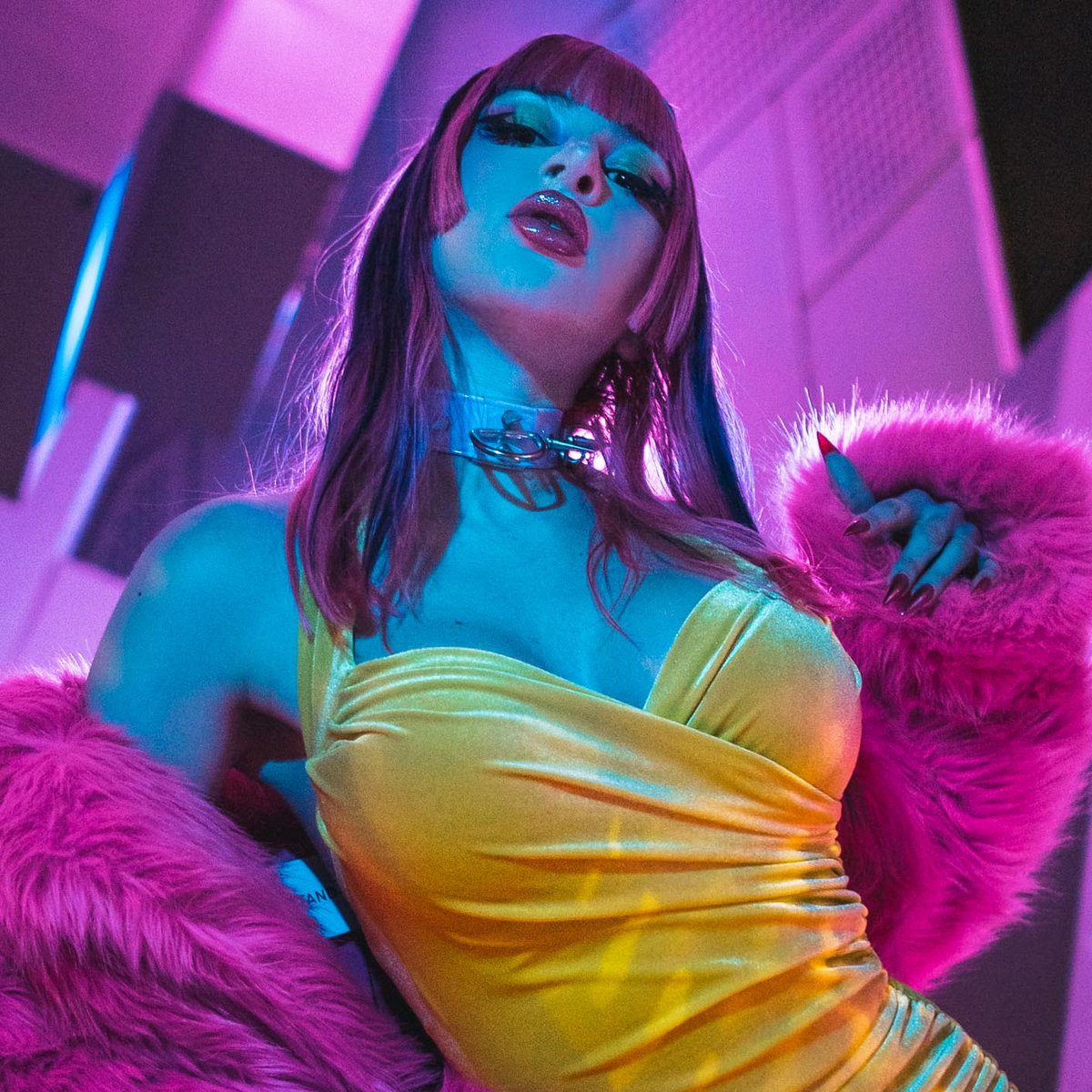
Name: Amber Sierra Cuadra aka Solene Velvet
Nationality: American
Occupation: Vocalist, songwriter
Current release: Solene's new album Midnight Angel, with J Rawls, is out via Fat Beats.
Shoutouts: Producer Mondays in NYC. Jiji’s Jazz Club and VIBE LA. All regular jazz events frequented by younger people which is always amazing to see. SERAPHINE NOIR. He is incredible, truly a genius that I know is making a bridge from past to future for jazz. Mr. Bonez’s Jazz Club on Tiktok and Instagram. I see him converting viewers every day into new jazz listeners. Minthaze, my long-time collaborator. Samara Joy and Laufey. It’s incredible seeing modern jazz artists thriving in the mainstream. And a shoutout to all the young jazz musicians making their way through a world that wants them to believe it has moved on. They are the future.
If you enjoyed this Solene interview and would like to stay up to date with her music, visit her official homepage. She is also on Instagram, Facebook, Soundcloud, and bandcamp.
What were some of the musical experiences which planted a seed for your interest in jazz?
I always immediately point to me playing Fallout: New Vegas as a teen.
That game is a huge perpetuator of my love for jazz (and juxtaposing it with other things). Hearing songs from it, like Frank Sinatra’s “Blue Moon” and Nat King Cole’s “Orange Colored Sky” awakened something in me. They were some of the first jazz songs I learned.
I also had this fascination with 40s and 50s fashion as a teen, and I’d go to these vintage days in the Midlands where an old steam train took you from station to station, and every stop had a mix of vintage vendors and live jazz bands.
Experiencing live jazz in that kind of setting had me smitten with the genre.
What does the term jazz mean today, would you say?
Everyone has a different answer for this, and I’m not sure there’s just one.
To me jazz is sophisticated grit. It’s rebellion and freedom in a delicate balance against order. It’s music from the souls of disenfranchised people that is eternally beautiful. It turns ugly truths into works of art. It’s life’s exposé: scored and accepted. It’s a release for so many like me that need a sound that resonates with the bluest most pained parts of their soul, and for those who experience highs and lows so strongly that emotions are physically bursting out of them.
And when they do come out, they are jazz. Whether in the past, present, or future, I feel that will always be the case. It’s part of what makes jazz so timeless.
As of today, what kind of materials, ideas, and technologies are particularly stimulating for you?
As I hone in the world surrounding cyber jazz, I’m currently focused on the social and technological controversies discussed in cyberpunk literature so I can incorporate them better into the messages of my songs.
It’s a lot of book reading from authors like William Gibson and Philip K. Dick. Video games still serve as a big inspiration for me when they have a powerful message, like Cyberpunk 2077.
As technology advances, we see in real time the way it’s destroying our sense of selves, the way we’re becoming so dependent on it to the point of financial ruin – like a drug – and the way that late stage capitalism is doing the same.
It seems like this is a natural segue into the next question so I’ll continue there.
Where do most of your inspirations to create come from – rather from internal impulses or external ones? Which current social / political / ecological or other developments make you feel like you need to respond as an artist?
It’s a blend of my own life experiences with what I see happening around me. That’s a big part of the “cyberpunk” in cyber jazz. It’s me confessing the ways that dark places, my greed, and consumerism have taken me, and broadening the discussion to society as a whole so others can see it’s not just them, discuss, and seek another way.
The greed and consumerism for me comes from being born into poverty with no opportunities to harness my gifts, yet being aggressively exposed to the glamour of Hollywood through media and its activating my worst instincts. It might not be openly talked about, but with social media connecting us all and allowing for anyone to ‘fake their lifestyle’, I know that this instinct has been awakened in even more people.
Technology and late-stage capitalism are bringing out the worst in us, especially those who are economically more vulnerable to it, and then punishing us for doing what we need to do to survive with the horrible hands we are given.
Tell me a bit about the sounds & creative directions, artists & communities, as well as the colleagues & creative hotspots of your current hometown, please. How do they influence your music?
I’m currently in Los Angeles. What’s so beautiful about being here is that the jazz scene is enormous. Finding likeminded musicians who seek to push boundaries of jazz are endless, and that is exactly why I returned.
I’ve been able to meet so many amazing artists that inspire me, like Alex Andre with his emo breakcore jazz fusion sound (so cool, right?) or young jazz-blending communities like JiJi’s Jazz Club and Vibe LA.
Then of course being here allowed me to meet Ash Gordon, who’s been helping me to refine my sound by helping me produce future music that’s even more layered than my current sound, and giving me ideas I’d never even considered.
What role do electronic tools and instruments play for your creative process?
Having begun my music in the lofi space, so much of my early work is electronic, beats and producers playing electronic instruments. I’ve been blessed to live in a time where I can work with producers and instrumentalists all around the world.
I rarely am in the studio when a beat maker is creating. I find giving them their own space to create is best. I enjoy taking these tracks, where many of them began as jazz records, were flipped into digital to be made into something new with a hip hop technique, then bringing in live jazz instrumentalists to improvise over them, whether in person or from afar.
Lately I’ve been focused on finding ways to get the balance of electronic effects and combine them more intentionally with live instruments … the results may be surprising.
What have been some of the most fruitful collaborations for you recently and what approaches to and modes of collaboration currently seem best to you? Jazz has always had an interesting relationship between honouring its roots and exploring the unknown. What does the balance between these two poles look like in your music?
The most fruitful recent collaboration was my album Midnight Angel with J. Rawls. Our instincts are so similar that creating with him was effortless.
I’m extremely proud of that project. It allowed me not just the ability to sing over some of Rawls’ legendary beats that go back as far as the 90s, but also to bring esteemed jazz musicians onto the project that I otherwise would never have gotten to meet, like Maurice ‘Mo Betta’ Brown on my songs “24K Rose” and “Down n Doomed,” …
... and getting The Liquid Crystal Project on songs like “Midnight Angel” and “I’m Ready.”
How much potential for something “new” is there still in jazz? What could this “new” look like?
Music is not going to stop evolving, therefore, jazz will never stop evolving because it will forever be combined with the new musical styles, technologies, and instruments of the future.
For many artists, life-changing musical experiences take place live. How do you see that yourself?
It happened to me. I went to see Talib Kweli live (before I’d actually worked with him professionally, I just went because I was a fan and had been lucky enough to share a mixing engineer with him named Federico ‘Csik’ Lopez) I was a fan of 90s east coast hip hop because it was so jazz-inspired, but also so cool.
So when I was at his show the other acts were performing to backing tracks with their DJs, which was great. But then Talib comes out with a jazz band. He’s performing his hits with them, and this combination of hip hop being played by jazz musicians that felt just like the track while also allowing jazz improvisation blew my mind. I’d never seen anything like it. I knew at that moment that it was exactly what I wanted my live shows to be like one day.
Fast-forward 2 years after a successful tour with Talib and an album he executive produced newly released, and my last 2 headlining shows in LA were executed exactly like that. His live show shaped the vision, performing with him gave me the chops, and finally I pulled it off.
How, would you say are your live performances and your recording projects connected at the moment? How do they mutually influence and feed off each other?
I’ve always preferred to perform live with a jazz band. I’m a jazz singer. It’s where I thrive, in the ability to improvise and have fun with the band.
However, I decided that the show could not just be a jazz band nor could it just be electronic. It needed to fit the vision of what cyber jazz should feel like: a futuristic jazz lounge. So I knew it needed a special combo to make it feel both cyber (and by that I mean the digital element of the song’s production) yet also be a jazz performance.
I approached Sam Barsh during a session of ours and he gave me the brilliant idea of having my keyboardist doing some light triggering during the shows. It worked. Now not only do the shows feel futuristic yet traditional, the songs sound like the track while also allowing the band and I to improvise live, allowing the mood of the performance to feel authentic and not bound by the constraints of the purely digital.
What, would you say, are the key ideas behind your approach to Improvisation?
It’s my favorite part of performing. It’s the rawest form of emotional expression for me.
When I scat, it’s purely an expression of my soul. You have to just let go.
The Montreux Festival intends to preserve its archive of recordings for future generations. Do you personally feel it’s important that everything should remain available forever - or is there something to be said for letting beautiful moments pass and linger in the memories of those that experienced them?
The sentiment of a moment lingering in the memory alone is beautiful, but think about it. There are people who, due to one reason or another, will never have the opportunity to experience such moments live. Moments that could change their lives forever. Moments that could save them.
Maybe these are people now. Maybe these are people who will live in a much bleaker and controlled world 100 years from now – those people will need the music of the past more than ever.
Who knows how soulless the world of entertainment will be by then. If people can be reminded that music can still feel a certain way, then there will always be a place for freedom in music. There will always be hope. And with that, change. And jazz.