Published
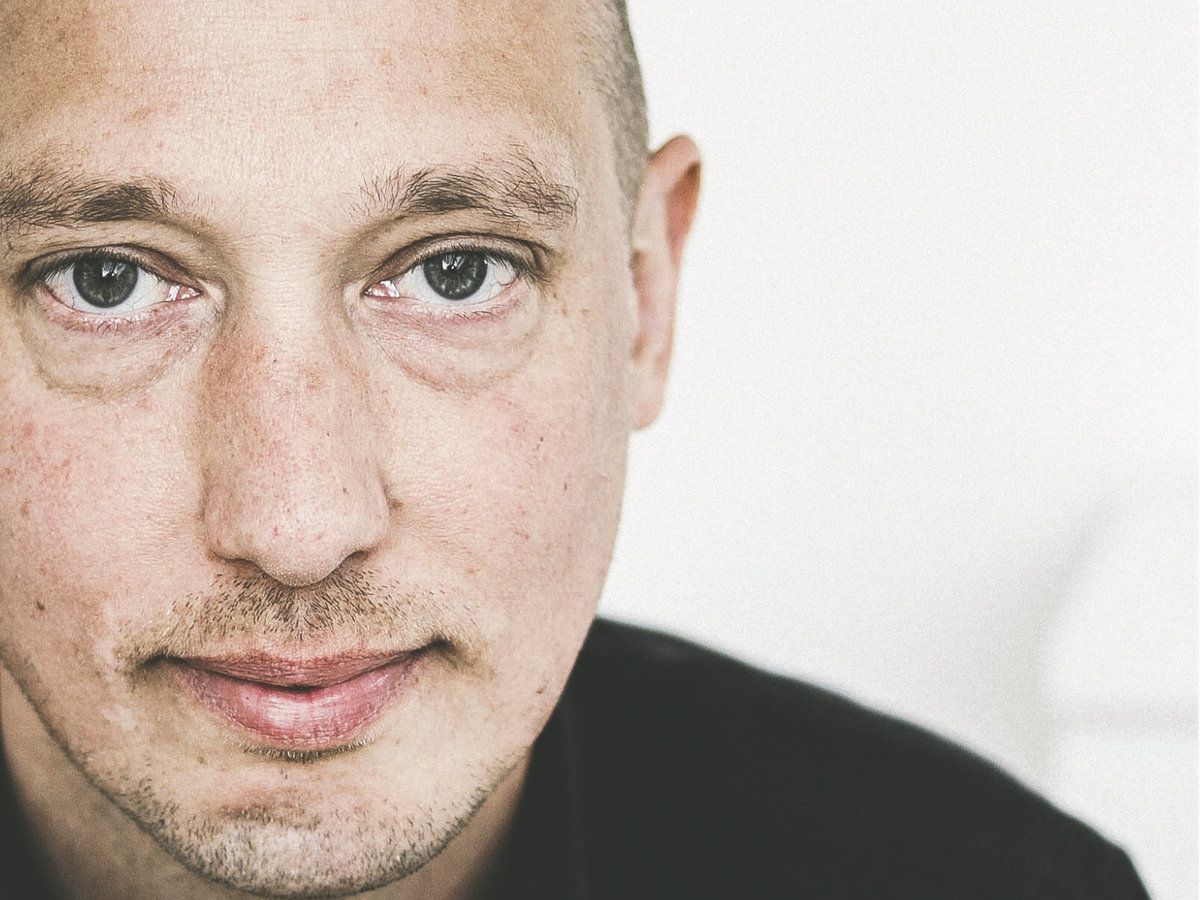
Name: Søren Bebe
Nationality: Danish
Occupation: Pianist, composer, improviser
Current release: Søren Bebe's most recent release is First Song, a high-definition compilation capturing some of the landmark recordings of his career so far. It is available directly from his bandcamp store.
If you enjoyed this Søren Bebe interview and would like to know more about his music, visit his official homepage. He is also on Instagram, Facebook, and bandcamp.
What were some of the musical experiences which planted a seed for your interest in jazz?
Not exactly a “musical experience” but still something that had a big impact on me starting to play jazz as a teenager: When I was around 11-12 years old, my older sister had a boyfriend who played guitar and I looked up to him a lot and thought he was super cool.
One day he gave me a mix tape with two John Scofield records Blue Matter and Loud Jazz. I listened to the two records a lot and started to research jazz harmony and other records.
At that time I had only played piano for a couple of years but was already very interested in it.
When I was 13-14 years old I played in a band at the local music school. We played rock/pop songs and performed occasionally. I especially remember one concert where I had to play a small solo. It was the song “Maneater” by Hall & Oates.
I remember the feeling of “disappearing” into the music. Turning off my brain and just playing by ear and not thinking about chords or anything else. It was an amazing feeling and one I have been chasing ever since. It's still the best thing I know, when I manage (once in a while) to turn off my brain and just "be" in the music.
A little later, when I was probably around 14-15 years old, my dad gave me his old LP collection. It was records like Oscar Peterson Trio's We Get Requests, Getz/Gilberto and Chick Corea's Return to Forever. But also some classical music like Tchaikovsky's piano concerto no. 1 in B minor. I was COMPLETELY sold and I especially liked the slightly bluesy stuff like Oscar Peterson and John Scofield.
Later, Keith Jarrett also came to play a big role.
How do jazz and jazz culture factor into your artistic processes and the music resulting from them?
Not quite sure what is meant by the question. I don't think much in terms of "terms" or "genres" these days. I listen to what moves me and am most inspired by other musicians.
I really enjoy streaming, especially Spotify, where I find a lot of new inspiration among suggestions and playlists. I tend to listen to the same thing over and over again when I find something I really like.
At the moment I listen to three records a lot: Arve Henriksen & Harmen Fraanje Touch of Time …
Mats Eilertsen/Harmen Fraanje/Thomas Strønen's And then Comes the Night …
and the record by Mette Henriette that is simply called Mette Henriette.
What does the term jazz mean today, would you say?
I don't know. It means different things depending on who you ask :o) For some it means “swing jazz” or “Dixieland jazz”.
For me it just means that the music contains a high degree of improvisation.
Jazz was about a lot more than just music in the 60s and 70s, from politics to fashion. For you personally, is jazz still a way of life – and if so, in which way?
No, for me personally, jazz is not a cultural thing or a way of living my life.
That being said, I think that some of the qualities that jazz music possesses can be an inspiration and something to strive for in daily life as well. The playfulness, the exploration, the openness, the responsiveness, the calmness. To give space, to listen, to be present, to have fun.
Many people perceive jazz as a genre with high barriers of entrance, both for listeners and musicians. What have your own experiences been in this regard?
Firstly, there are so many types of jazz nowadays that I think there is something for everyone :) I get a lot of emails and messages from new listeners of my music who write something along the lines of “I didn’t think I liked jazz but I like your music”.
It would make me happy and very proud if I can help open the eyes and ears of new listeners who might want to delve deeper into the fantastic and colorful universe of jazz music.
What, would you say, are the key ideas behind your approach to improvisation?
I really just strive to try to play the ideas that come to my head. To play what I hear. It requires calm and concentration and contemplation.
But not least that I am on the same wavelength with those I play with and that we inspire each other. Listening and giving space.
How would you describe your relationship with your instrument – is it an extension of your self/body, a partner and companion, a creative catalyst, a challenge to be overcome, something else entirely?
It depends a lot on the day and my mood :o)
I have always liked practicing and learning new things. But I have also spent many years thinking I should be good at everything - from bebop to Bach. And for the same reason I never thought I was good enough. Not the most fun or healthy mental attitude to be in, but a great motivator at times to practice. :)
But the past few years I have found more and more peace in focusing on the things I feel I am good at and just trying to cultivate my own style and my own music. With each Søren Bebe Trio album I think I am getting a little closer to that.
And in general, this whole thing of writing music myself and recording albums sometimes takes on a completely therapeutic character for me. That working with music at the same time becomes a work of finding the core of myself and standing by myself and really being honest with myself and saying:
This may not be the most hip or complicated thing. But it doesn’t really matter as long as I like it and it feels right in my body.
Jazz has always had an interesting relationship between honouring its roots and exploring the unknown. What does the balance between these two poles look like in your music?
I am very much aware that I stand on the shoulders of a lot of fantastic musicians, composers and artists. And I really love a lot of different music. But in my work and when I play with my orchestra, I don't think about tradition or feel obligated to do anything in a certain way at all.
That being said, I like to write songs for, or dedicate songs to people who have meant something special to me.
On the album Here Now, the song “Misha” is for example a tribute to the pianist Misha Alperin who I was very inspired by when I wrote the music.
And from the same album, the song “Folksy (To Jan)” is a tribute to Jan Johansson who has also had a great impact on me.
Likewise, the song “Tango for T” from the album Home is an homage to Tord Gustavsen, whose trio's sound aesthetics have meant a lot to me and been very inspiring to me over the past few years.
What are currently direction in jazz or jazz-adjacent communities which you personally find interesting?
I get overwhelmed easily and for the same reason I don't follow very much what's new.
If I had to mention one thing it would be music therapy! I've received several emails lately from music therapists who use my music and I think it's interesting and important that there is more focus on the healing power of music and its ability to influence us.
Just yesterday I got a request for the sheet music of my song "Echoes" from the album Echoes from a music therapist who wanted to analyse it from music theory perspective with his class.
How, would you say are your live performances and your recording projects connected at the moment? How do they mutually influence and feed off each other?
It's a problem that it's so hard to get out and play live. I spend an incredible amount of time writing to promoters and venues and also spend a lot of money getting other people to do it for me. Even with lots of streams and good CD and vinyl sales, we're still an "unknown" band to many promoters because we're independent, meaning we self-publish and are not on a big record label like ECM or ACT.
It's getting better and better and we're fortunately getting more and more concerts. But most of the time we don't get to play the music live before we go into the studio. It would be a dream come true if we could play 40-50 concerts a year so there was a natural flow and interaction between live concerts and studio recordings.
The next record will be a little different because we actually have a few concerts before we go into the studio and the fact that we've played a lot of concerts this year has also given me new ideas and inspired me to write music based on some of the things that have happened on stage.
So thankfully it's going in the right direction :)
There are various models to support jazz artists, from financial help to mentorships/masterclasses. Which of these feel like the best way forward to you?
The best way you can support me is by buying my records and subscribing to my newsletter.
Since I am independent and self-publishing I don't have to share with a record company plus I have a unique opportunity to see where in the world my fans are, which can be a big help in terms of future concerts.