Published
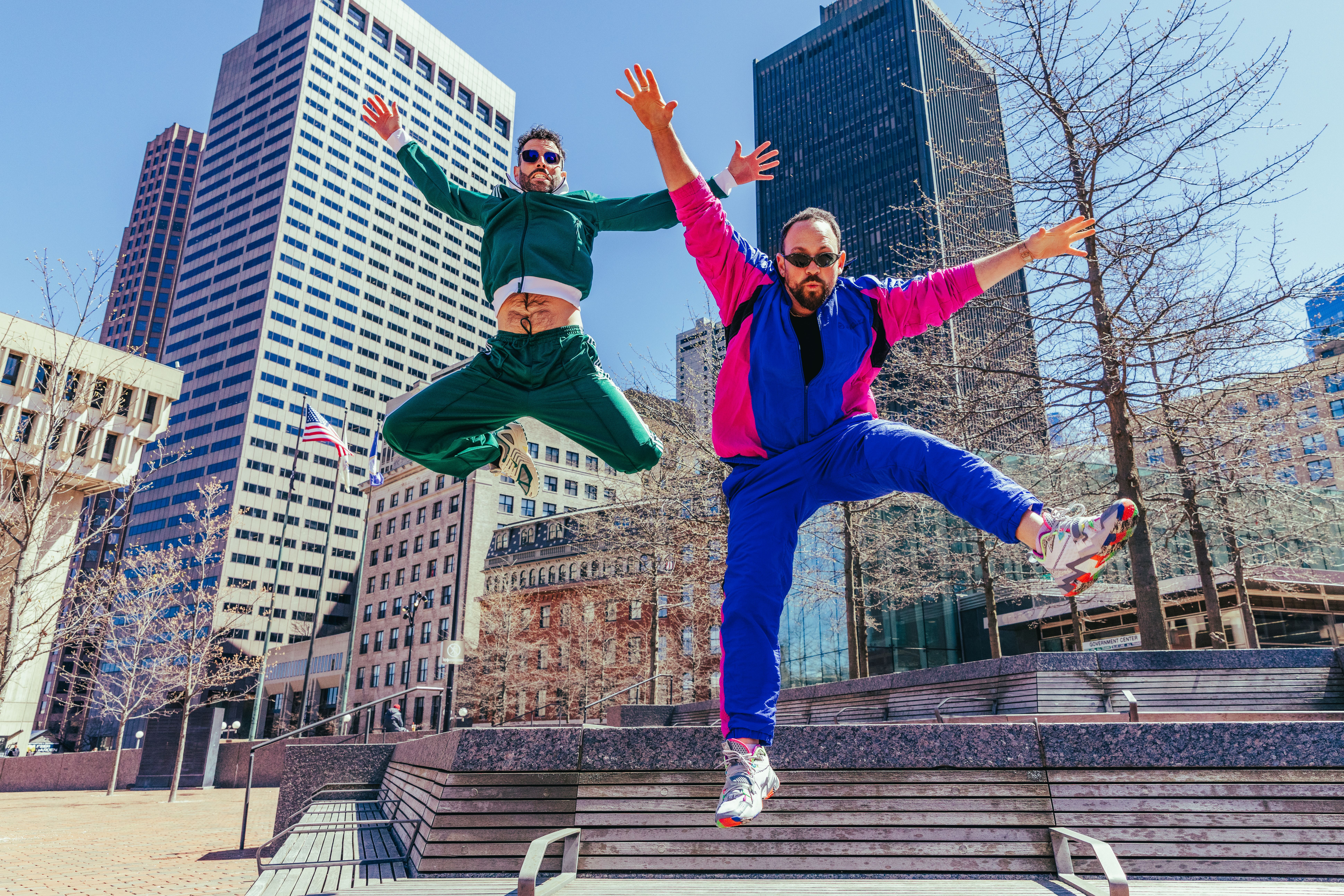
Name: Soul Clap
Members: Eli Goldstein a.k.a. Bamboozle / Elyte, Charles Levine a.k.a. Lonely C / Cnyce
Nationality: American
Occupation: Producers, DJs, songwriters
Current release: Soul Clap's Drowning In Your Love EP is out via Freerange.
Recommendation for Boston, USA: An incredible thing to see is the Harvard museum of natural history! The collection there is incredible and they house the Ware Collection of Blaschka Glass Models of Plants aka the “Glass Flowers." Its a collection made by Leopold and Rudolf Blaschka who were a father and son team of Czech glass artists. Over fifty years, from 1886 through 1936, the Blaschkas produced 4,300 glass models that represent 780 plant species of plants. It’s insanely mind blowing and about as far away from Minimalism as you could ever imagine, they went EXTRA!
Topics we're passionate about but rarely get to talk about: Charlie has become totally obsessed with loose leaf tea, especially high mountain Oolongs from Taiwan and China. He is constantly drinking tea day and night and buying more and more. It’s very un-minimal and highly delicious!
Eli is into the intersection of Nature and electronic music. How we can collaborate with Nature to create new sounds that inspire people to connect more deeply with the world around us and our communities. He runs a festival and Karl called Future Sound Of Nature that explores all this …
If you enjoyed this Soul Clap interview and would like to stay up to date with the duo and their music as well as current live dates, visit them on Instagram, Facebook, Soundcloud, and bandcamp.
For a deeper dive, read our earlier Soul Clap interview.
Are there examples of minimalism in music – and outside of music - that impressed you early on?
Soul Clap was founded in 2001 but it felt like really around 2006ish was when things started to take off and this was definitely a primetime music for minimalism in dance music.
We used to get the Fabric and FabricLive CDs delivered through their subscription service and of course the Ricardo Villalobos edition Fabric #36 released in 2007 left a big impact. That mix was constantly on repeat in Eli’s car. It was a real game changer, too, to hear all of those songs mixed together, because if you know this mix it was all his original productions.
So this was a big influence on us, but there are many other examples of minimalism that shaped our musical sensibilities, like Claude Young, Kenny Larkin, Robert Hood, Richie Hawtin / Plastikman (duh). Yes perhaps these are really just examples of Detroit Techno, but the minimalist principles can shine through from time to time.
We also love the Dub Techno / House sounds like from Maurizio, Basic Channel, perhaps David Alvardo as a housier example.
[Read our Richie Hawtin / Plastikman interview]
[Read our Basic Channel's Moritz von Oswald interview]
Were you ever interested in minimalism as a style – from the Philip-Glass-variety to solo instrumental work to minimal techno? If so, tell me a bit about your interest in this.
Funny question for us because in many ways we were the ANTITHESIS of minimalism, especially in 2006-10.
People were soooo deeply interested in Minimal and we were the guys bringing in the flavors of Funk, Soul, R&B, Disco, Yacht Rock, Reggae, House, Punk, Italo etc etc - really musical content, heavy stuff - and introducing this stuff to crowds for the first time.
Imagine being super entrenched in minimal techno and hearing a huge mega produced 80’s R&B record for the first time, it blew people's minds, especially the ones who were high ;)
Do you tend to find that, as many claim, “less is more?” Are the notes you don't play really as important as the ones you do play?
There is a power in less is more sure. But also sometimes, the most is amazing.
Like in the case of a big orchestra or even the loose chaotic sound of bands like Funkadelic where there is so much going on and things are super loose and just a lot of expertly performed information going into the brain all at once.
But yes on the flipside, when you boil things down to the core root elements you can really wind up with a groove that can become quite hypnotic and trance inducing.
Do you feel as that making music is a process of adding elements until it is done – or one where you chisel away pieces from something that is already there?
There is no one recipe for making music, each song has its own origin story.
Sometimes things need extra elements to reach their completion and other times what is presented needs to be reduced to really get to that powerful place.
Many artists are becoming more minimalist in their music as the years go on, focusing on the “essence.” How is that for yourself and how would you describe your development in this regard?
Again yes, there is a power to finding the perfect groove, to using just the best ingredients to create something, to trimming away all the fat until its just the real meat of an identity.
But you know minimalism can become tremendously overrated and devoid of soul, spirit and humanity, so it’s a thin line to walk between creating something magical and over-analyzing the process.
What were some of the starting points for your most recent release? How did a minimalist mindset possibly inform the creative process?
This new EP is far from minimalism, however there was a stripped mix of the b-side “EFUNK Anthem” that boiled things down to a much more bare groove - perhaps this is where that mindset informed the process.
Do you like to set yourself limitations? If so, which were some of those limitations for the new pieces?
Because music production often presents an ENDLESS amount of options, where to go, how to get there, what tools to use, how to shape what you’ve created, it's fun to sometimes say, ok I’m going to make something with JUST this sequencer or that drum machine or a specific synth or instrument and try to get as much out of it as possible.
In many ways there was a certain magic to what we were able to accomplish when we had very little to use. One piece of music we made back in the day called “Incoming Bitch (Get Low)” really was made almost exclusively with a Korg MS2000 for the melodies, bass line etc. That was a really fun moment.
It came together really quickly and became a powerful song that huge crowds of people used to crouch down low to the ground and then come springing back up together when the record dropped!
It’s also quite minimal in its elements.
Thanks to sampling and digital synthesis, there are endless possibilities for sculpting the sounds and overall sound design of a piece or album. What are your considerations in this regard?
The power of modern technology is INCREDIBLE and there is always so much more to learn and ways to grow in music.
What a blessing it is to do this with our lives.
Would you say that you approach your creative tools with a minimalist mindset? Or do you need a wide choice of instruments and tools to make music?
There is no need for one way or the other, there has been SO much music made strictly in Ableton, sitting in a hotel room, on an airplane, on a train etc, with no gear no studio, really except a laptop.
But that said when you surround yourself with delicious ingredients the results are that much more powerful. Real synths, great outboard sound processing, well recorded results, amazing session musicians … you can definitely hear the difference.
What were some of the most important pieces of gear or instruments for this release?
Off the top, the Yamaha DX100, Dave Smith OB6, Moog Mother, Korg MS2000, Arp Solina, Isla S2400, Roland TR8S, ERM Multiclock.
Hard to remember it all, but those are some of the tools.
Reducing one's options and techniques often implies a different way of working with the materials. Tell me about yours, please.
We have a lot of options and a lot of techniques and those create varied results because we have very eclectic tastes.
Variety is the spice of life and as we like to say HOUSE WEARS MANY HATS!
French producer Guillaume Duchastel told me: “Minimalism is about more than owning fewer things. It’s about focusing on what truly matters.“ What are some of your strategies for separating what matters from that which doesn't?
Yes, having a lot often means having unnecessary extra baggage. This can become problematic and big collections are hard to manage.
Maybe Guillaume can help out here lol!
With so much incredible music instantly available, are you finding that you want to take it all in – or that you need to be more selective? How do you pick the music you really want to invest in?
There is really so much of everything going on everywhere all at once, what seems to be important is to just focus on what brings you the most joy but also always to remain open to new ideas and avenues.
There is no need to be closed off but it is certainly ok to know when to stay in one's own lane.
Would you say that minimalism extends into other parts of your life?
Having less stuff and focusing on the essence of what we need to live opens up space for the mind and the spirit to expand.
In this culture of instant gratification and commodification making minimal choices has positive effects on our mental health and the health of nature and our planet.