Published
Name: Soulparlor
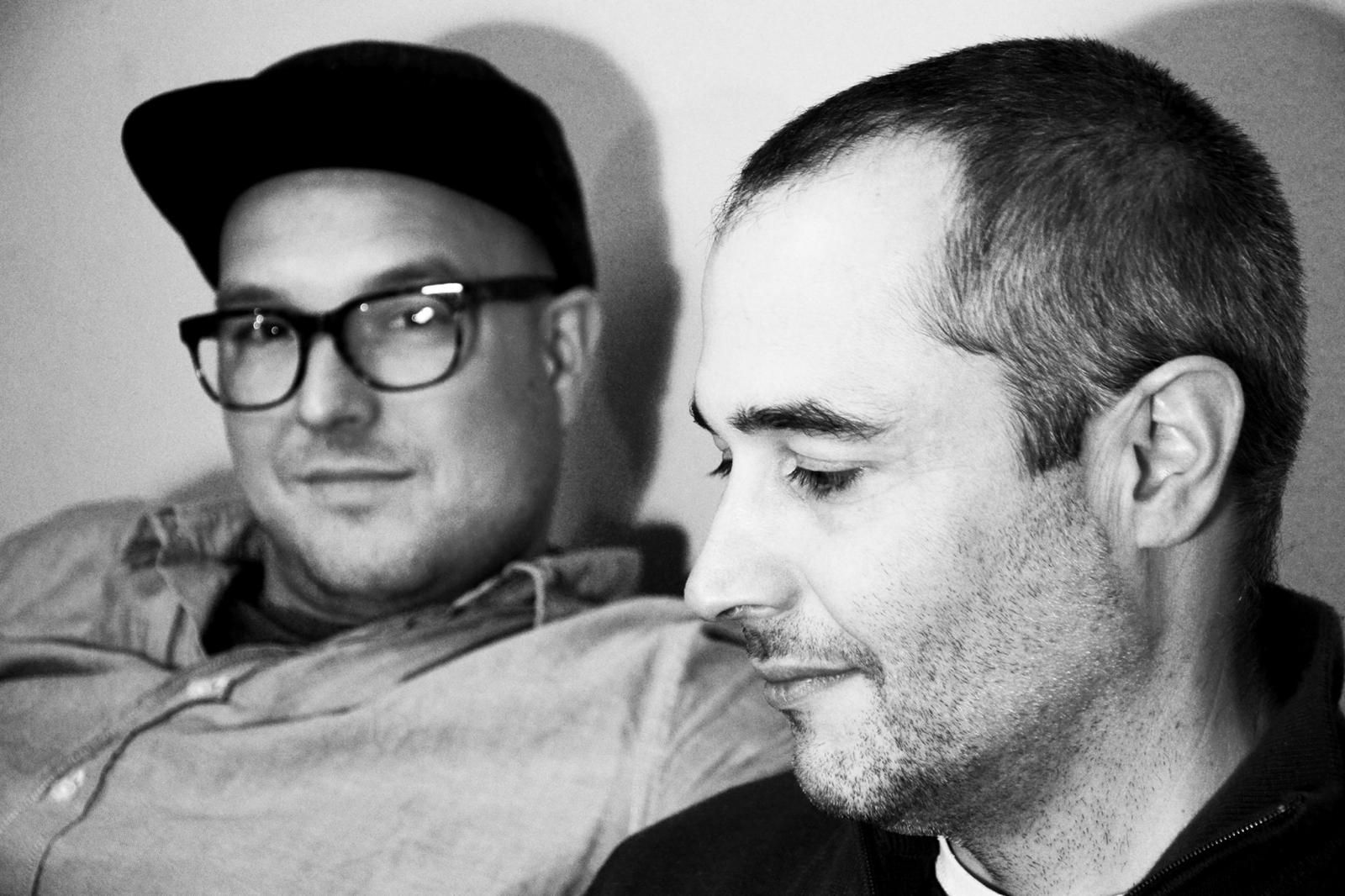
Members: Frank Jensen, Tobias Müller
Nationality: German
Occupation: Producers, DJs
Current Release: Soulparlor's new album Day By Day is out via Atjazz Record Company.
Recommendations for Mainz, Germany:
Frank: Come on over and relax by the river. Afterwards, visit a traditional wine house and enjoy great local food and wines.
Topic I am passionate about but rarely get to talk about:
Frank: The world is becoming increasingly inhumane due to a few very crazy powerful people – if we now put aside our egos and work to counteract this, it will make the world a more lovable place for everyone again. Every single person can make a difference ...
If you enjoyed this Soulparlor interview and would like to stay up to date with the group's music and live dates, visit them on Instagram, and bandcamp.
When it comes to experiencing strong emotions as as a listener, which albums, performances, and artists come to mind?
Tobias Müller: Hubert Laws – “We’re in ecstasy” (Album: Land of passion)
Bill Withers – “Make a smile for me” (Album: Black Magic)
Bob Marley – “Sun is shining” (re-recorded Version on Album: Kaya)
Stevie Wonder – “Too High” (Album: Innervisions)
Oscar Peterson – “Wave” (Album: Motions & Emotions)
Goldie ft. Diane Charlemagne – “Inner City Life” (Album: Timeless)
Anderson.Paak – “Right There” (Album: Venice)
Just to name a few.
Of course, there are many, many more huge tracks in the musical universe – sorry for not mentioning them here.
Frank Jensen: Slum Village – Fantastic Vol. 2
D’angelo – Voodoo
4 Hero – 2 Pages
Daftpunk – Homework
Roni Size – New Forms
Moodymann - Silentintroduction
There can be many different kinds of emotions in art – soft, harsh, healing, aggressive, uplifting and many more. Which do you tend to feel drawn to most?
Tobias Müller: I can't say that in general. Maybe it depends on the quality on the one hand, and on the other hand, whether I’m ready for it.
Frank Jensen: It often just depends on the current mood and what I actually want to achieve. Sometimes it can be aggressive, sometimes soft. And I like it when the mood changes during the process, it can be really fascinating.
I have had a hard time explaining that listening to death metal calms me down. When you listen to a song or composition, does it tend to fill you with the same emotions – or are there “paradoxical” effects?
Tobias Müller: I can say that music that bores me makes me aggressive, regardless of the mood they are trying to convey, PLEASE SKIP IT!
Frank Jensen: I sometimes listen to hard drum and bass or dubstep to fall asleep. According to my wife, that's a bit crazy, but it calms me down.
In as far as it plays a role for the music you like listening to or making, what role do words and the voice of a vocalist play for the transmission of emotions?
Tobias Müller: For me, instrumental pieces are the most universal and I like that feeling. Adding vocals gives a piece a certain framework, classifies it thematically, but of course it also makes it more human and emotional and maybe more accessible.
Frank Jensen: There are tracks that don't need vocals and there are tracks that cry out for vocals. If we want vocals, we'll give the artists the instrumentals in an almost clean version – without any requirements or a theme. What emerges from this is usually very interesting.
And if you then get the feeling that the vocal artist has understood the vibe of the track, you can only be happy.
When it comes to experiencing emotions as as a creator, how would you describe the physical sensation of experiencing them? [Where do you feel them, do you have a visual sensation/representation, is there a sense of release or a build-up of tension etc …]
Tobias Müller: I have never experienced synaesthesia, if that is the phenomenon you are referring to. I can feel tensions and sparkling in my stomach, heart, head and spine while playing around in the studio. During the process I simply feel an inner urge to work on an idea until the result reaches a state that I am satisfied with.
Of course, sometimes you discover new changes and combinations that just leave you stunned.
Frank Jensen: I think in many cases it just happens that at a certain point in the production process you realise, ‘This is it!’ And then you have the drive and the feeling that you absolutely want to continue. But then there are also tracks that you've started and after hours, days or weeks you realise ‘this is never going to work’.
For me, failure is a huge part of my constant learning process. It makes the experiences all the more wonderful when you feel that something great can come out of it.
When it comes to composing / songwriting, are you finding that spontaneity and just a few takes tend to capture emotions best? Or does honing a piece bring you closer to that goal?
Tobias Müller: That also depends. The best instrumentals are created in a session when the flow can build up unhindered. Finalizing the sound of a track needs more or less honing. During that process changes can happen, and sometimes you find the icing on the cake in these late steps.
But, given the tools available today, such as virtual synthesizers and plug-ins in your DAW, you have to set limits for yourself so as not to overproduce a track.
Frank Jensen: Many great ideas usually happen in the first few minutes, and in many cases it's not that much work to stay true to the idea afterwards.
I come from a time when many things were still limited, MPC and that was it. And I find it totally sexy nowadays when people limit themselves again despite the endless possibilities.
How much of the emotions of your own music, would you say, are already part of the composition, how much is the result of the recording process?
Tobias Müller: That also depends. I would say the direction is given by the composition. If the recording process is done with dedication, it will support the composition and enhance the given direction.
Frank Jensen: For me, the first question is where do I want to go! And usually, I decide at the beginning whether I want something that ‘'bangs’ or more of a ‘vibe’. Then I move on to the genre – whether it’s hip hop, broken beat, house or drum & bass.
And then I let myself be surprised...
For your current release, what kind of emotions were you looking to get across?
Tobias Müller: We don't have a special meta-space filled with concepts to explain or justify the music we make. We make music because it wants to come out.
Frank Jensen: We simply wanted to musically portray an ordinary day in the lives of ordinary people. With all its ups and downs.
But to be honest, this concept only came about when we finalised the playlist – at the beginning, we had no clue where it was going.
What role do factors like volume, effects like distortion, amplification, and production in general for in terms of creating the emotions, energies or impressions you want?
Tobias Müller: Using FXs is a basic process, because 99% of available presets don’t have that special ‘je ne sais quoi’.
Tweaking is essential! From my point of view static sound textures don’t support emotional flow.
Frank Jensen: To be honest, I'm often quite the amateur in this area. I know how something should sound and often achieve it in quite unusual ways. I can use FX and I'm not too old for new things.
But when it comes to mixing and professional usage of FX, Tobias is on a whole other level.
In terms of emotions, what changes when you're performing live on stage, with an audience present, compared to the recording stage?
Frank Jensen: There are two problems with that.
1. We don't play live (we used to have a SoulParlor band – maybe we should revive that project).
2. When I'm DJing, I might play one of our tracks every few years. That's a problem I've always had. It probably has to do with listening to the tracks over and over again for months or years during the production process.
And when I do include one of our tracks in a set, Tobias comes along and says I shouldn't play such old stuff.
How does the presence of the audience and your interaction with it change the emotional impact of the music and how would you describe the creative interaction with listeners during a gig?
Frank Jensen: I love it when I have an all-nighter as a DJ. I really enjoy taking people on a long journey.
So I start with NuSoul and hip hop and slowly work my way up to prime time via disco and broken beats to house and sexy techno. Depending on how the crowd is feeling, I might move on to dubstep and drum & bass. But at prime time, I generally like to stick to house in all its facets.
And it's always important to bring people back down to earth at the end, which makes them want to come back for more.
What kind of feedback have you received from listeners or concert audiences in terms of the experience that your music and/or performances have had on them?
Frank Jensen: I think many people appreciate SoulParlor's musical openness.
You've never really been able to pigeonhole us, and that's what makes it so exciting in the end.
Would you say that you prefer to stay in control to be able to shape the emotions or do you surrender to them and allow the music to take over? Who, ultimately has control during a live performance?
Frank Jensen: So SoulParlor DJ sets generally have a kind of concept – but that's exactly why I love to break out unexpectedly and surprise people.
There always has to be tension in the air.
The emotions that music is able to generate can be extremely powerful. How, do you think, can artists make use of this power to bring about change in the world?
Frank Jensen: Just do what you feel like doing and don't completely submit to the music industry. And you have to deal with a lot of setbacks and learn from them.
When emotions inspire a track, anything is possible.