Published
Name: United Freedom Collective
Members: Robbie Redway, Mathieu Seynaeve, WaiFung Tsang
Interviewee: Robbie Redway
Nationality: British
Recent release: United Freedom Collective's Bright Patterns EP is out February 14th, 2025 via Multi Culti.
Global Recommendation: Margate has many treasures, but I would say walk around the harbour arm at low-tide, ending with a sauna on the beach and a dip in Walpole tidal pool.
If you enjoyed this United Freedom Collective interview and would like to find out more about the band and their music, visit them on Instagram, and Facebook.
Many musicians I am talking to at the moment feel somewhat disillusioned about the impact, meaning, and value of their work. Feel free to vent some of your own frustrations and/or disappointments – as well, if possible, something that you recently experienced (or a thought that you had) that might give hope to other creatives.
Well, the first thing to say is that playlist and streaming culture, whilst serving as a conduit for reach, is killing engagement in longer-form musical output and real fan investment in artists. This can be really disheartening, especially when that reach is often determined by algorithms and pot luck.
A friend (who’s a very well-known musician) recently said to me ‘releasing new music is like farting in a gale storm’, which really is how it feels sometimes, even for those with a large fan base. So yeah, not a hugely positive start to the interview haha.
But I do find hope in artistic communities that are still thriving, like we have in my hometown Margate, and the continued love people will always have in getting together and listening to unique, high quality live music, or skilled selectors playing on an awesome sound system. That’s where we can forget about the ‘industry’ side of things and actually just celebrate life through vibration.
If, for a moment, we forget about streaming numbers, target audiences, social media followers, and sales - why are you drawn to sound and music as a creator and listener? What is it that you give and receive through it?
I suppose, like most creators, I have a complex relationship with music making. It’s vital to me as an outlet for creativity but it’s so clouded by, as you say, expectations for it to result in something financial or for it to be approved of publicly in some way.
I don’t think there’s any doubt about it’s power to express what we can’t express with words, or its capacity for healing. I think the key thing is intention. It seems if I have a clear intention, the music I make tends to result in evoking more feeling in the listener. Likewise, as a listener, I’m drawn to music that has an emotional rawness to it, which I think is true for most people.
The most beautiful music is a hot bath that we can get in to explore the feelings we all experience. From dark to light.
In how far can music be considered "essential" for humans?
Music and sound are primal facets of human existence, we communicated through sound and movement well before we had constructed languages. So yes, after our basic needs of oxygen, food, water and shelter, music is up there!
Every single human civilization has used sound in some form of ritual. So yeah the evidence is there for sure.
Take us through a day in your life, from a possible morning routine to your work, please, and how music and sound accompany you through it.
Routine is my Everest haha.
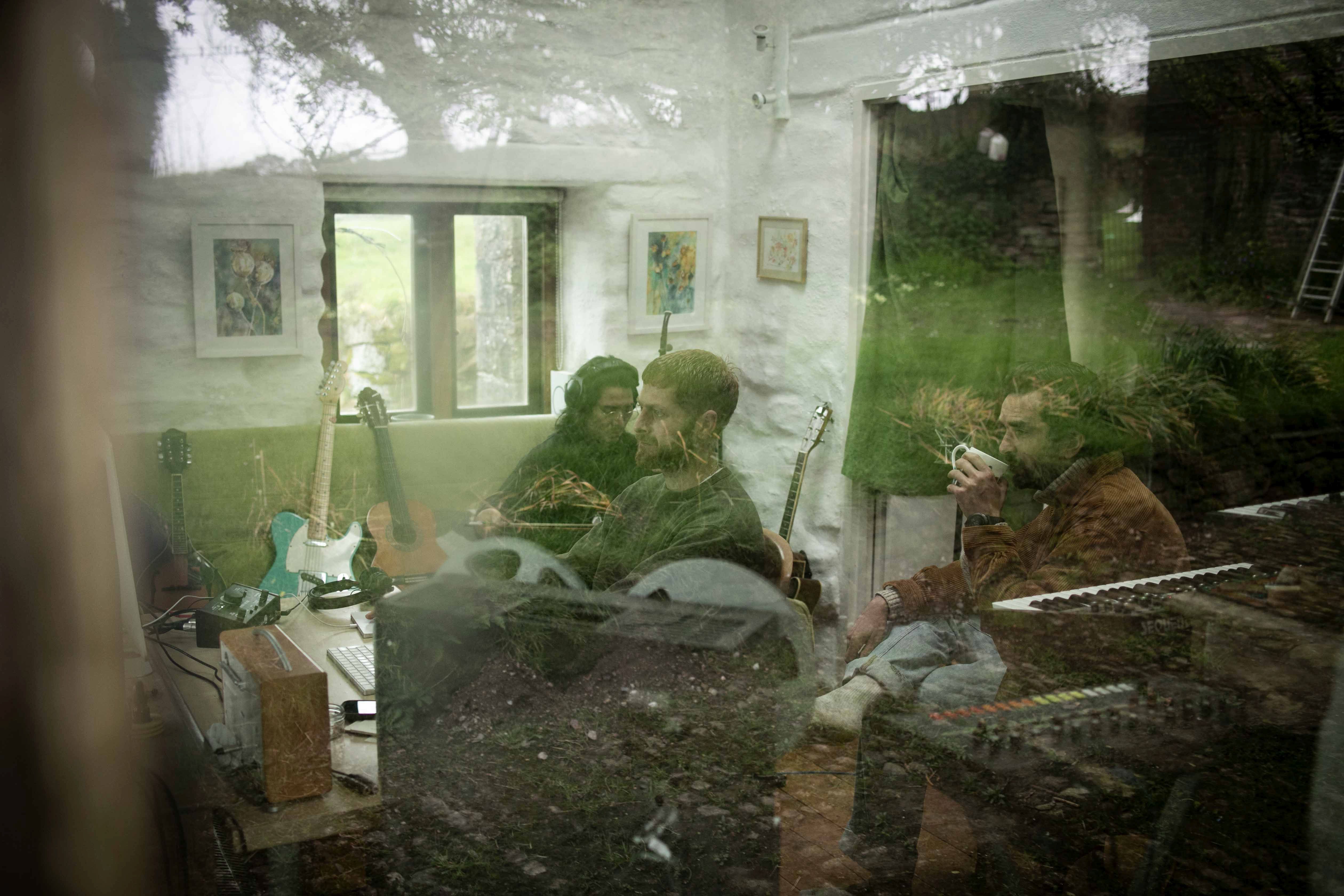
I find it quite hard but in an ideal world I will meditate and breathe and stretch a bit, walk my dog, swim in the sea and then eat something healthy before going to the studio to work. I have a room at Prah Studios in Margate which is partly residential so there’s always different artists coming through and I get a lot of inspiration from that.
I try to listen to as much of other people’s music in the morning as I can, as once I’m in the studio I prefer to just focus on what I’m making. I don’t love referencing while I’m writing, as it can be disheartening to listen to a fully formed piece of work when my idea is still undeveloped. 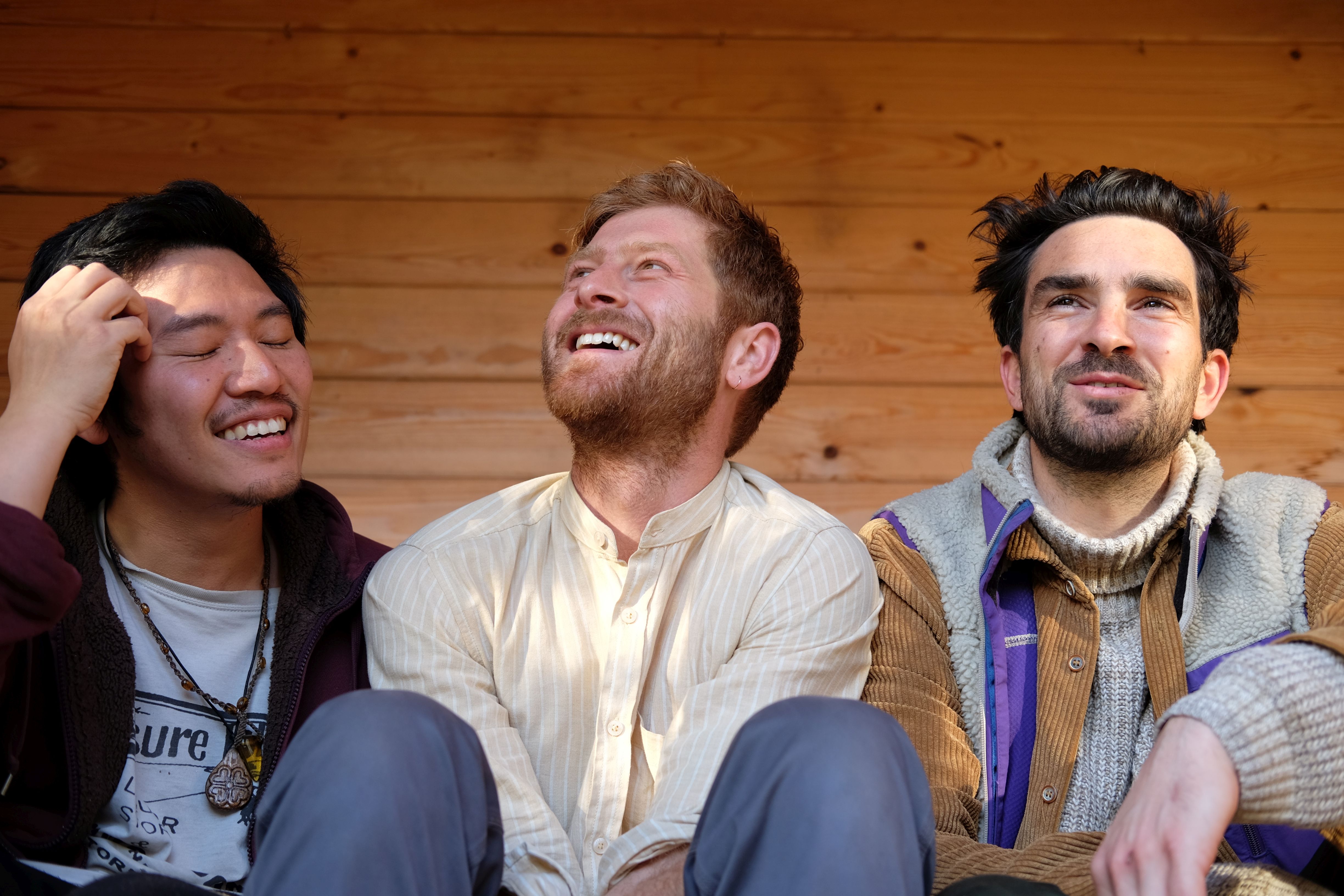
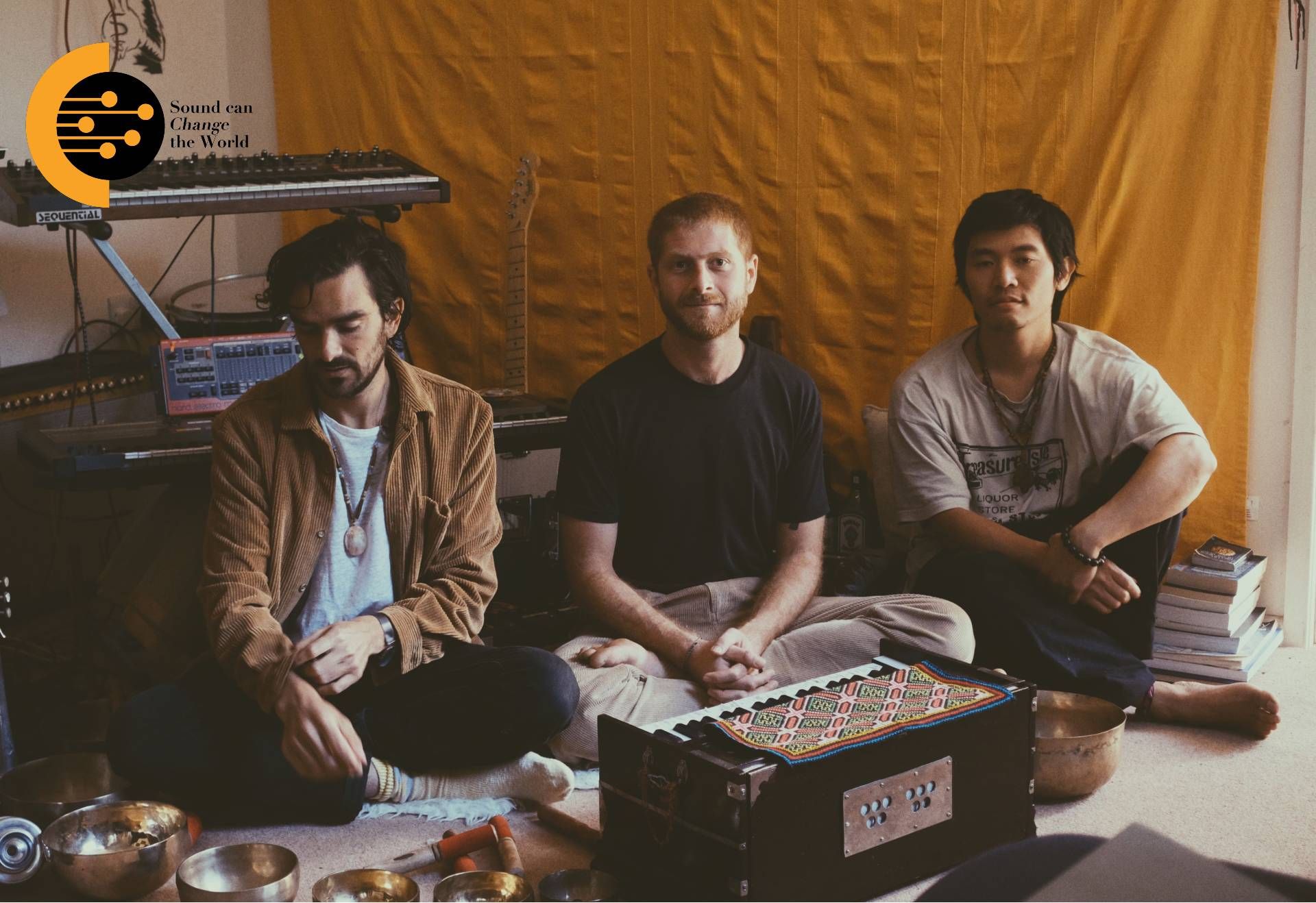
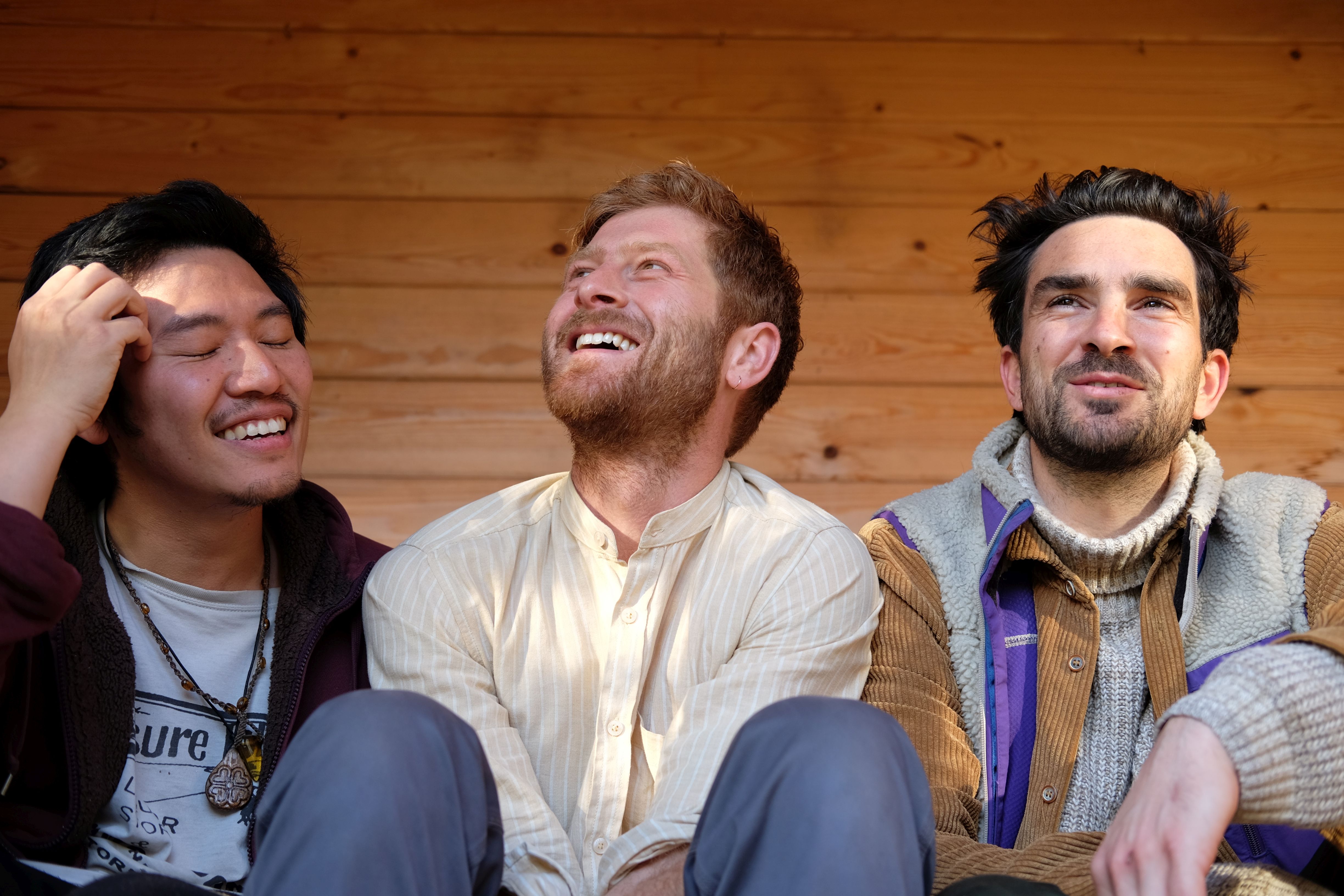
United Freedom Collective Interview Image (c) the artists
What artists, albums, performances, or even aesthetics and philosophies are inspiring to your life in and beyond music right now and in which way? Have there been songs, albums, performances, and artists that changed / influenced your life?
Wow that’s a big question. If I focus on recent times I’ve been interested in sound (as opposed to actual music) as a healing tool, making soundtracks for my friends’ (and fellow UFC founders Mat and WaiFung) research into psychedelics as medicines, and also doing a course in sound therapy and learning about Pauline Oliveros’ work in ‘deep listening’. This has inevitably had an influence on what I’m doing in the studio.
Probably the most influential musicians on my life have been Miles Davis and Radiohead, but I could name hundreds.
[Read our Pauline Oliveros interview]
Tell me about some of the feedback you've received from listeners about how your work has impacted them.
Right now we’re on tour supporting Maribou State around Europe and it’s been really lovely to meet a few fans who have said they have felt the music and that it’s soundtracked some sort of experience for them. It’s a cliche but obviously that’s what its about isn’t it.
As much as I try not to base my emotional state on external validation, if someone has listened and felt a connection to our music, that’s a really wonderful thing.
What are some of the goals and ambitions you have for your music?
More of the above really. Right now I want to be successful enough to have someone else do my social media (haha) and someone to drive me to gigs.
I’m being glib obviously, but the ambition is always just to create a life where I’m inspired, able to pay for things, tend to relationships and have time to make music. Balance and sustainability basically. Easier said than done for sure.
What kind of music/art do you feel the world needs right now - does it need “healing,” “shaking up,” “an escape from reality,” “consolation,” “a sense of community,” “holding up a mirror,” something else?
Well there’s enough artists making amazing music, so those bases are all covered I think, they’re all necessary aren’t they. If I was to pick one it would be healing - but again that can mean so many things.
I actually believe what the world needs now more than anything is for humans to feel connected to each other and to the Earth and all life upon it. If music helps with that, then great!
What are some of the non-musical topics and causes you feel strongly about? Do you keep them separate from or try to connect them to your creative work?
I think everything we encounter throughout life is going to impact what we create. That’s inescapable.
There’s many causes that need support right now aren’t there. Vulnerable people being demonised for the sake of greed. Capitalism destroying our natural world. Ancestral trauma repeating itself in the most ugly ways. Urgh. It does all get quite heavy when you think about it.
But we can’t just hide from it and hope it all works out. We need new systems, we need waking up. I think it starts with providing education and safety to young people, that’s somewhere I feel I can contribute a little bit at least.
French Saxophonist Sakina Abdou told me that she "witnessed a powerlessness towards a world that is in absolutely no way in line with my values," and that she hasn't "yet found a way to overcome this in ways other than music, but I admire the activists around me who do it." Can you relate to this and what does it say about the role of music in overcoming our sense of powerlessness and actually empowering us?
Yeah I completely agree with her, and definitely relate regarding the activism. It’s so hard to know what to do about all the injustices in the world. And making music can often feel indulgent and insular, even though it is important.
I think we need to pick our battles and fight them with energy and conviction but providing spaces where people can get lost in music is a valuable contribution in itself.
What do you make of the idea that music and sound are a universal language - and how can artists use its specific and universal qualities to bring about change on a global scale?
I recently read The Mysticism of Sound and Music by the Sufi philosopher Hazrat Inayat Khan which beautifully highlights that aspect of music and sound, that it’s inbuilt in us as humans as a form of communication, to each other and to a higher power.
I think the use of music in spiritual and religious settings and other communal gatherings (like festivals and clubs) is only going to bring us closer together, which will contribute to global healing. But it has done for millennia and we still see so much pain in the world, so we need other factors too.
Binning off billionaires would be a good start.
How would our world be different if we paid less attention to looks and listened more instead?
I think if you apply a sense of attention and non-judgement to both looking and listening, the world would be a better place, as both senses serve pretty important functions. Obviously as a society we have placed too much importance on looking a certain way and conforming to stereotypes which has led to all sorts of trouble.
And I think listening to others and to nature is definitely an area of improvement for our increasingly distracted human race. Although I’m not sure looking and listening are mutually exclusive. 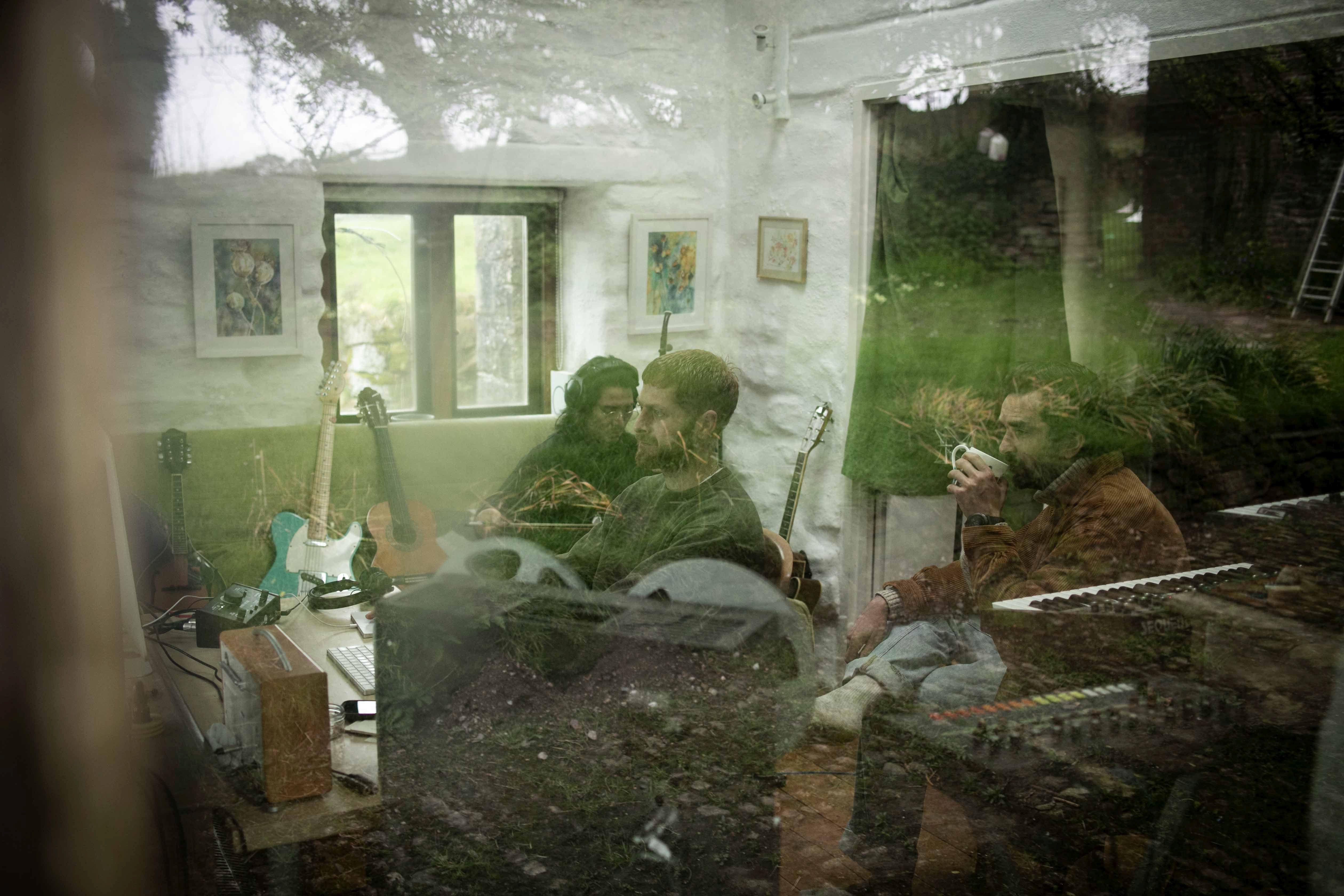
United Freedom Collective Interview Image (c) the artists
Performing music or creating sounds with others opens up the possibility of resolving conflicts in a different way. From your personal experience in collaborations or group performances, how does this work and do you believe it is possible to apply these approaches to areas outside of music?
United Freedom Collective was started with the intention of it being an open, collaborative space where we can share our ideas and cultures and focus on the process without external pressures on what the outcome is.
Obviously this is an ideal and there have been big obstacles to overcome, especially when we signed with Ninja Tune and had to start thinking about our music as a product.
Mathieu and WaiFung, who I started the project with, are both mental health clinicians, and our sessions are often framed by deep conversations about how best to collaborate and intertwine our different perspectives. We usually meditate or practice breath-work together before we start making music as this seems to bind us in a deeper way, calming us too and creating a nurturing atmosphere rather than a competitive one.
These are certainly practices people can use to benefit their lives outside of music.
It is possible for someone with an entirely different world view from your own to love or appreciate your work. How, if at all, is it possible to use this power of sound and music to enter into a dialogue?
Yes, I think so, although, despite the death of subcultures, I think people who like similar music are often tuned to similar frequencies and are therefore more likely to have similar worldviews.
Of course, music has the power to bring people together despite their different beliefs, but I’m not sure it has the power to change our increasingly polarised society, unfortunately.
In human history, music is universal across cultures and eras of development. Still, musicians are possibly being exploited more than ever. How do you feel they can see beyond their personal limitations, and form bonds and communities capable of tangibly furthering their cause? How can we get people to listen?
I’m not sure musicians are being exploited more than ever.
Yes, it’s very difficult to make a living from music but, bar about 30 years in the 20th century, I’m pretty sure it has been that way throughout history. We’ve recently seen a boom and bust of the industry in quite a short amount of time, but we have also seen the rise in the bedroom producer, the end of reliance on labels, which has meant more and more music flooding the market. On the flip side artists have more autonomy than ever before.
I think we’re also suffering from a culture which is increasingly impatient. It takes years and years to establish a music project (mostly) but because we’ve all seen artists blow up virally or whatever there’s an illusion that anyone can make it and that it’s easy. It’s not easy, and there’s no shortcuts.
This favours people who have some form of financial backing, unfortunately. And governments don’t seem to want to subsidise it much any more. It’s tough out there.
So yeah, I think the key word you said there is community. Building proper communities based around collaboration is a good place to start, not just online communities. Public support for grassroots venues would be so beneficial, so that it doesn’t cost acts crazy money to tour. Fans focusing on platforms like Bandcamp rather than spotify.
There are ways, but I’m afraid, like the world as a whole, the majority are having to take the hit while a minority strike it rich.