Published
Part 1
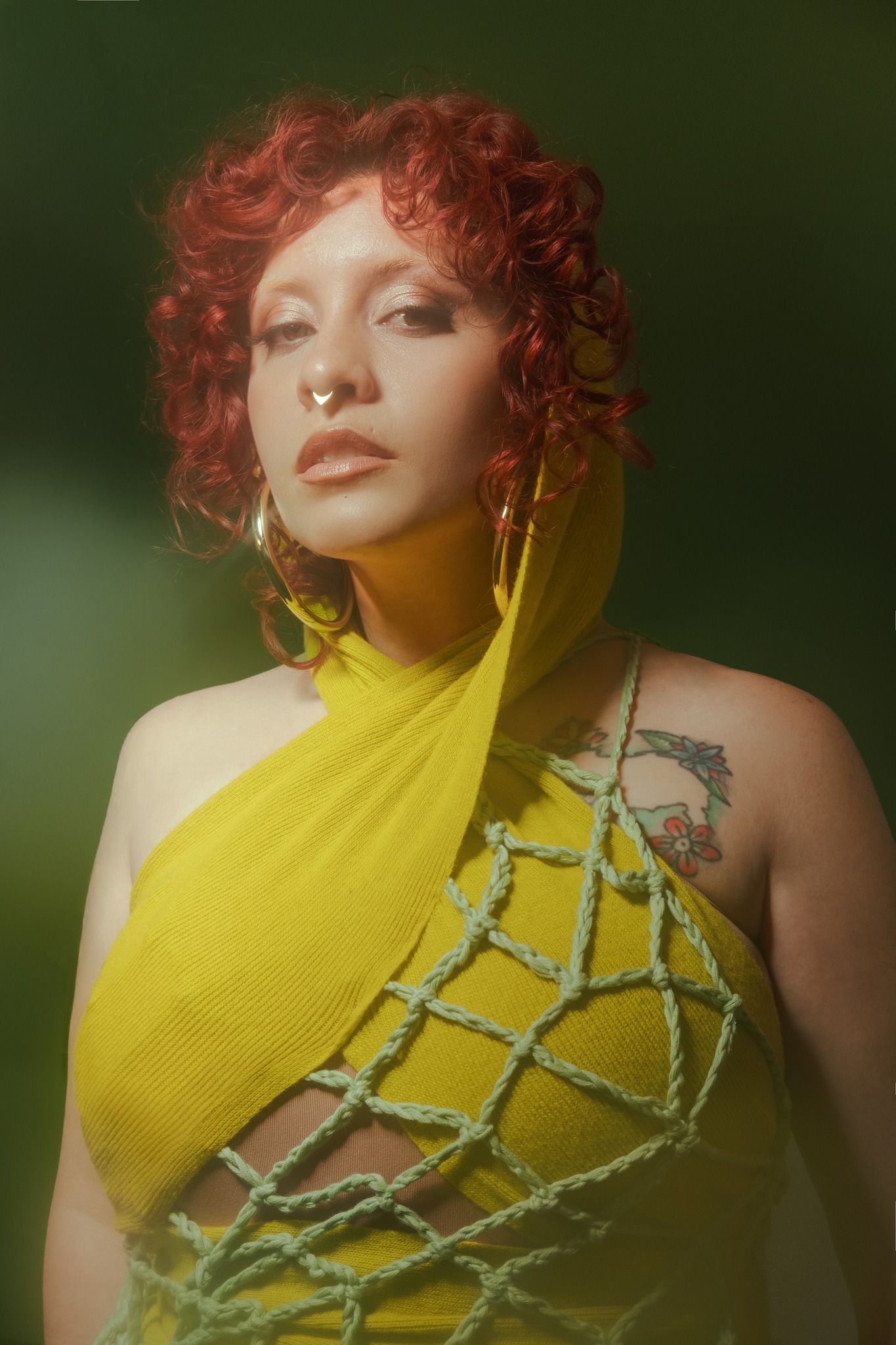
Name: Speranza Galez
Nationality: Venezuelan, Paris-based
Occupation: Singer, songwriter
Current release: Speranza Galez's new album Memorias Imaginarias de un Universo Sin Tiempo is out via Le Coolectif. Pre-order the vinyl LP via Digger's Factory.
Recommendations for Venezuela: Well, just outside my hometown, San Cristóbal, there is a very beautiful town called Peribeca — I highly recommend it. If not, in Caracas, where I grew up, I recommend visiting the Mirador de Santa Fé to see the whole city. And in Paris, where I currently live, I suggest visiting Montmartre, which is my favorite neighborhood.
Topic I am passionate about but rarely get to talk about: I have a very important hobby, which is crochet! I’m passionate about crochet and have been doing it for at least 12 years. It’s a present element in my project—you’ll see it a lot in the album artwork. I also drew inspiration from this hobby and intertwined it with the myth of Penelope (I also love mythology) and composed a song with the same name.
If you enjoyed this Speranza Galez interview and would like to stay up to date with her music and current lives dates, visit her on Instagram, and Facebook.
When did you first consciously start getting interested in singing? What was your first performance as a singer on stage or in the studio and what was the experience like?
I don’t remember exactly when I first became interested in singing because it was always present in my life.
My mom was the director of the children’s choir at our church in my hometown, San Cristóbal, Venezuela — and of course, I was there too.
Every now and then at home, she would take out the guitar and start playing songs, and we would sing them together, doing harmonies and everything.
If you're also playing other instruments, how does the expressive potential of these compare to your own voice?
When I was a teenager studying at the conservatory, I played the double bass. I don’t play it anymore, but every now and then I pick up the electric bass just for fun.
Still, my voice is by far the most expressive instrument for me. With it, you can make an enormous variety of sounds while conveying lyrics and a message at the same time.
For me, the message, the underlying meaning, the concept — that’s essential (you can see that in my album), and there’s no better instrument than your own voice to express it.
Singing is an integral part of all cultures, and traditions. Which of these do you draw from – and why?
In that sense, my album is an open book. In my compositions, I mix my Latin roots — specifically Venezuelan — with jazz, bossa nova, funk, and even metal.
Fusion is my life, because I’m a very eclectic person when it comes to musical taste. That really comes through in my record. Besides my original compositions, there are also rearranged versions of traditional Venezuelan songs from different eras and styles (like merengue caraqueño, polo oriental, onda nueva, and tonada fused with maloya — since my drummer is from Réunion Island).
I also included a couple of standards completely taken out of their original context, including one that I even sing in Spanish — "I Remember Clifford."
What were some of the main challenges in your development as a singer/vocalist? Which practices, exercises, or teachers were most helpful in reaching your goals – were there also “harmful” ones?
My development as a singer has gone through many stages, and I’m still very much in that process.
I’m deeply committed to improving every day so I can have more tools for expression. Even though I started taking singing lessons at the age of 14, I always felt vocally misunderstood, and I couldn’t achieve the goals that were being set for me. That led to a lot of frustration and even more vocal blocks.
When I was 17, I began studying acting at the National Theatre School in Caracas, and it was the vocal projection classes that finally helped me understand resonance — the teacher I had at the time, Ludwig Pineda, was wonderful.
After finishing my theatre studies, I began questioning which artistic path I would follow, since I’ve always loved art in all its forms. I had studied music, theatre, and visual arts, and was passionate about all of them ... So I decided to follow that childhood dream — even something I used to play at being: a singer!
At the University of the Arts in Venezuela, I began studying jazz singing. I had an amazing teacher, Biella Da Costa, and later I continued working mostly on my own. I followed Seth Riggs’ method closely — I found his book Singing for the Stars, which came with practice audios. That book completely changed my life.
That’s how, little by little, I’ve been building my vocal identity. I’m a very introspective person, and I think it can sometimes be challenging to align all the ideas in your head with the way you actually want to bring them to life.
What are the things you hear in a voice when listening to a vocalist? What moves you in the voices of other singers?
What interests me most in a voice is rhythm — the way a singer phrases, how they articulate, and the intention behind it all. I believe that’s where the life of a song truly is.
As singers, it’s easy to focus too much on pitch and forget the importance of rhythm — and sometimes, no matter how in tune a song is, it doesn’t feel alive.
This is one of the many aspects that turned me into an obsessive fan of Ella Fitzgerald (who I also consider one of my vocal teachers — I’ve learned so much from her).
Ella’s phrasing, the way she articulated, how she gave energy to every note, every syllable, how she played with time and sound — it moves me deeply.
It gives me chills, it makes me dream, it makes me happy.
How would you describe the physical sensation of singing? [Where do you feel the voice, do you have a visual sensation/representation, is there a sense of release or tension etc …]
It’s a feeling of release … and hard work to make that sense of release stronger each time. I focus on feeling the sound in my resonators and supporting it with my diaphragm.
In reality, I’m very technique-focused — to avoid any kind of tension or vocal injury, and to maintain good intonation and note stability. I’m a bit of a geek when it comes to that. I really enjoy playing with nuances and interpretation.
We have a speaking voice and a singing voice. Do these feel like they are natural extensions of each other, ends on a spectrum or different in kind?
Yes, for me, especially when singing with the chest voice, it’s important to sing as closely as possible to our speaking voice.
In fact, before recording my album, one of the recommendations Vincent Segal gave me was to recite the song as if you were speaking it, to find ways to phrase and give intention to each melodic phrase.
For the mixed voice and head voice, I feel it’s a bit different because those resonators are ones we don’t normally use in everyday life — or at least, I don’t use them. So, there I feel you have to try to connect with different references to access them. Like Sting once said, thinking about crying for the mixed voice, or for the head voice, imagine the sound a wolf makes.
You have to explore the whole spectrum of sounds we are capable of producing with our voice.
How do you see the relationship between harmony, rhythm and melody? Do you feel that honing your sense of rhythm and groove has an effect on your singing skills?
A song is born from the interaction of these three elements, so I see their relationship as absolutely essential — almost mandatory. A melody follows the path laid out by the harmony, and it does so at a specific rhythm.
I think I mentioned this before, but for me, rhythm is especially important because that’s where you can really express your groove. In traditional Venezuelan music — which is deeply rooted in African rhythms — rhythm is indispensable, and I draw a lot of inspiration from that.
Playing with rhythmic figures, shifting phrases, displacing accents … that’s all really important to me.