Published
Name: Stavroz
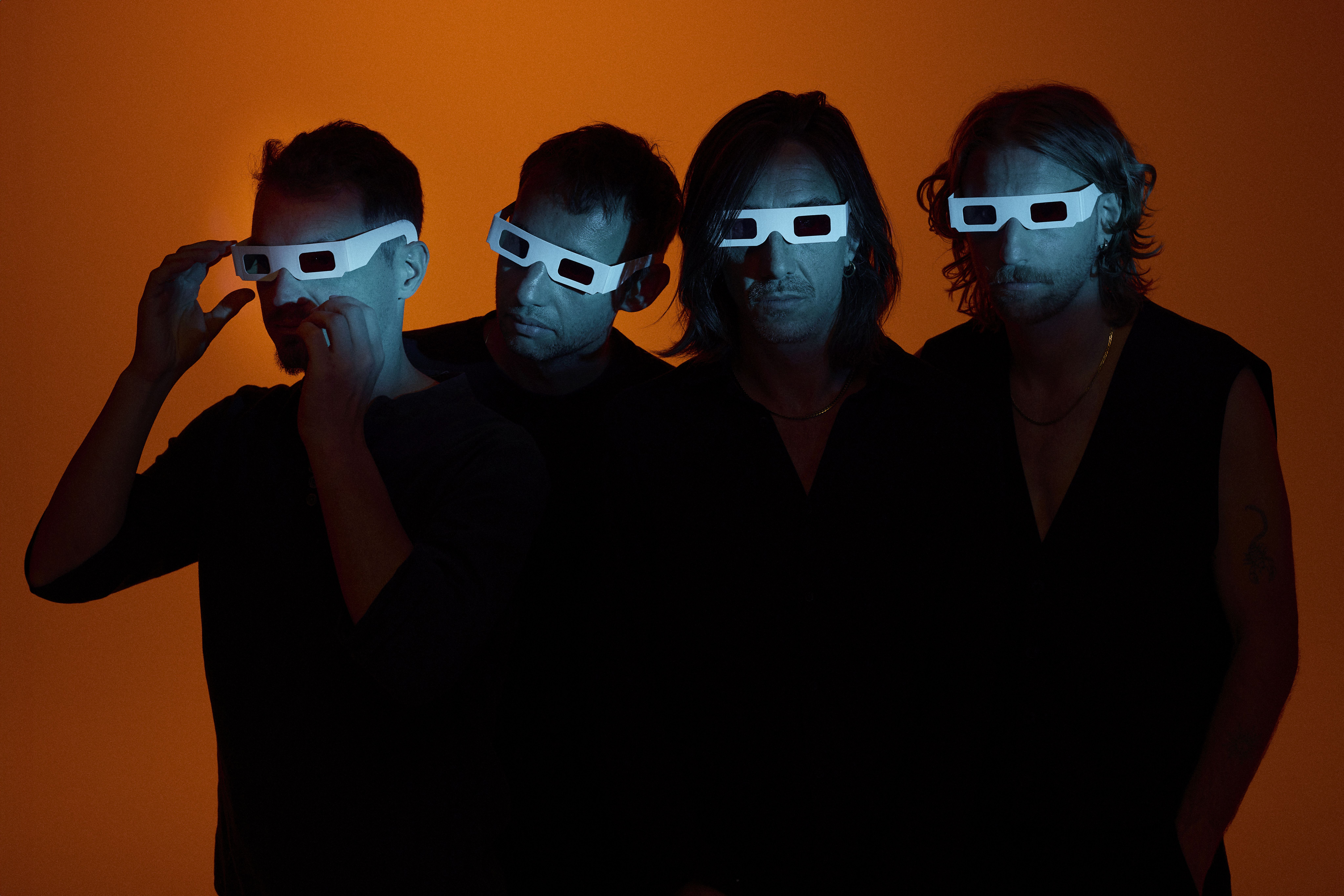
Members: Pieter De Meester, Maxim Helincks, Gert Beazar, Ijsbrand De Wilde
Nationality: Belgian
Current Release: Stavroz's new album Take a Seat is out via Moodfamily. Order the limited vinyl directly from the band.
If you enjoyed this Stavroz interview and would like to stay up to date with the band's music and live dates, visit their official homepage. They are is also on Instagram, bandcamp, Soundcloud, and facebook.
Where does the impulse to create something come from for you? What role do often-quoted sources of inspiration like dreams, other forms of art, personal relationships, politics etc play?
Inspiration comes and goes. Often, it starts with a sound or a sample that sparks something.
But it’s not just music itself – dreams, experiences from our travels, or moments on tour often find their way into what we create. Sometimes it’s a rhythm we heard somewhere, sometimes it’s a phrase that turns into lyrics later in the studio.
We never really plan it; ideas just grow naturally from the things we live through – like when we saw an amazing Gnawa band in Morocco, and some of those rhythms eventually made their way into our music.
Also, huge changes in life, like becoming a father, is, of course, an inspiration for the creation process.
For you to get started, do there need to be concrete ideas – or what some have called a 'visualisation' of the finished work? What does the balance beteen planning and chance look like for you?
Sometimes you have an idea in your head and think, “this could turn into something like that.” But sometimes it becomes something completely different – and that’s actually great.
The balance between planning and unpredictability is always shifting, especially with four people involved. You might come up with a guitar lick, and someone else turns it into a different rhythm or time signature, and you’re like, “wow, I never imagined that", but it really works.
Is there a preparation phase for your process? Do you require your tools to be laid out in a particular way, for example, do you need to do 'research' or create 'early versions'?
There’s not really a set preparation process.
We create separately, then together, then separately again, and keep editing both ways. That’s how we end up with a hundred different ideas and demo versions.
It’s exhausting at times, but that’s how we try to get the best out of everything.
Do you have certain rituals to get you into the right mindset for creating? What role do certain foods or stimulants like coffee, lighting, scents, exercise or reading poetry play?
No specific rituals, really.
A typical day looks something like this: get the kids to school, do some exercise, eat healthy, and then make music or rehearse.
For your latest release, Take a Seat, what did you start with? If there were conceptual considerations, what were they?
The concept for Take a Seat developed as the music started to take shape.
There’s a lot of variety and changing atmospheres, so you can sit down and (hopefully) find it interesting to listen to the whole album from start to finish.
Many writers have claimed that as soon as they enter into the process, certain aspects of the narrative are out of their hands. Do you like to keep strict control or is there a sense of following things where they lead you?
Definitely the second one. It’s clear that Stavroz blends different influences and tastes, so ideas can go in any direction.
We’d never want to limit ourselves creatively.
Once a piece is finished, how important is it for you to let it lie and evaluate it later on? How much improvement and refinement do you personally allow until you're satisfied with a piece? What does this process look like in practise?
Sometimes it helps to let an idea rest for a while.
Taking a few weeks off can give you a fresh perspective – you often gain new insights by not listening to it for a bit.
What's your take on the role and importance of production, including mixing and mastering for you personally? In terms of what they contribute to a song, what is the balance between the composition and the arrangement (performance)?
Of course, a track is built around beats, sounds, and melodies, but mixing can really change how a song feels. Balance plays a big role.
And if a track is meant for dancing, it needs to sound great on big speakers so mixing and mastering are definitely important.
Music and the accompanying artwork are often closely related. Can you talk about this a little bit for your current project and the relationship that images and sounds have for you in general?
Some tracks on the album felt a bit edgier and more urban to us. It’s hard to explain, but that’s why we wanted the artwork to have a more urban, human, yet still surreal vibe.
We felt this street photography artist was a perfect fit for that mood.
After finishing a piece or album and releasing something into the world, there can be a sense of emptiness. Can you relate to this – and how do you return to the state of creativity after experiencing it?
It’s exciting because you never know how people will react.
No empty feeling because we have started rehearsing for the shows and integrating some of the tracks into our set. That’s not always easy and takes a fair bit of work.
Creativity can reach many different corners of our lives. Do you personally feel as though writing a piece of music is inherently different from something like making a great cup of coffee? What do you express through music that you couldn't or wouldn't in more 'mundane' tasks?
Creativity can take many forms, and for us, it’s just a way of living our lives. You don’t really think about it – it just happens. Something comes out of your instrument, a sound or effect inspires a sample, and ideas start flowing.
It’s like cooking dinner in the evening: you don't think about it, you just do it, and a bit of creativity naturally comes with it. You simply can’t stop it.