Published
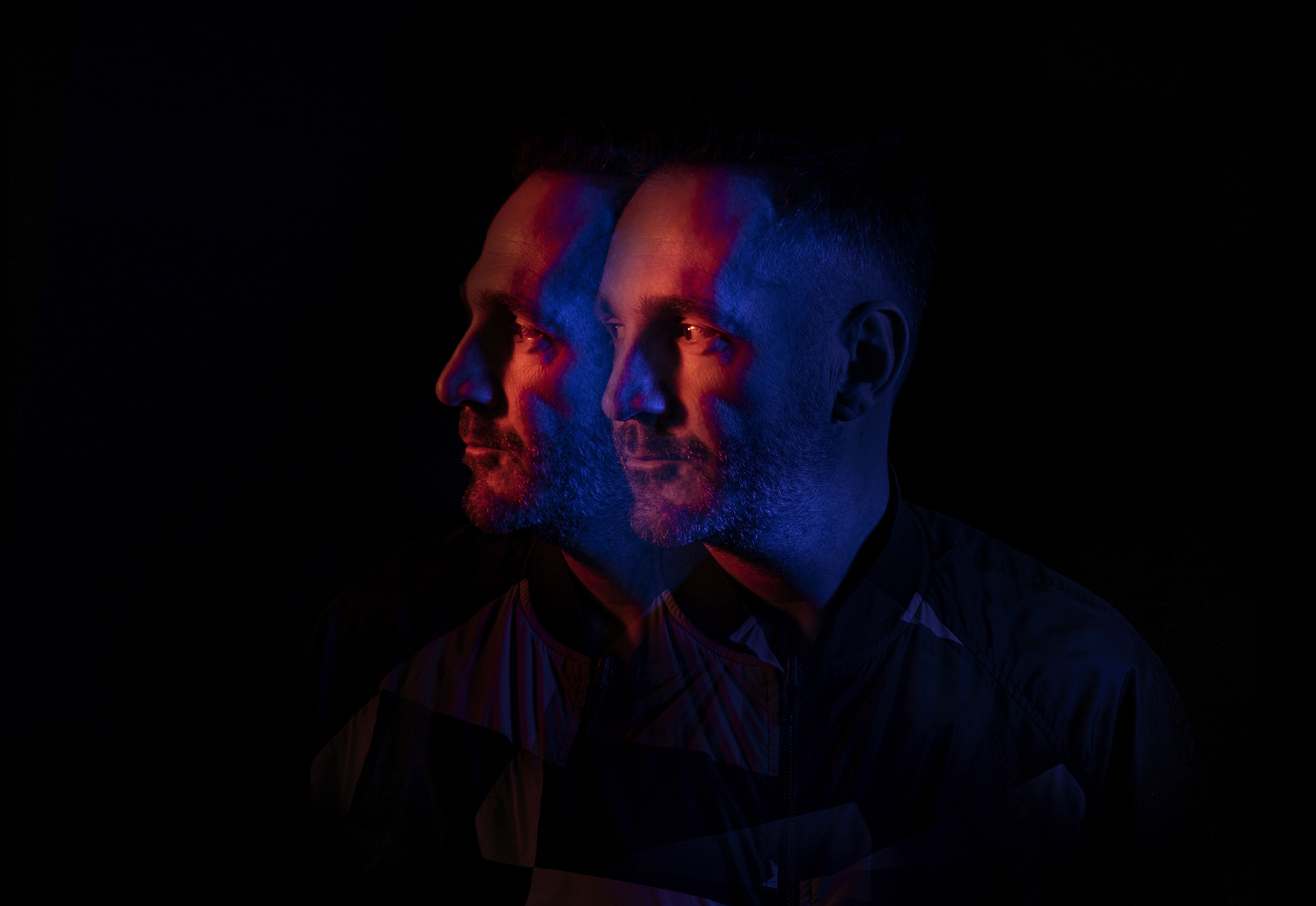
Name: Steve Lawler
Nationality: British
Occupation: Producer, DJ
Current Release: Steve Lawler’s “Pegasus” single is out on 25th July on SHÈN. Grab it here.
If you enjoyed this Steve Lawler interview and would like to know more about his music, visit his official homepage. He is also on Instagram, Soundcloud, and Facebook.
For a deeper dive, read our earlier Steve Lawler interview.
The path to becoming a producer is a process - but from many interviews, I am under the impression that there are nonetheless one or a few defining moments. If this was the case for you – what were they and why were they so incisive?
I started writing music because I wanted my own version of songs that I felt would work well in my DJ sets, making something that didn’t already exist.
I started making music back in 1997 with my first release under the moniker ‘Novacane’ which was me and a friend playing around in a studio.
It's a terrible EP of 2 tracks, god awful music, but it was the first time I made a record.
I used to hang out at a local Studio Complex in the city near where I lived. I would go there and make coffee for the bands and watch the producer work his magic on the mixing desk.
I was hooked by the whole studio lifestyle. It had me from day 1.
Tell me about one or two of your early pieces that you're still proud of (or satisfied with) in terms of production – and why you're content with them.
Two of my personal faves are ‘Avaida The Organ Track’ which took me 9 months to make, going back n forth to different studios and working with different engineers to try and finish a piece of music I had written.
But it was so complex that no one could finish it to the quality level I wanted, it was a nightmare to mix! So much going on.
But a friend of mine knew a big time pop music producer in Greece who mixed many big pop artists and such and my friend said let's send it to him, get every channel stripped and on a desk and lets mix it analog. And voila! It came out sounding incredible.
I named this track after the birth of my first daughter because she also took 9 months to make! Lol
Another fave of mine is my single ‘Femme Fatale’ and the reason why this meant so much to me, is because I come from a generation where you didn’t have to make music to be a DJ so when you made music it was literally a huge expression of your own feelings.
And this is what making music is still to this day for me, it's about expressing emotions in music. 'Femme Fatale' is a deep emotional roller coaster and was about a time when I fell in love with a girl or thought I fell in love with a girl!
The whole thing was a roller coaster and this single was my way of expressing that emotion.
In how far, would you say, was your evolution as an artist connected to the evolution of your music set-up and studio? Were there shared stepping stones?
Oh yes definitely! At one point I had the most incredible studio set up. I had 2 studios in fact, 1 in London, and 1 in Ibiza where I spent my summers every year. But it was a process of collecting studio gear.
I had almost the entire Roland collection and all originals, I had a gorgeous Moog. I absolutely loved my studio, my 808 and 909 were my faves though. I used to love using those machines, the swings on them were to die for!
It almost became an addiction if something new came out I had to buy it for the studio! The more gear the studio had, the more clutter of machines, the better the room sounded too!
But over the years I realised the single most important part of your studio is your speakers and I always had a pair of Yamaha NS10s which were amazing for mixing only.
There are artists who can realise their ideas best with a traditional – or modified – piano interface, others with a keyboard and a mouse, yet others by turning knobs or touching screens. What's your preferred and most intuitive/natural way of making music and why?
My preferred was always hands on, actually touching the resonance. Physically turning a knob as opposed to mouse on a screen and always, always, always playing notes on a controller keyboard was and still is optimal over screen notes.
But honestly, so much has changed about making music since I started, it is so, so, so much easier now to make music than it was when I first started, and way, way cheaper. Now all you need is a laptop, Ableton and a small controller and headphones and you're done. It would cost me a 100k to set up a proper studio back in the day, now you could spend 2k and make a great track.
One super important thing I learnt over the years is, it wasn’t about what equipment you had. That was just a self obsessed addiction to studio gear. Most important was and is your state of mind. Some of the biggest classic electronic songs by, for example, Daft Punk, were made on the most simple basic set up.
It’s about the artist, not his paint brushes.
Tell me about the space of your current studio/workplace and how you've set it up to optimise creativity.
Now, it's a very simple set up. I have a wide curved, long ass monitor, 2 speakers and a simple keyboard controller tucked away in a corner in my garage where I plug my laptop in and work on writing and arrangements. I send all my music to a producer for bells n whistles and mixing.
My preferred way to work now is writing and arranging. That's always been my strongest area in the studio. Because I don’t spend every day making music I am not always down with the latest synths or plug ins, so let the experts do the production magic while I focus on the writing, playing notes, playing basslines and making my drum tracks. The ideas are what I need to focus on and finally the arrangement, that's my strength.
I often put down ideas when I’m alone in hotel rooms on the road or long flights, then take them back to my studio and work on them for days until I have a good sounding track. Then, when I know I have something, I’ll work closely with a producer on cleaning it up and mixing it down.
From the earliest sketches to the finished piece, tell me about the production process for 'Pegasus,' please.
Same as above, this is what I did, created some nice simple percussive house drums and added a long dark growling synth note.
I knew I wanted long notes to give it the atmosphere I was searching for in this track, added stabs, vocal samples, all to give it purpose and movement. I then created a whopping breakdown with an intense build which needed work but the producer I used nailed that with fx. Then I created a simple yet effective arrangement.
This track is bursting with emotion but not a “song”, it's an instrumental but somehow makes you feel. This was my goal with this track and I felt I achieved that.
Late producer SOPHIE said: “You have the possibility with electronic music to generate any texture, and any sound. So why would any musician want to limit themselves?” What's your take on that?
Said like a true artist. One of the things I dislike about modern studio set ups and modern music is the lack of integrity and creative experimentation. It feels a lot of music that comes out is purposefully very, very similar to what's achieving success, so it's like people just copy what's working.
And that isn’t really what artistry is about. It's okay to be inspired by other artists and other music but there is a fine line between inspiration and copying.
Like SOPHIE said, why limit yourself when your sounds are your paint. Go wild!
Tell me about your aesthetic preferences for picking effects like reverb, delay, compression, chorus etc … - what was the role of these effects in the production of your current release?
They were huge in this track in particular because the sound wave and style of this track is creating a mental picture of being lost in the darkness to find the light.
That's how I interpreted this from my mind to machine and to get that it needed a lot and more than usual fx bells n whistles shall we say.
Producers work with sound in a very direct way for very long stretches of time. What are some of its qualities that you appreciate now more than before, and how do you try to bring these to the fore in your work?
This is where producers shine actually and yes you’re right, they can spend a lot of time on plug ins and combinations and channel splitting etc.
But like I say, I focus more on writing, and playing music. I don't like to get lost for too long in production - otherwise it can interrupt my creative flow.
The current production process allows for fast and infinite variations. Can you tell me about how you deal with this potential for the infinite and what ultimately decides on how many iterations to create and which version to release?
Ha! Well I can tell you I have a hell of a lot of un-finished tracks, sketches I like to call them, on my laptop that I always swear I'll go back to and finish. But honestly, in reality, if you don’t finish something it's because you can't, and you hit a wall as we call it in the studio.
If you can't finish something it's sometimes, actually most of the time, it's better to move on and start something new. Hence why so many un-finished tracks are sitting around in all musicians studios this I guarantee!
Tell me about the role collaboration played in your recent productions – and how you see the potential for machines as collaborators compared to humans.
Machines will never fully replace humans when it comes to art, it's just not going to happen for actual quality music. Yeah machines will churn out a lot of music in the future on its own, un-guided, but it will be as stagnant as copy cat music.
I sincerely hope that doesn’t happen to the generations coming because art is not just an output its a life style and one that comes with both a lot of love and pain.
Production, as opposed to live performance, can be a lonely process and feedback from listeners isn't always tangible. What is it about it that gives you satisfaction?
I like that making music is a lonely place sometimes. That's almost the point, where you can comfortably sit with your own mind and express, it’s therapeutic!
A live performance might not be lonely but the life of touring around it is very, very lonely. I have a love / hate relationship with both making music and touring, they can both be hard and lonely and frustrating. But when they reward you with gratification of others feeling your music or your performance, there still is nothing like it in this world!
Right now I’m in a very very good place both in the studio and touring and I have finally after 30 years found the perfect balance.
We can watch videos on production, take producer courses, and exchange deep insights on gear forums. Amidst these options to improve one's chops/skills, how do you keep things playful?
Haha! Well don’t take it so serious, it’s not a job! Making music should never be seen as a job. It's an output, it's a release, its a need for some people - but like I say, some days in the studio feel like banging your head against a wall after hearing a kick drum for 12 hours straight. You feel like you have achieved nothing.
And other days its come together and you feel like you just had all your birthdays in one!
AI is already capable of making something most people would recognise as music. I am curious, though, and will keep this question somewhat broad on purpose: What do you think that means?
I have looked deeply into AI music and the platforms that make it, and honestly it's toy music. It can not make proper music yet, that's for sure! It can certainly copycat billions of songs out there in the ether, but it massively lacks on production and creativity.
I think there will come a point, and it is no doubt already in its very early stages, where people can use AI on some elements, but even then, I just don’t think it’s necessary.
I started experimenting with AI and created a label called MWR (Made with Robots) where I have prompted AI to create albums and albums worth of instrumental background lounge music. But honestly it's very very infant in what it can actually do and I think you can really tell when its AI music over actual produced written music.
Creativity can reach many different corners of our lives. Do you personally feel as though producing a piece of music is inherently different from something like making a great cup of coffee? What do you express through music that you couldn't or wouldn't in more 'mundane' tasks?
Hahaha this question!
I see making music no different to painting a picture, one uses sound and the other paint. You can see music, and you can hear pictures if you are open enough to creativity and art.
I have never been able to make a great cup of coffee! Although I wish!