Published
Name: Steve Rothery
Nationality: British
Occupation: Guitarist, composer, performer
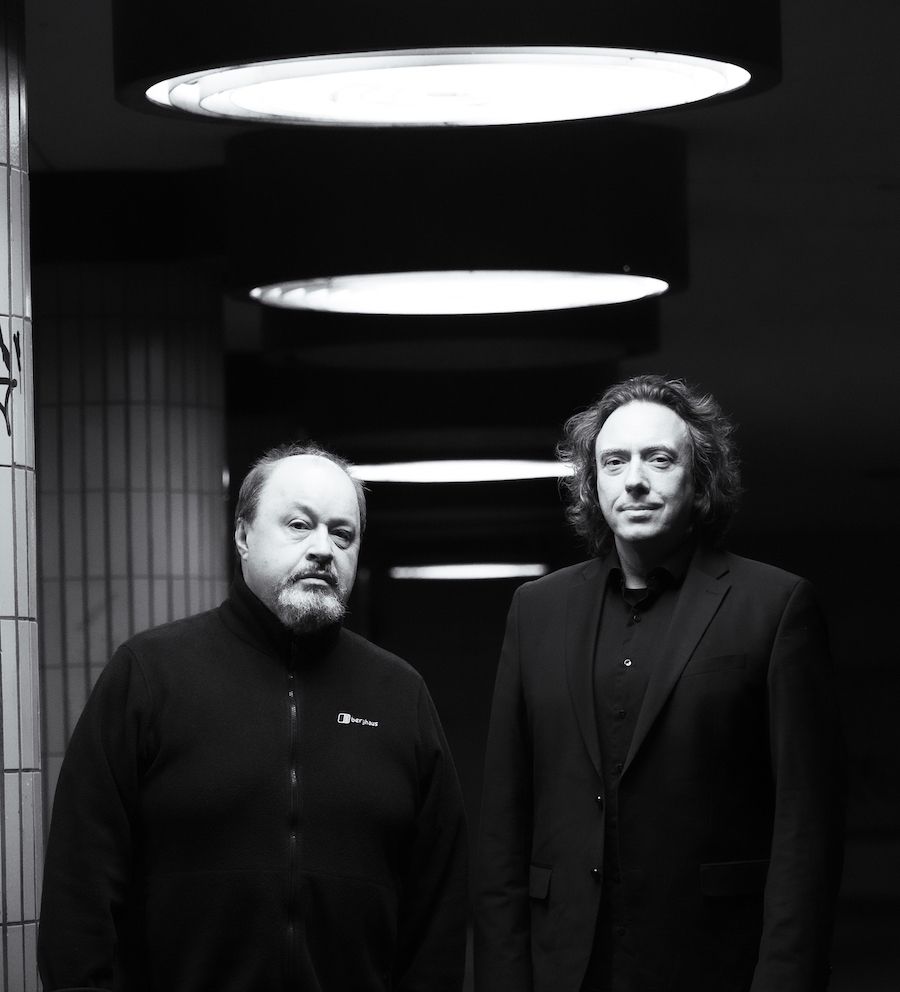
Current release: Steve Rothery teams up with Tangerine Dream's Thorsten Quaeschning for their collaborative project Bioscope. Their debut album Gentō is out via earMUSIC.
Hometown recommendations: I grew up in and around Whitby, North Yorkshire between the ages of 6 and 19. It’s a beautiful place full of history and with a strong musical tradition, especially with British folk music. It’s the place Dracula landed in Bram Stoker’s novel so is now very important to the Goth community in the UK. Its rugged coastline and wild moorland made it a very inspirational place to live.
[Read our Thorsten Quaeschning interview]
If you enjoyed this Steve Rothery interview and would like to know more about his music, visit him on Instagram.
How would you describe your personal relationship with Krautrock? When and how did it start?
I first heard Tangerine Dream and Kraftwerk when I was 15 years old and in the process of discovering all kinds of music - including Krautrock and the classic progressive rock bands of the seventies.
Tell me about one or two of your favourite Krautrock records please.
The Tangerine Dream albums Ricochet and Stratosphere were inspirational to me growing up in Whitby, a small fishing town on the North East coast of England.
They really seemed like they were from a different planet to anything else I’d heard up to that point.
Many of the original Kraut musicians loved blues, rock, and psychedelia; they were intrigued by electronics and improvisation; they rebelled against virtuosity, classical education and the superficiality of Schlager on German radio. How much of that do you recognise in your own creative preferences and interests?
I think I hear a lot of that in my attitude to writing music.
I’ve never been interested in writing pop music.
Both in the music and the way it was made, Krautrock was about imagining different worlds. What is the experience of listening to this music like for you and what kinds of worlds is it taking you to? What is your preferred way of listening to it?
I’d prefer to listen to that kind of music on headphones when you can really lose yourself in the music.
A lot of the Kraut spirit came to life through musicians living in communities, playing and recording together every single day. Have you ever tried working and creating in such a constellation? Is it possible to emulate this process from a home studio?
A lot of the Marillion albums were written in that way, all living together in a residential studio. It really helps free you from the distractions of everyday life if all you have to focus on is music.
What instruments or equipment are you using to create your music? Are there any vintage instruments that you find essential to get your sound right?
I use a combination of vintage and state of the art equipment such as the Quad Cortex modeller in conjunction with pedals such as the Eventide H90 and the Meris Enzo guitar synth pedal.
I also use various valve based guitar amplifiers and pedals such as the H&K Rotosphere (which sounds like a leslie rotating speaker cabinet) and the Groove tubes Trio preamp.
Could you describe your creative process for Gentō?
Thorsten and I improvised various sections of music, usually when I flew to Berlin for several days at a time (starting in February of 2019). We’d then develop these ideas and they very slowly evolved over the years.
It was really a musical conversation. I think we inspired each other.
Tell me a bit about the role that improvisation and inventive arrangement techniques (like cut-up) play for your work?
Digital editing and comping of ideas was a very important tool in how we developed the songs.
We’d try different arrangements and my personal approach with the guitar, was to record multiple tracks, quite often changing the sound completely between takes then sifting through the ideas for the magic moments.
I got into Kraut via Tangerine Dream and early Ash Ra and to me, the motoric beat was never quite as important. Today, it seems as though it's the defining element. Are you interested in it? Are you making use if it? What makes it special to you?
I prefer to put melody and atmosphere before anything else.
Did you ever visit one of the birthplaces of the genre – Berlin, Düsseldorf, Munich – or any spaces related to the history of Kraut? Do you own any paraphernalia from the era?
I recorded the Misplaced Childhood album with Marillion in Berlin in 1985 and was struck at the time by what a unique place it was.
I still feel that energy every time I fly over to work with Thorsten.
Several of the original Kraut pioneers recently passed away or withdrawn from making new music. If some of your personal favourite artists were affected as well – can you share a little what did their music meant and means to you?
The passing of Edgar Froese in 2015 was very sad.
Those early Tangerine Dream albums are part of what made me fall in love with music and want to be a musician.