Published
Part 1
Name: STRUKTURSTRUKTUR
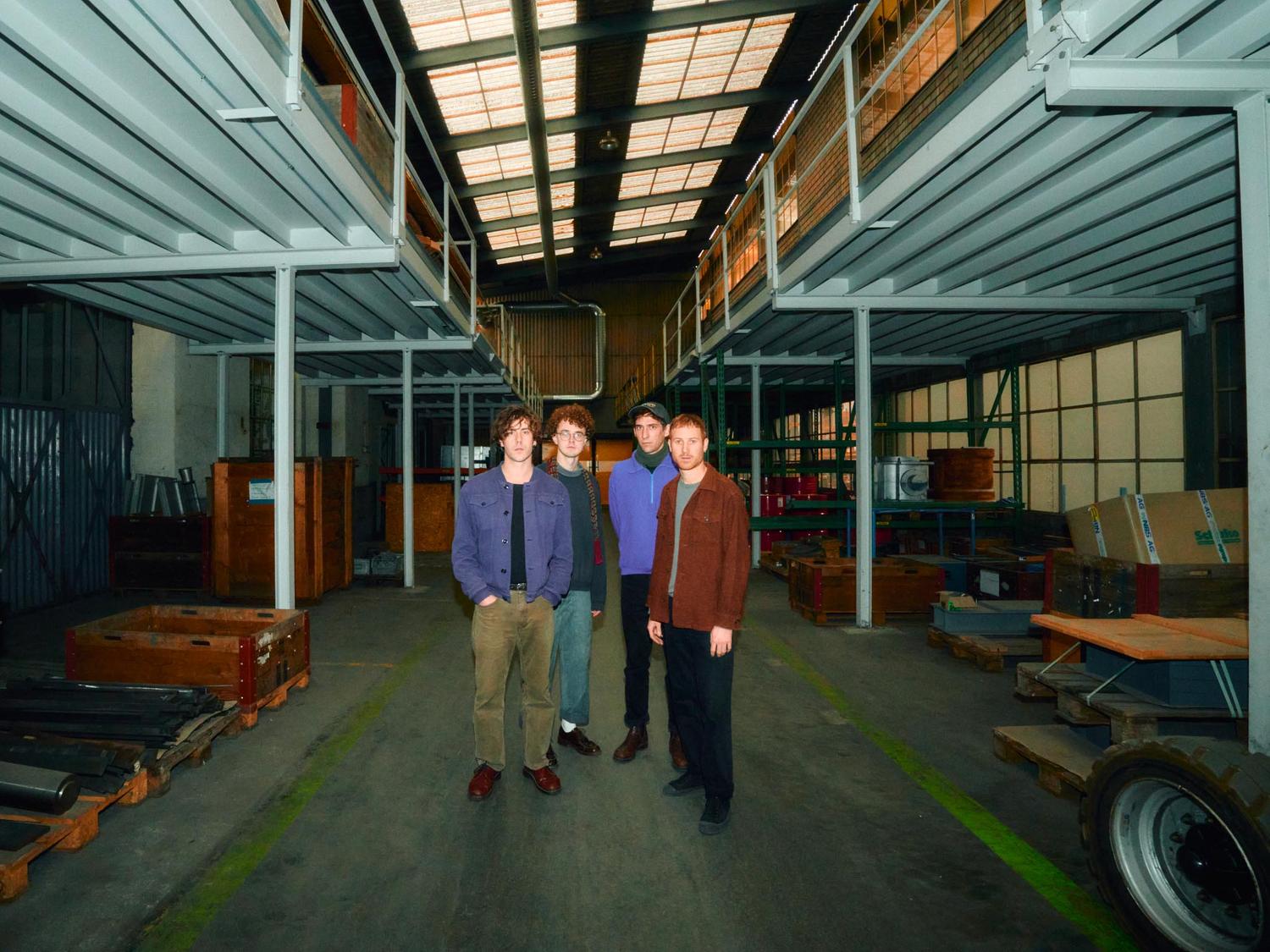
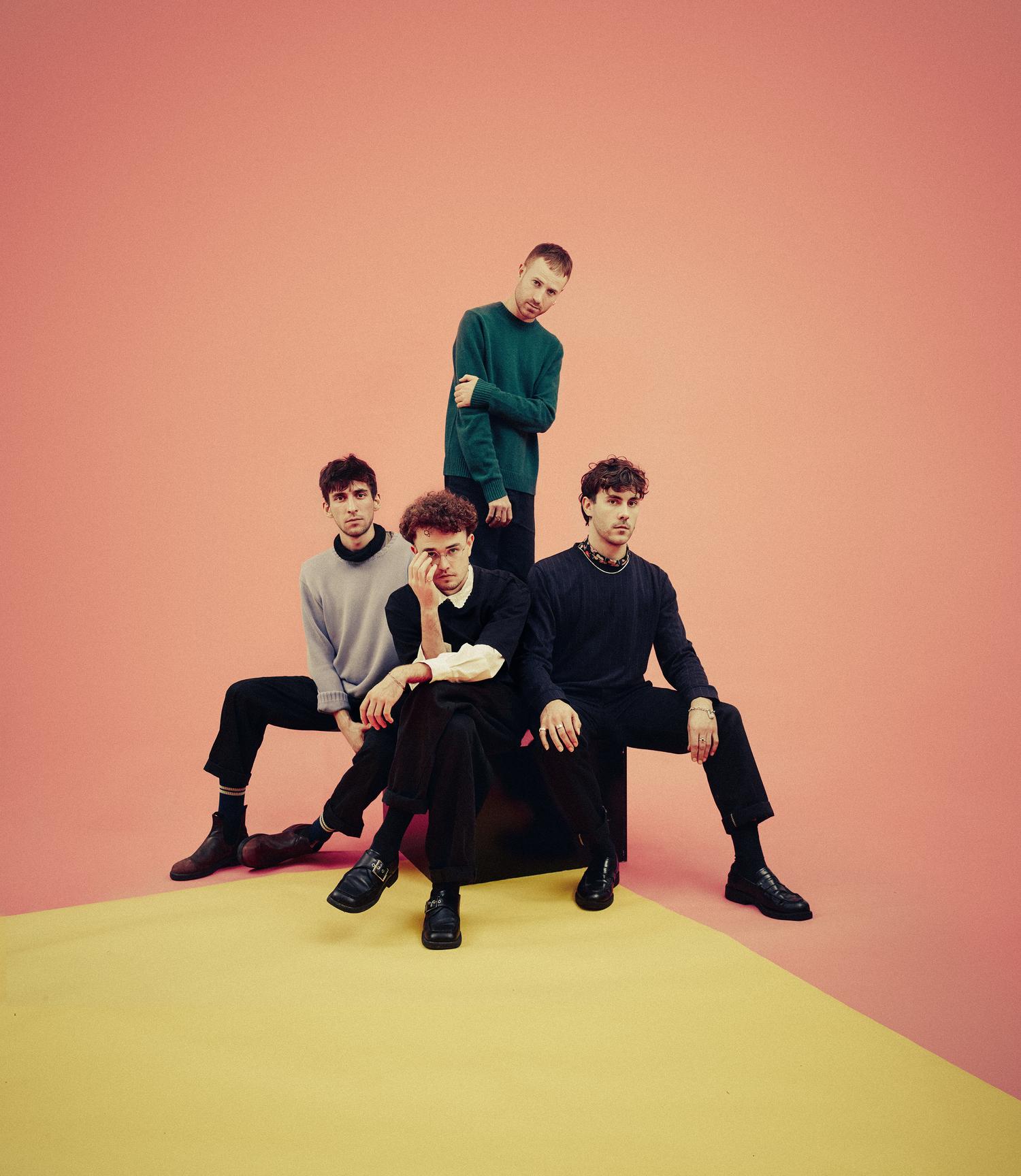
Members: Vincent Rigling (guitar), Leander Schöpfer (bass), Simon Scherrer (drums), Silvan Schmid (drums)
Interviewee: Vincent Rigling
Nationality: Swiss
Current release: STRUKTURSTRUKTUR's new album the Gestalt is out via Unit.
Recommendation for Lucerne, Switzerland: Go for a swim in the lake with a great view of the alps, then have a drink at Kaffee Kind and if you’re down for some clubbing after, you can visit either Kegelbahn Klub, Neubad Keller or stumble across something else. The next morning you should go early to the market in the old town.
If you enjoyed this STRUKTURSTRUKTUR interview and would like to know more about the band and their music, visit their official homepage. They are also on Instagram.
What does the term jazz mean today, would you say?
It’s important to say that I’m in no position to answer that question.
I’d like to think of it not as a genre or a style but as a mindset or attitude towards creating music. I think jazz at some point became other things and I’m not sure if modern jazz actually is the current form of jazz. So, for me the term jazz creates confusion. We would not use the term jazz to describe our music, but we’d like to think that we share certain key elements:
One would be crafting your own language. This might sound a bit cliché, but we think it describes it very precisely. Language as a form of recognisability as a group, but also as a way of communicating between the musicians. It can be seen as a style or aesthetic, but it’s also our own approach towards making our music work – finding our own grammar and terminology as it were.
Another element is searching for a way to manifest a creative vision. The key element here is improvisation. Improvisation as a way to explore and shape a vision by interacting with a specific moment in time that is unique. It’s a negotiation and collaboration within the band to perceive our repertoire in a new way every time which forces us to be conscious, concentrated and connected with the moment.
As of today, what kind of materials, ideas, and technologies are particularly stimulating for you?
There are numerous things and developments that are influential in how we perceive music. I’m not sure if I’m able to name them specifically.
Field recordings, ambient music, deep listening as well as non-idiomatic improvisation and experimental approaches to music contributed to accepting noises or “unusual” sounds as something musical. The attention to texture and deconstruction of sound is something fascinating to us. And so, we’re trying to perceive music in a broader context and acknowledge and include the less obvious parameters in music.
With STRUKTURSTRUKTUR we’re trying to create sonic structures of sound. They are somewhat incomplete and leave space for introspection and exploration for the listener.
Another thing is referencing or imitating certain technologies (sampling, loops, artificial effects, …). Trying to play loops instead of bars, frequencies instead of notes, texture instead of timbre, collaging different musical events, creating fast and harsh changes in spatiality of a soundscape etc.
We like to interweave the actual technologies – as for example a delay pedal – with its imitation not using the technology. I think that this approach also led us to think about our musical possibilities not in an instrument-oriented process but rather sonically or artificially constructed.
Where do most of your inspirations to create come from – rather from internal impulses or external ones?
As for me, many ideas come from impulses striking me randomly. I sometimes record them by making noises with my mouth and transcribe them after.
Since these recordings are cryptic, I need to figure out, what exactly made the idea the idea. From there on I experiment on my instrument on how to get to what I felt and bring this very rough sketch to the rehearsal, where we experiment with it.
I’m also strongly drawn to visual events, whether they be artificial or natural: Reflections, different light settings, saturations, colours, visual disturbances and so on. Those events make me want to think about how they would sound.
Some of our song titles are linked to visual phenomenon. The song “störbild” (visual disturbance) was inspired by glitches and AI image technologies but also glitches in nature.
We tried to create a musical landscape that seemed coherent and natural but at the same time gives a feeling of unease or artificiality.
Which current social / political / ecological or other developments make you feel like you need to respond as an artist?
This is an extremely difficult topic to answer. These days politics are a shit show fueled by hatred, discrimination of all kinds, corruption, misuse of power, fascism and so on. We feel desperate, and this also affects our need to express that in our art.
However, we think we must be aware of the limitations of the impact our art has. We feel that it’s a bit pretentious and too easy to create a piece and say: “oh, this is about this and that”.
If you’re an artist with a large audience for example there is a platform where you can have an impact. Also, as an artist you can boycott certain things, events, or people or speak up for things. But these actions are probably made by the artists as individuals or by bands as “institutions”.
As for things that affect us somewhat more directly such as structural problems within the music industry, one-sided power structures, sexism, machoism, a lack of diversity, we feel that we’re more able to act – both in action and artistically. Being aware of our privileges, knowing where we can take space and where to leave it, who we’re working with, where we’re performing etc are questions we ask ourselves.
Artistically we see our music and performances as a form of resistance. Being conscious about what we are doing, how we do it, reflecting our work and presentation as well as being aware of the responsibility we have as artists is important to us.
Music has become a lot more global, and incorporating elements from other parts of the world or the musical spectrum is commonplace. Do you still think there are city scenes with a distinct, unique sound? How does your local scene influence your work?
Definitely! I think it’s a natural thing that cities have their own style in music. But it’s probably rather the attitude or character that shapes a scene in a city than a specific vision in sound.
In Lucerne, the city in which we work for example, I feel that there is a big enthusiasm and platforms for experimentation in art – especially compared to the relatively small size of the city. I guess this also influenced our way of thinking and perceiving music.
If you as an artist feel in whatever ways connected to the culture surrounding you or city you live in, then I think you’ll naturally incorporate a reflection of it in your art.
What role do electronic tools and instruments play for your creative process?
There is a lot of inspiration in terms of sonic possibilities of electronic tools but also how they function or rather how they behave sonically.
We try to incorporate more “non-instrument-specific” sounds in our music and try to push the limitations of our instruments. We all work with effects to manipulate certain aspects of the sound.
However, we understand electronic tools such as effect pedals as a part of the instrument. They are an extension of the instrument and not simply shaping the surface.
Thanks to technological advances, collaboration has become a lot easier. What have been some of the most fruitful collaborations for you recently and what approaches to and modes of collaboration currently seem best to you?
We’re very interested in bringing different art forms together. We want to collaborate with artists from different fields such as textile design, graphic design, photography, video arts and dance. We feel like technological advances made it easier to connect however the one-to-one exchange is crucial for us.
An exciting collaboration we’ll have will be with a video artist and a dancer. Those kinds of collaborations are very time-consuming and there are struggles to finance them. So, we’re not sure exactly when it will happen but we’re very excited to realise it.
Most recently, Samuel Ortlieb – a Swiss artist – asked us, if he could use our song “ahab” to do an animation for an exhibition. This was a very fruitful and easy but effective collaboration.
The artwork for our album the Gestalt was done by Sarahi Singh, she works in textile design. The posters for our merchandise were done by Olympe Boutaghane.
We were touched by their sensitivity in regards of our music as well as their amazing craft and vision in what they came up with.