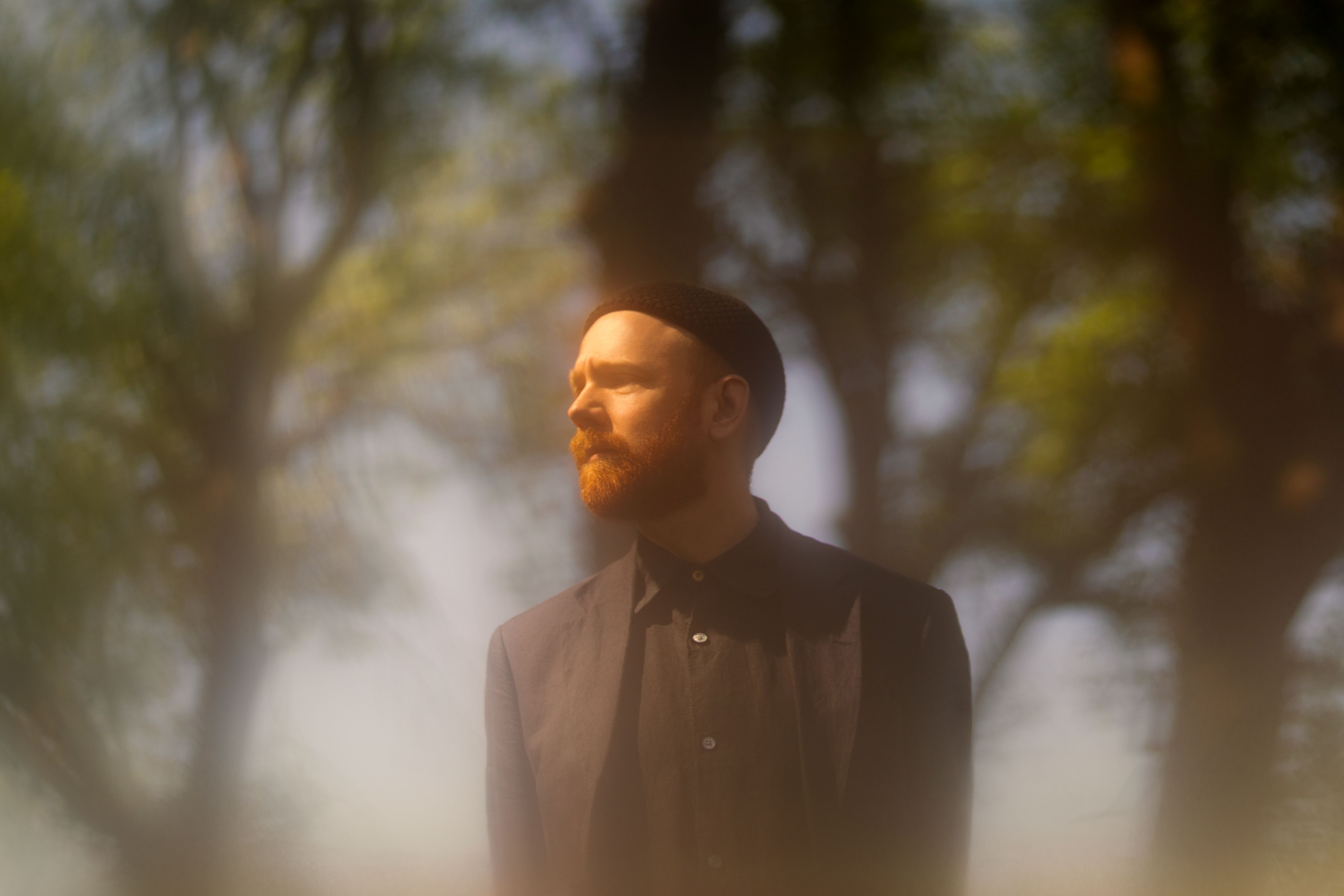
Published
Name: Sven Wunder
Occupation: Composer, label co-founder at Piano Piano
Nationality: Swedish
Current release: Sven Wunder's new album Daybreak is slated for release September 26th 2025 via Piano Piano. Third single "Take A Seat" is out now.
If you enjoyed this Sven Wunder interview and would like to stay up to date with his music and live dates, visit him on Instagram, and bandcamp.
For you to get started, do there need to be concrete ideas – or what some have called a 'visualisation' of the finished work? What does the balance between planning and chance look like for you?
I often start off with a vision, but you’re never sure where the song or the process will take you. You just need to keep an open mind to directions and impulses.
It’s a bit like improvisation in music — you follow your instincts to discover new experiences.
Is there a preparation phase for your process? Do you require your tools to be laid out in a particular way, for example, do you need to do 'research' or create 'early versions'?
I usually start my day at the same café in the neighborhood, close to my studio. That morning routine is very important to me. I listen to different music, read a book, and when I feel ready, I walk to the studio.
Once there, I often spend at least an hour at the piano, trying out ideas or working on old fragments. This routine feels almost sacred to me, and I tend to lose myself a bit when I step away from it.
For Daybreak, what did you start with? If there were conceptual considerations, what were they?
For me, the concept usually comes later in the process. I want the songs to be strong on their own before I dress them up in fancy clothes. They should be able to stand independently.
You should be able to play the melody or chords in different ways, on various instruments, before deciding which direction to take.
Tell me a bit about the way the new material developed and gradually took its final form, please.
I went in many different directions before ending up here. You just need to listen and be honest with yourself — is this song working? Do I actually want to listen to it? If not, then why not? And then you try again …
On Daybreak, I had to bring in a full symphony orchestra in the end to make it work.
Many writers have claimed that as soon as they enter into the process, certain aspects of the narrative are out of their hands. Do you like to keep strict control or is there a sense of following things where they lead you?
It’s wonderful to just follow and be surprised by the process. But I often head in directions where I want to try new combinations of instruments or sounds.
On this record, I started off with a lot of mallet instruments like marimba, xylophone, and vibraphone, combined with deep reed instruments like the bass recorder. That sound really thrilled me, but in the end I only used it on two tracks.
Still, it helped me generate a lot of material that stayed on the record — good for the process.
There are many descriptions of the creative state. How would you describe it for you personally? Is there an element of spirituality to what you do?
When I get excited, I often stop breathing. So when I end up dizzy, I know I’m onto something ...
It’s a lovely and slightly manic state. You both love and hate it.
Once a piece is finished, how important is it for you to let it lie and evaluate it later on? How much improvement and refinement do you personally allow until you're satisfied with a piece? What does this process look like in practice?
A good wine needs time … I have a lot of songs in my library just waiting for the right moment to blossom.
Sometimes all it takes is the final piece of the puzzle to unlock the mystery. Something as simple as choosing the right lead instrument or changing the chord progression under a melody can completely transform it.
How do you think the meaning, or effect of an individual piece is enhanced, clarified or possibly contrasted by the EPs, or albums it is part of? Does each piece, for example, need to be consistent with the larger whole?
For me, a piece should be strong in itself. It should be able to stand alone and still thrill me.
But sometimes an alternative, stripped-down version of a track can be beautiful, and it makes the other theme or version even stronger.
What's your take on the role and importance of production, including mixing and mastering for you personally? In terms of what they contribute to a song, what is the balance between the composition and the arrangement (performance)?
I love recorded music and often prefer it over live performance, because production adds another dimension. You can frame the idea and guide the listener toward what you want them to hear first.
There’s also the texture of the sound, which is very important to me — I almost want a physical feeling from the sound. Hard to describe, but production is extremely important to me.
Music and the accompanying artwork are often closely related. Can you talk about this a little bit for your current project and the relationship that images and sounds have for you in general?
My very close friend and record label partner, John Henriksson, always works on the artwork and concept with me.
We’ve done this for many years, and it’s such a lovely process when the record is finished and we can frame it into its final shape.
After finishing a piece or album and releasing something into the world, there can be a sense of emptiness. Can you relate to this – and how do you return to the state of creativity after experiencing it?
Post-production depression, yes, I’ve had that.
You just have to accept it and rest until your love for music and sound comes back. But it’s real.
I would love to know a little about the feedback you've received from listeners or critics about what they thought some of your songs are about or the impact it had on them – have there been “misunderstandings” or did you perhaps even gain new “insights?”
I usually avoid that … I’d lose myself and my confidence. It’s painful enough to make art.
I also come from a background in scoring films, which involves a lot of different opinions and ideas. So with my own music, I try to keep it as close as possible to my own thoughts and intentions.
Still, it’s always nice to talk with friends about parts of the compositions and arrangements to make them as good as possible.
Creativity can reach many different corners of our lives. Do you personally feel as though writing a piece of music is inherently different from something like making a great cup of coffee? What do you express through music that you couldn't or wouldn't in more 'mundane' tasks?
The wonderful thing about music is its ability to create atmosphere — something completely abstract yet unique. I love that about it.
I don’t think this really exists in any other art form, and that’s where my love for this medium and process comes from.