Published
Name: SYOT
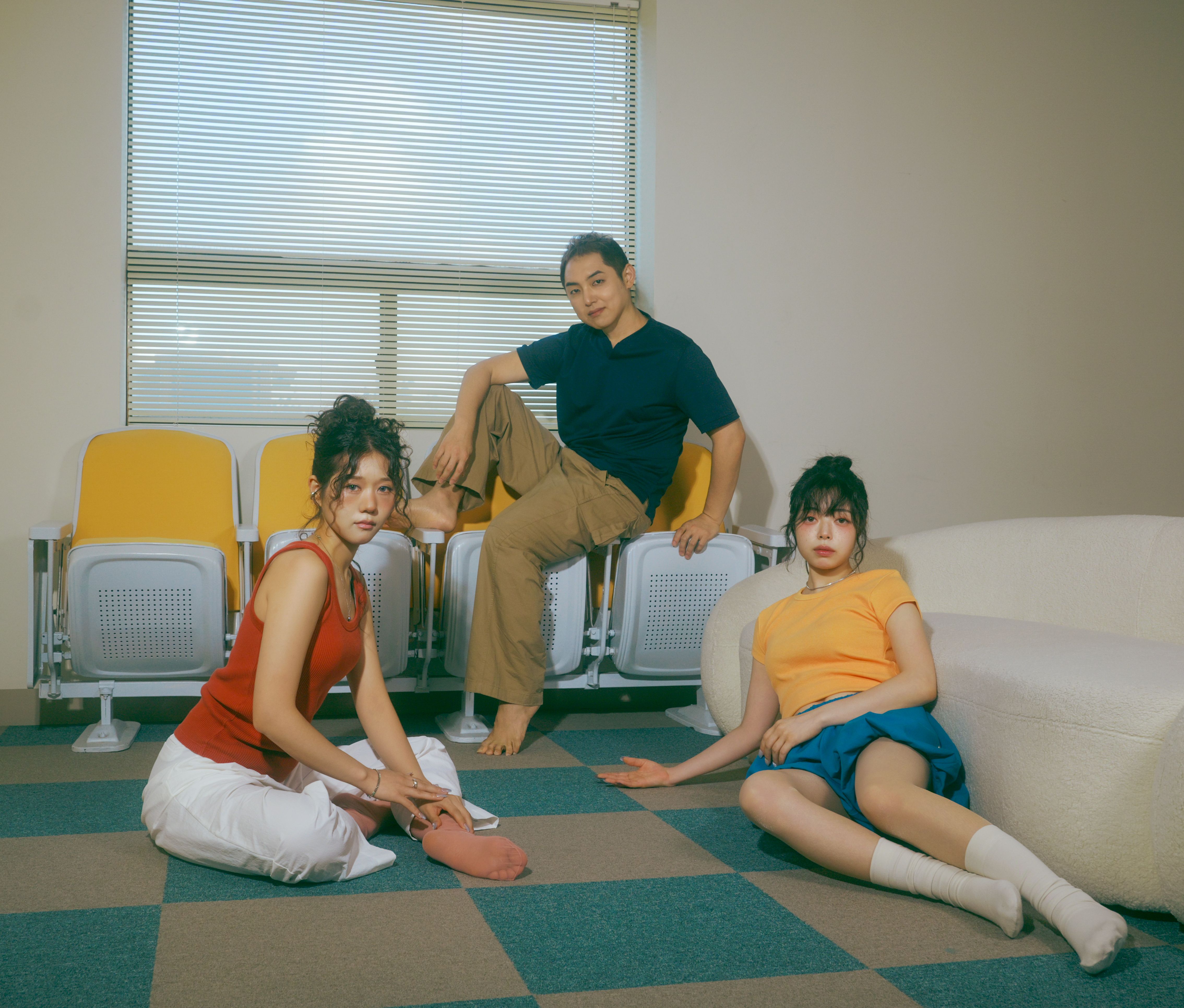
Members: G.QOO (multi-instrumentalist, producer, composer), Hanbeen Park (pianist, vocalist), Yoolim Lee (gayageum player)
Nationality: South Korean
Current release: SYOT's new double single “X (Hassla / Velvet)” is out via 주식회사 지제스튜디오.
Recommendation for Seoul, South Korea:
Lim: I would recommend Yongsan Family Park. It’s a place where Korea’s modern and contemporary history is deeply embedded, while also serving today as a space to pause and breathe within the city. It’s located near the National Museum of Korea, making it ideal to visit together, and it’s a wonderful place to walk, connect with nearby areas, and recharge.
If you enjoyed this SYOT interview and would like to stay up to date with the band and their music, visit them on Instagram.
Where does the impulse to create something come from for you? What role do often-cited sources of inspiration—such as dreams, other art forms, personal relationships, or politics—play in your creative process?
been: I tend to imagine and think based on things I have actually experienced.
When emotions or thoughts suddenly come to me while reading a book or walking down the street, I write them down in a notebook. They don’t have to be complete sentences, and even if I can’t clearly name the emotion, I leave them as they are. Later, I take these accumulated fragments out one by one and begin writing music.
For me, the impulse to create is less about sudden inspiration and more about emotions gathered from everyday life naturally flowing into music.
When you begin working, do you need concrete ideas, or is a kind of “visualisation” of the finished work important to you? What does the balance between planning and chance look like for you?
qoo: When I sketch a song for the first time, what matters most is being clear about what my music is trying to say. Before thinking about musical expression, I focus more on the message and the emotion—much like how you need to think carefully before speaking.
I believe a good conversation isn’t about delivering everything you’ve prepared in advance, but about interacting within a broader context while listening closely to the other person. Music works the same way. I think a balance between intention and chance is essential.
Is there a preparation phase in your process? For example, do you need to set up your tools in a certain way, do research, or create early versions?
qoo: In songwriting, I usually aim for more than 80% completion at the very first sketch. That’s why, before I begin sketching, I spend a lot of time imagining and concretising the music I want to make.
Starting from the emotional arc and the message, I think through which instrument will carry the main theme and with what kind of nuance, what concept will guide the sound design, and even how elements will be placed in the mix.
I try to visualise all of this before the sketch begins.
Do you have any rituals or routines that help you enter a creative state? What role do things like coffee, lighting, scents, exercise, or reading poetry play?
qoo: Creation requires intense focus, but at the same time it feels similar to letting your mind drift. I try to set aside the detailed plans and images I’ve prepared beforehand and empty my mind.
Rather than repeating a memorised script right up until stepping on stage to give a good speech, sometimes a cup of tea and deep breathing are more important. If something helps me clear my mind, I try to remain open to it, whatever it may be.
What did you start with for your most recent release? Were there any conceptual considerations?
Lim: This release connects directly to our band’s core message.
The name SYOT is an acronym for See Your Own Tradition, and in Korean it also evokes the consonant “ㅅ” (siot). This shape consists of three points converging into one, symbolising the way three people with different backgrounds and languages come together to create a single piece of music.
The key concept of this project was boldly “crossing” those elements. With this release and beyond, we wanted to push that idea of crossing even further and attempt a different kind of innovation within crossover music. That sense of longing and questioning became the starting point for this work.
Could you describe how new music develops and gradually takes its final form?
lim: We are moving toward music that has no precedent.
Throughout the process, we place great importance on continuous dialogue about each other’s traditions, listening together, and experimenting with sound. While working from a foundation of Western music, we repeatedly explore how to integrate traditional Korean musical language, which instruments to use, and what role each instrument should play.
The many changes we went through with the title track “Hassla” stand out in particular. Even when we felt a piece was finished, if adding another instrument made us feel it wasn’t quite right, we would dismantle it and reassemble it again.
From the beginning, we couldn’t be certain of the final form, and even now it sometimes feels as though there is no single correct answer.
Still, when we encounter a sound that resonates deeply, we take that sensation as a kind of answer and present the music as it is now.
Many artists say that once they enter the creative process, part of the story escapes their control. Do you prefer strict control, or do you tend to follow where the flow leads?
qoo: I’ve always felt that the system of the creative brain and the system of the controlling brain are fundamentally different.
Creation feels less like speaking and more like listening to an inner voice.
There are many descriptions of the creative state. What does that state feel like for you personally? Does your work include a spiritual element?
qoo: In Christianity, creation is often described as breathing life into something, and in Buddhism, the act of emptying oneself and reaching enlightenment can also be seen as a creative process.
I believe that breathing life into a work is ultimately completed by fully emptying myself.
How important is it for you to step away from a finished piece and revisit it later? How much revision do you allow before reaching satisfaction, and how does that process actually work?
been: When a draft of a song is finished, I face it again the next day or a few days later with a sense of tension. Only then can I look at my music more objectively, which makes it a crucial moment. If the music fails to convince me, I revise parts of it—or sometimes start over entirely.
In that process, I value a sense of space and a natural flow above all. Moving back and forth between intuition and judgment, I push the piece as far as I can.
For me, completion doesn’t mean there’s nothing left to change, but that I’ve been convinced by the music myself.
How do you think the meaning or impact of individual tracks is strengthened, clarified, or contrasted by the EP or album they belong to? Do tracks need to maintain consistency within the larger context?
qoo: In the past, when people listened attentively from the first track of an album onward, that kind of cohesion felt especially important. Now, with streaming and playlists at the forefront, approaches to tracklists have become more fluid. You could say there’s more freedom.
Even so, within the album format—an area curated by the artist—I still feel it’s better when the overarching message and musical coherence are clearly perceptible.
How do you view the role and importance of production, including mixing and mastering? How do you see the balance between composition and arrangement or performance?
qoo: I believe it’s essential to pursue a clear direction and set of values throughout the entire production process. For example, the tone of the snare should change depending on how the vocals are expressed, and the groove of the guitar should shift according to the movement of the bass.
Especially in the final stages of mixing and mastering, countless elements matter, but how and where you use compression to shape the groove is particularly important. I often find myself thinking about how this music can physically move people.
Music and the artwork that accompanies it are often closely connected. Could you talk a bit about that relationship in your current project? More generally, how do image and sound relate to each other for you?
Lim: If we divide visuals into still and moving images, still images such as album artwork or photographs serve to intuitively reveal the core keywords of each release. They offer a sensory hint before the listener even hears the music.
At the same time, we are very aware of the importance of video content today, which is why we’ve created music videos for every track we’ve released so far. Moving images are another language that expands the mood and message of the music, either directly or indirectly.
Sound and image don’t so much explain each other as they sit side by side, amplifying the overall sensory experience.
After completing and releasing a work, some artists experience a sense of emptiness. Do you relate to this, and if so, how do you return to a creative state afterward?
been: When I first encountered that sense of emptiness while continuing my musical journey, it came as quite a shock. I spent a long time wondering how to accept it and move past it. Eventually, I realised that humans are perhaps destined to feel emptiness from time to time—and maybe that’s why we keep searching for something new and moving forward.
Now, I no longer see emptiness as purely negative. Sometimes it becomes the trigger for starting a new creative process or offers inspiration in unexpected directions.
In that sense, I sometimes wonder if a state entirely free of emptiness might actually be more dangerous.
Have you ever received feedback from listeners or critics that offered a particularly striking interpretation of your music or its impact? Were there any “misunderstandings,” or moments when you gained new insight yourself?
lim: I feel especially glad when I encounter interpretations that read our music closely and translate it into each listener’s own language.
There are moments when thoughts I held only as vague sensations—things I hadn’t been able to articulate—suddenly become clear through someone else’s writing or review. It feels like stumbling upon a sentence I’d been searching for in a book.
Through that process, I also come to see the music anew and discover meanings or textures I hadn’t consciously recognised before. Even if interpretations differ, I believe that once music enters the world, its meaning no longer belongs solely to me.
Rather than misunderstandings, those responses feel like proof that the music has left my hands and begun to live on its own.
Creativity can extend into many areas of life. Does making music feel fundamentally different from, say, making a great cup of coffee? Is there something you express through music that you don’t—or can’t—express through everyday tasks?
qoo: Making music is truly unique. Sound waves don’t exist as tangible particles, yet they leave a powerful trace in those who listen. Music, like cooking or painting, is a great tool for expressing individual creativity, but what makes it especially compelling is that it is an art form rooted in time.
We often say that music “flows,” and just as water flows naturally, I hope our music will flow gently into people’s memories.