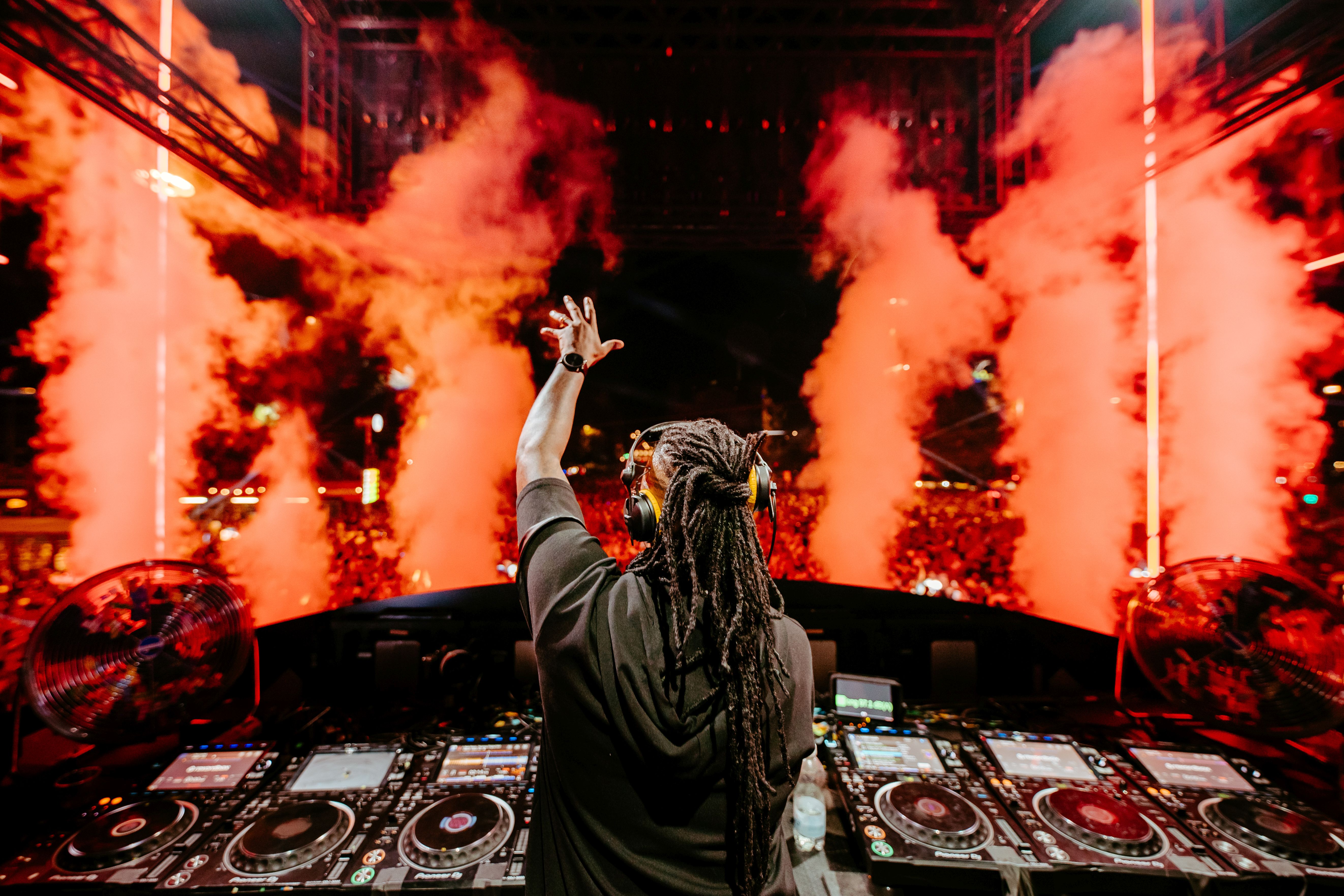
Published
Name: SYREETA
Nationality: British
Occupation: DJ, producer
Current release: SYREETA's EP "Happiness," is out via Sound D'Elite and includes a Josh Kalker remix. More recently, she published "Take me Higher" on Sound International.
Recommendations: I can highly recommend the book The War Of Art by Steven Pressfield. And for any budding producers out there, The Secrets Of Dance Music Production by Attack Magazine.
If you enjoyed this SYREETA interview and would like to stay up to date with her music and upcoming live dates and releases, visit her on Instagram, Facebook, and Soundcloud.
Do you think that some of your earliest musical experiences planted a seed for your interest in DJing?
Music was always such an important part of my life - it's the soundtrack to all my emotional journeys I've experienced, whether to celebrate, to make me feel better or to meditate.
So, being able to express myself through music and to know I can bring joy and happiness into someone's life for that moment is the reason I started
I have always loved club music, but I was not initially a dancer very much. What was this like for you? How does being – or not being – a passionate dancer influence the way you deejay?
At heart, I am a dancer - you will always find me on the dancefloor before and after my set - I still like to get lost in the crowd and the music, and I love dancing to my own sets and other people's.
If you're not having fun behind the decks then how can you convince others to?
For your own DJing, what were some of the most important things you learned from teachers/tutorials, other DJs, or personal experience?
Carl Cox once said to me, "No one cares if you f*ck up, as long as you bring the vibe, that's what they care about ..." and that lesson has served me well. I always keep that in the back of my head if something doesn't quite go to plan.
[Read our Carl Cox interview]
How do you approach digging, what are you looking for, and what were some of the best finds of the past few weeks for you?
I typically spend a couple of hours every single day listening to new tracks and collecting music - I like to collect music; for me it's not so much about the genre but the vibe.
Every single set I play is different from the last, as for what I'm looking for, everything I play has to have soul, groove and energy, whether that be a house record, a bassline track or techno - the principle doesn't change.
How do you experience "groove," and rhythm? What is the relationship between harmony, rhythm and melody?
To me, it goes hand in hand. When they all combine perfectly, you get a rush of emotions, goose bumps, euphoria, and nostalgia.
The rhythm provides the structure of the track, and the melody is that part that you'll always remember, what usually attracts you to the song and be singing or humming at those random times. The harmony brings it all together, creating tension.
How would you describe the experience of DJing, physically and mentally? Do you listen – and deejay - with your eyes open or closed?
I'm very much in the present moment when I DJ. I like to look and engage with the crowd, even though I'm behind the booth, we can still dance together and connect.
I love the way music makes me feel and the ultimate goal is to make people feel how I feel, through the music I play. So it's important to be able to connect on a deeper level so you can be in tune with the dancefloor.
How does the decision making process work during a gig with regards to the inclusion of key records, the next transition and where you want the set to go? How far do you tend to plan ahead during a set?
You can never predict how you or the crowd will feel on the day, so I don't plan anything in advance. I put around 100 tracks into a folder of all different moods that I feel like I would want to play and take it from there.
I always watch how the crowd is reacting to the DJ before and try to transition into their set with something fresh but also something that works with what they've just been playing so that the sounds blend seamlessly.
When you're DJing, does it actually feel like you're inventing something on the spot – or are you inventively re-arranging patterns from preparations, practice or previous performances?
I have never played the same set twice. I used to never play the same track twice, but I realised that for producers making tracks and for tunes I really like and support, I should honour them more by playing them in different settings. I don't ever want to get complacent as a DJ or for it to feel monotonous.
I realise I'm privileged to be playing on the lineups and stages I am playing, and I owe it to the audience to create brand-new experiences. When I meet people after my set, and they say - I've seen you play 6 times, and you've played six different sets - with different genres - it's a good feeling; they get what I'm trying to do.
Do you engage with audiences/dancers - and how? Taking one of your online DJ mixes as an example, how does the experience and the way you deejay change when you subtract the audience?
I love nothing more than to engage with the audience. I'm very big on eye contact and letting them know "I see you" with a hand gesture or mimicking their dance moves.
Whenever I close my sets - I will play the last track and go down into the audience and dance with the crowd, it's actually one of my favourite things to do - to enjoy that last track with everyone and share that special moment. These are memories we make together, and it's beautiful.
If there are dancers and performers, I love playing strong, powerful tracks that they can dance to - you see them light up because it's like a silent conversation you have had, they know the track is for them, and you see them react in the most amazing way through their dance and performance and it's electric.
Collaboration is a key part of almost every aspect of music making, but it is still rare in DJing. Do you have an idea why this is? Tell me about your own views on back-to-back DJing, interactions with live musicians or other forms of turning DJing into a more collective process.
I personally only enjoy playing B2Bs with artists I vibe and connect with, as you need to have this telepathic conversation about how the journey is going to be. So if you've never met or played different sounds, the connection won't be as deep.
I feel like there are a lot of times where shows like to just throw people together to make the line up look heavy, not thinking about the experience you're going to give the crowd. I know how I play reflects back to the dancefloor, so I want to be bouncing off the other DJ I'm playing with.
How important is dancing for our wellbeing on a personal and even on a societal level?
Haha I've certainly lost a few Ibs from having the time of my life on the dancefloor.
Anything that releases endorphins is great for our wellbeing, and dancing is one of those things. It helps form connections with others and is another way of expressing yourself, and living in the moment, which is something we all need to do more of.
Especially in the light of advances in AI, where do you see the role of humans in DJing versus that of technology? Can AI act as a collaborator or creative stimulus?
I mean, music creation and technology is always evolving, AI is already acting as a collaborator in a lot of cases creatively. But AI will never be able to replace the human connection and emotion we present.
I chose the tracks I play from reading the room and responding to the mood - which is something only a human can do.
Tinnitus and developing hyperacusis are very real risks for anyone working with sound. Do you take precautions in this regard and if you're suffering from these or similar issues – how do you cope with them?
I can not stress how important it is to protect your ears. If you lose your hearing or get tinnitus, that's it. I wear custom-made earplugs and also DJ with in-ear monitors that have filters. I don't leave my house without them, whether it be for a show I'm playing at or I'm just a raver I always make sure I wear them.
It's a fine line between having good hearing and tinnitus, that's just a risk I'm not willing to take. You start to damage the hairs in your ears after just minutes of standing next to a speaker. Yes, they repair themselves, but there's only so much time they can do that, and you will never know when that time will be.
So do the right thing and spend the money on earplugs. It's priceless!
Do you feel as though DJing is inherently different from something like making a great cup of coffee? What do you express through music that you couldn't or wouldn't in more 'mundane' tasks?
When you make a great cup of coffee, you know exactly what you want, you have a particular process to make it taste good, and it will be the same each time.
When DJing, each time you play is different, the crowd is different your mood is different, the setting, the country, so you have to adapt to these and create a journey based on this.
It's your time to create a space and express your passion and love for music by connecting with the audience on a deeper level.
Let's imagine you lost all your music for one night and all there is left at the venue is a crate of records containing a random selection of music. How would you approach this set?
I hope this never happens to me as I'm always prepared with backups.
However, if it did, I'm known for blending several genres in my sets, so I would curate the music starting off gently and progressing through my set, building it up slowly --- my audiences know that I can sometimes go from house to techno and everything in between.
However I don't just randomly drop in tracks, there's always a build-up and transition. I like to build trust with the crowd so that they trust the journey we are on.