Published
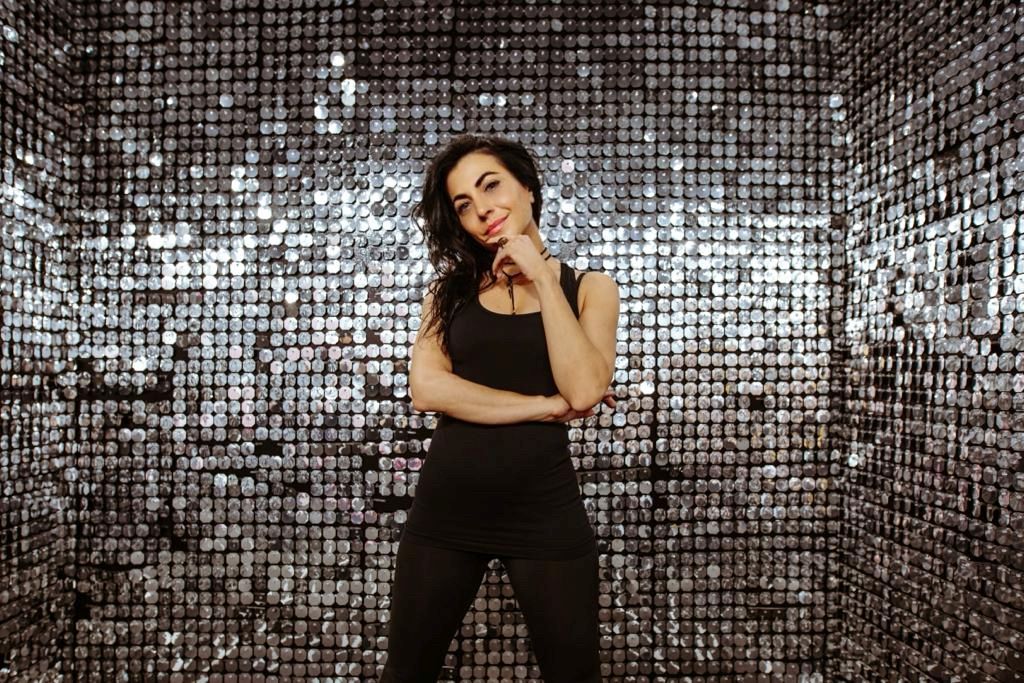
Name: Tara Brooks
Nationality: American
Occupation: DJ, producer
Current release: Tara Brooks's new single "Come Back" is out via Desert Hearts Black. Pre-order her upcoming "Here & Now" EP on Beatport.
Recommendations:
Books: The War of Art – Steven Pressfield; The Creative Act – Rick Rubin
Music: Northern Exposure – Sasha & Digweed
[Read our Sasha interview]
[Read our John Digweed interview]
If you enjoyed this Tara Brooks interview and would like to stay up to date with her music and upcoming live dates and releases, visit her on Instagram, Facebook, and Soundcloud.
Do you think your earliest musical experiences planted a seed for your interest in DJing? How and when did you start DJing?
For sure.
Going to raves and underground parties sparked my love for the whole experience—from being a dancer to wanting to share music that moved me.
Today, DJs are rarely just DJs—they’re often producers as well. Where do you see yourself on that spectrum, and what kind of challenges or benefits come with it?
I was a DJ first—producing came second. I love my evolution through different sounds and styles, and the fact that there’s always something new to learn.
These days, being a good DJ isn’t enough; you have to produce, too. I just wish DJ skills and musical journeys were as valued today as they used to be. That said, I’m grateful I have the passion to make music and love trying new tricks and techniques—especially with every Pioneer CDJ update.
The only issue, in my opinion, is if you’re not putting in the work on either side. And if you’re forcing yourself to produce just because it’s a “requirement,” it might not go well. You should only do it if you genuinely love it.
What were some of the most important lessons you’ve learned—whether from teachers, other DJs, or personal experience? What does it mean to be a “better DJ?”
Make and play music for yourself first. If you believe in it, don’t be afraid to share it. Have awareness and etiquette when playing a support set. Be kind and respectful.
Being a better DJ comes from experience—building your skill set technically, having impeccable musical selection and programming, and being sensitive and in tune with the crowd. A great DJ creates a vibe on the fly and connects with people on an emotional level.
Outside of searching for music for your sets, do you still listen recreationally? If so, what do you gravitate toward, and does it influence your performances?
Absolutely! I listen to tons of genres just for fun and based on my mood. I’m always making playlists and digging deep into whatever sound I’m feeling—‘90s and classic rock, reggae and trip-hop, ambient, electronica, drum & bass, old-school hip-hop and R&B.
It all seeps into my sets in some way.
When digging for music, what are you looking for? Is it purely about taste, or is it something deeper?
If I’m just digging for the sake of it, I’m not looking for anything specific—just GOOD F*CKING MUSIC. Anything that makes me feel something.
It’s not about taste; it’s about the energy it brings in the moment.
Walk me through your preparation process for a gig. How do you decide what to play and where to take your set?
I prep in different ways since my style is so eclectic.
It starts with the venue, the time slot, and the crowd. What’s their musical knowledge? How far outside the box can I go without losing them, while still introducing them to something new?
I love taking risks, but I have to feel out how open the crowd is. I like to take twists and turns while keeping everything fluid. If it’s a techno night, I’ll pull my newest and oldest favorites, some of my own productions, and guaranteed dancefloor hits that match a certain energy—not necessarily all techno.
Every set is different, and it’s all about my connection with the crowd.
There are endless ways to match two or more tracks. What makes a great transition for you?
It’s all on the fly. Once I’m playing a track and locked into the energy of the dancefloor, the next track usually pops into my head—or I know what to look for.
Drums and energy are my main guide. I’ll probably loop the first track, bring in the next one, and get creative with effects.
I usually mix for a long time, especially when the blend is just that good. Creating that “third track” in between is the magic ticket.
How would you describe the experience of DJing, both physically and mentally? Do you play with your eyes open or closed?
After so many years, it feels natural—it’s healing.
DJing brings joy, happiness, and a kind of spiritual high. It makes me dance while I play, and the whole experience is euphoric, uplifting—it’s medicine.
As for eyes open or closed?
Both. It just depends on the moment.
How do you engage with the crowd when DJing? And when you’re recording a mix without an audience, does your approach change?
I definitely get lost in my own world while DJing—mixing, looping, using effects—but I always check in on the crowd. I make eye contact, smile, send them love, let them know “I see you” and appreciate them being there. I show them how much I care through eye contact, waves, and warm gestures.
When I’m recording a mix alone, I just have to imagine the vibe. It’s different, but the passion stays the same.
Collaboration is huge in music but still pretty rare in DJing. What are your thoughts on back-to-back sets and other ways DJs can work together?
To B2B well, you have to be connected—not just as people but to each other’s music. And even then, it’s not a guarantee. It’s almost spiritual—you have to be totally in sync, yet still uniquely yourself.
Some of my favorite B2Bs have been with Lee Reynolds (Desert Hearts), Trevor Moontribe (Desert Dwellers), Mr. C (Superfreq), and Doc Martin (Sublevel).When it works, it’s magic.
[Read our Mr. C interview]
How important is dancing for our well-being—both personally and as a society?
SO IMPORTANT! Moving and grooving to the beat is everything—for physical, mental, and emotional health.
Dancing solo is beautiful, but dancing together? That’s electric.
With AI advancing, where do you see the role of humans in DJing versus technology? Can AI be a creative tool or collaborator?
I honestly don’t know, and it kinda scares me. I try to stay open-minded about technology, but I worry AI could take the human soul out of music. How does a computer create emotion or identity?
No clue what’s coming next, but I really hope music keeps its human touch. That’s what makes it special.
Let's imagine you lost all your music for one night, and all that’s left at the venue is a crate of records containing a random selection of music. How would you approach this set?
I wouldn’t lose my music—I always have three USBs on me!
I wouldn’t feel comfortable playing random records I don’t know because my music is my identity. The likelihood of that music making sense for me is slim to none.
Always have a backup to your backup!