Published
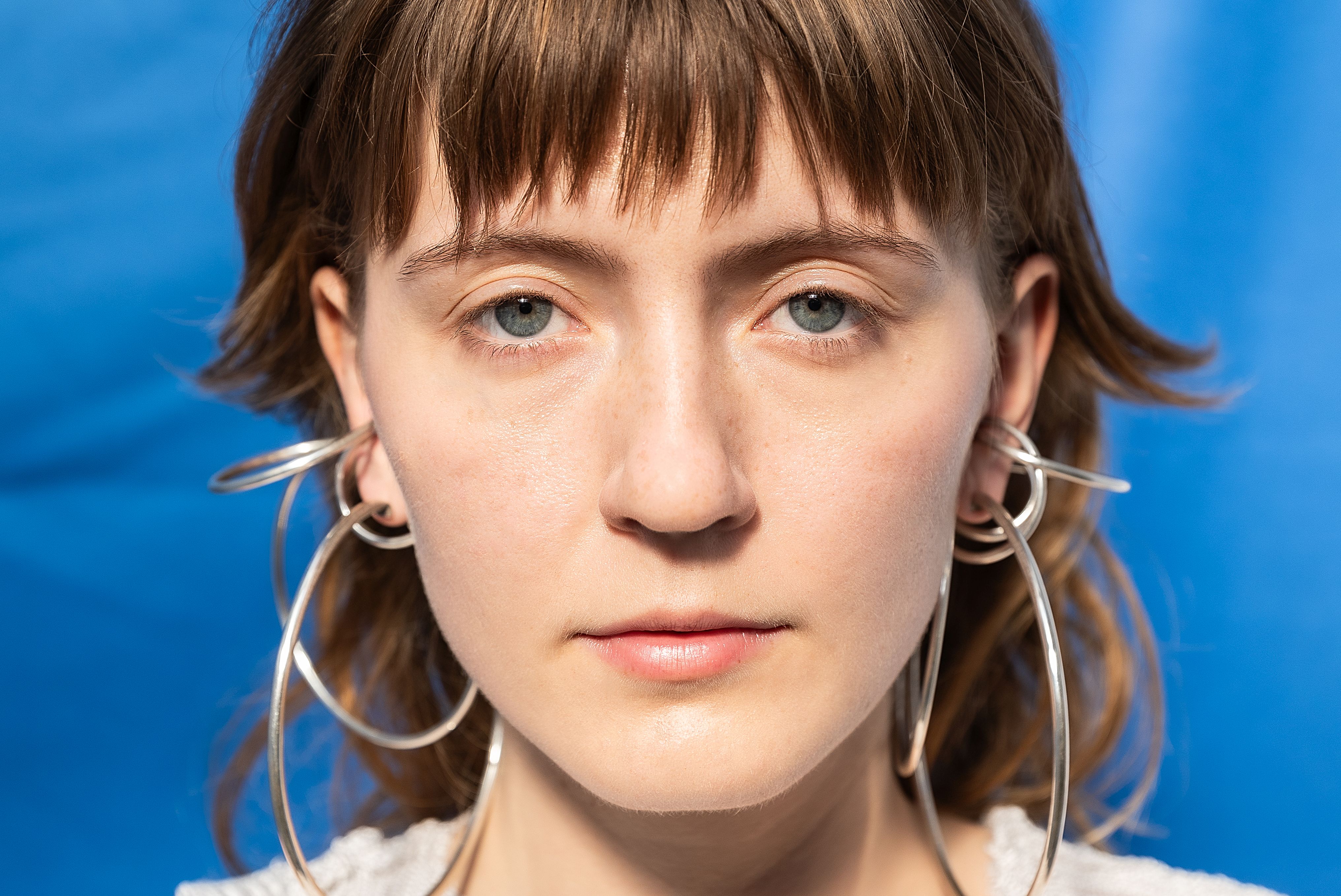
Name: Tara Nome Doyle
Nationality: Irish-Norwegian, Berlin-based
Occupation: Singer, songwriter
Current Release: Tara Nome Doyle's new album Ekko is out via FatCat.
Recommendations for Berlin, Germany: The Berliner Salon is currently showcasing young designers at the Gemäldegalerie. I’ve been getting more into fashion lately, and I find the contrast between historic art and modern design really refreshing and inspiring.
Topics that I am passionate about but rarely get to talk about: I have a wide range of interests—dogs, poetry, the Kardashians, fantasy books, veganism, 2010s YouTubers, C.G. Jung, makeup, hiking, knitting, RuPaul’s Drag Race, geopolitics … Sometimes, I do wish I could present a more unfiltered, multifaceted version of myself.
If you enjoyed these thoughts by Tara Nome Doyle and would like to know more, visit her official homepage. She is also on Instagram, and Facebook.
Where does the impulse to create something come from for you? What role do often-quoted sources of inspiration like dreams, other forms of art, personal relationships, politics, etc. play?
My creative impulse often comes from my fascination with language—phrases, metaphors, sayings. Sometimes, a particular combination of words strikes me in such a way that I feel compelled to build a song around it. The implied contradiction in the phrase “bad days never felt this good before” (from “Bad Days”) is a good example of that.
Another major songwriting trigger for me is my fascination with shame—the thrill of saying the unsaid, of exposing myself to the listener. On Ekko, this emotional exhibitionism is particularly present in songs like “I Used to Fly.”
For you to get started, do there need to be concrete ideas, or what some have called a 'visualization' of the finished work? What does the balance between planning and chance look like for you?
My first two albums, Alchemy and Værmin, were largely conceptual. I wrote most of those songs with a clear narrative or album arc in mind.
For Ekko, I challenged myself to write more freely—to let go and trust that, at some point, a thematic thread would emerge. It was a difficult process for me, but it resulted in my most personal album yet.
About halfway through, I came across Ovid’s myth of Echo and Narcissus, which became an anchor, helping me structure the album and inspiring its visual storytelling.
Is there a preparation phase for your process? Do you require your tools to be laid out in a particular way? Do you need to do research or create early versions?
I tend to collect ideas over long periods—words, melodies, song snippets, images, albums with a specific sonic atmosphere. When I begin a new project, it helps immensely to have this collection to draw from, rather than starting from scratch.
Once I have a rough direction, I step into a more analytical mindset, sorting through everything and finding connections. To get into the deep flow state necessary for writing and finishing songs, I usually escape to my family’s cabin in the Norwegian woods.
I record all my ideas as rough piano and vocal demos, which later serve as the foundation for studio production.
Do you have certain rituals to get you into the right mindset for creating? What role do things like coffee, lighting, scents, exercise, or reading poetry play?
Listening to my "core memory music" is incredibly inspiring—albums that made me fall in love with music and songwriting, like Susanne Sundfør’s debut album.
Reading poetry, lyrical prose, or watching visually stunning films can also be really helpful.
I don’t have strict rituals, but going for walks in nature and spending time with loved ones in a peaceful, comfortable environment helps set the right tone for exploration and creativity.
For Ekko, what did you start with? If there were conceptual considerations, what were they?
The first song I wrote for Ekko was a German track called “Hinter den Wolken.” It was a commissioned piece for a film, and since writing songs in German doesn’t come naturally to me, I spent time reading German poetry to get a feel for the poetic rhythm of the language.
My biggest inspiration ended up being Georg Trakl’s collected poems.
Tell me a bit about how the new material developed and gradually took its final form.
Ekko emerged from a time of confusion and loss. I felt directionless and constantly questioned myself.
It was a challenging period to live through, but ultimately, it became a source of inspiration. I tried to capture the discomfort of feeling disconnected from myself while simultaneously searching for a way forward.
I had many doubts about whether this would lead to a strong, coherent record, but in the end, it became an honest reflection of my experience—which is all you can really hope for.
What makes lyrics good in your opinion? What are your own ambitions and challenges in this regard?
Great songwriting is what I pay the most attention to when listening to music. I want lyrics to feel naturally paced, yet intertwined with the music.
Clever wordplay can be a bonus, but what excites me most is raw, unfiltered truth, expressed in a way that feels uniquely personal to the writer. That’s the standard I try to hold myself to as well.
What are areas, themes, or topics that you keep returning to in your lyrics?
I’ve always been drawn to liminality—the in-between spaces, uncertainty, doubt, complexity. Dive In really captures that feeling for me.
I also keep coming back to nature’s beauty, psychology, and ancient spirituality. Those themes never cease to fascinate and inspire me.
Many writers claim that as soon as they enter into the process, certain aspects of the narrative are out of their hands. Do you like to keep strict control, or do you follow things where they lead?
I try to embrace both. There’s nothing quite like getting into a creative flow and following wherever it leads, but that state isn’t always accessible. In those moments, it can be useful to approach writing from a more structured, analytical perspective.
I find writing pop songs like “Lighthouse” to be the perfect challenge—balancing authentic simplicity (which is surprisingly difficult to achieve) with a natural sense of flow.
There are many descriptions of the creative state. How would you describe it for you personally? Is there an element of spirituality to what you do?
For me, the creative state is deeply spiritual. It’s cathartic—transforming my memories and emotions into melodies and words. Sharing that with others gives me a sense of purpose and direction.
Tapping into that childlike state of creativity feels like a gift, and I hope everyone gets to experience it in some form.
Once a piece is finished, how important is it for you to step away and evaluate it later? How much refinement do you allow before you're satisfied?
I try not to overthink things. When something feels right, I trust that instinct and let it go.
One rule I’ve started following is: if it’s not a clear yes, then it’s a no. That means I don’t force things just because I feel like I should do them. It has its challenges, but it’s strengthened my intuition and creative confidence immensely.
“Narcissus” is a good example of this: it might seem like an odd choice to leave a voice memo of me mumbling a melody in the middle of a carefully produced album, but it served exactly the purpose I needed it to—so I left it in.
How do you think the meaning or effect of a song is shaped by the album it belongs to? Does each track need to be consistent with the larger whole?
With Ekko, I wanted the songs to stand more independently than on my previous albums. That said, I still aimed for a cohesive sonic atmosphere and a track list that reinforced the themes of the record.
Songs like “Ekko” were included to help tie the listening experience together, offering a deeper layer for those who engage with the album as a whole.
After finishing an album and releasing it into the world, there can be a sense of emptiness. Can you relate to this? How do you return to a creative state afterward?
So far, I haven't felt that post-release emptiness because I still hold on to the sense of creative accomplishment until the album is out. I am a bit wary of what comes after, but since my first European tour is happening right away, I don’t think I’ll have much time to dwell on it.
As we say in German: Kommt Zeit, kommt Rat (when the time comes, the solution will come).