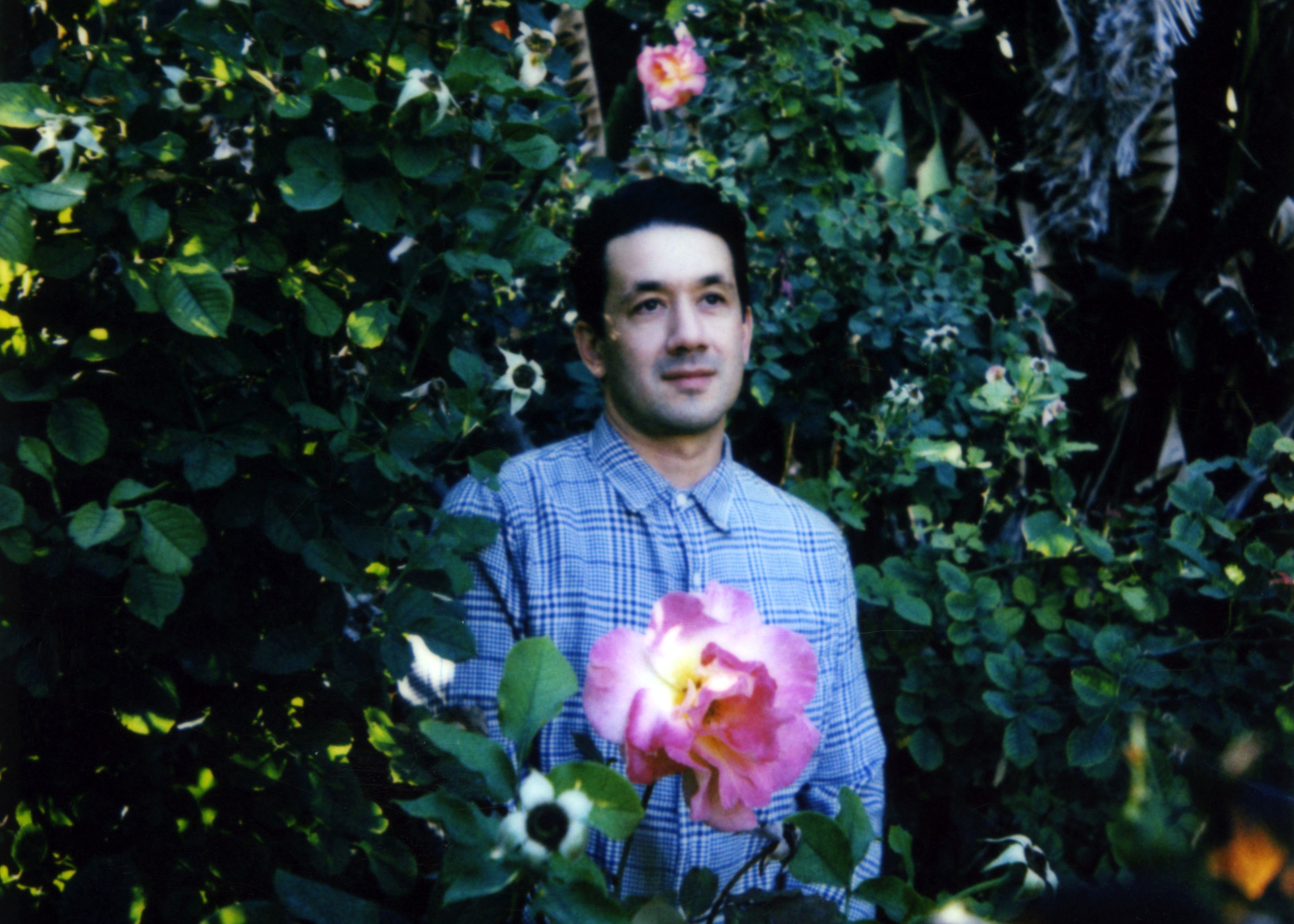
Published
Name: Tashi Wada
Nationality: American
Occupation: Composer, performer
Current release: Tashi Wada's What Is Not Strange?, featuring Ezra Buchla (viola, electric viola), Corey Fogel (drums, percussion), Devin Hoff (double bass) and Julia Holter (vocals, additional keyboard), is out via RVNG Intl.
[Read our Julia Holter interview]
If you enjoyed this Tashi Wada interview and would like to know more about his music, upcoming releases and live dates, visit him on Instagram, and twitter.
For What Is Not Strange?, where did the impulse to create the music come from for you? What role did often-quoted sources of inspiration like dreams, other forms of art, personal relationships, politics, etc., play?
The music began with me playing keyboard a lot, something I grew up doing but hadn’t focused on in recent years. This was very tactile, and led to an accumulation of sounds, gestures, and basic ideas. The dream aspect emerged with how the different elements came together as one overarching thing or album.
Drawing inspiration from other art and the people and world around me is pretty much always the case to some extent and becomes woven in, directly or more obliquely.
For you to get started, do there generally need to be concrete ideas – or what some have called a 'visualisation' of the finished work? How unforeseen, really, are "unforeseen outcomes" in your process?
I didn’t have a clear idea of what the album as a whole would sound like in advance, and in many cases the nature and form of the songs only revealed themselves later on. Some started with an image or feeling I wanted to capture, but I tried to let the music guide itself.
Generally, I’d say that I’m more interested in finding myself in unfamiliar terrain than making a specific type of music.
The press release also mentions that you dealt with the writings of Philip Lamantia in preparation for the album – arriving at the conclusion that “even the ground under our feet is uncertain." I know it's a big topic, but can you briefly talk about what led you to this realisation and how that entered the music?
Philip Lamantia’s writings have been a longstanding preoccupation for me. With What Is Not Strange?, his poetry was a perfect companion while I was writing the music, and it became embedded in it. It’s really Lamantia too and what I’ve understood about him that I find inspiring. He was a visionary, a “high poet” as he termed it, always searching for the ecstatic state.
The uncertainty of our world is a prevailing feeling for me that appears everywhere in life. The things that we take for granted are so often shaky at best. The birth of my daughter followed by the death of my father, all during the pandemic, turned my world upside down and thrust me into a new reality.
It felt important for me to identify this by saying it out loud, so to speak.
For the new album, you tuned your synths to a temperament suggested by Rameau. How would you describe the shift of moving to this particular tuning and what are its defining qualities from your point of view?
The meantone temperament proposed by Jean-Philippe Rameau that was the basis of the tuning system I worked with is relatively unstable and implies movement. In turn, the music highlights change.
What is especially interesting to me about these types of temperaments, which are not “equal,” is that the pitch relationships are different depending on the key. A specific chord, for example, won’t sound the same in each key.
These tunings work well for keyboards, as they were designed with them in mind. I wrote all of the music in the tuning system, so it’s very much married to the sound.
In how far has working with alternative tuning systems led to creating different music for you personally? Are there creative ideas / pieces which you could not realise in equal temperament?
I’ve been exploring a variety of different tuning systems for years.
For me, the tuning, or retuning, can lend the sound a personal quality, as well as help direct the music in interesting ways. I think we find this throughout the world historically in how the specific tuning systems of different cultures have informed the styles and tendencies of their musics and vice versa.
Twelve-tone equal temperament has specific implications, just like any system. It’s very versatile, but flattens the plane in the process, which is both its strength in what it allows and limitation in what it leaves out.
The album features several befriended musicians. What, in and outside of a personal connection, do you look for in a collaborator?
One important element for me, especially with this album, is working with musicians who aren’t bound to one style of music, which is true of each of the people who contributed to What Is Not Strange?—Julia Holter, Ezra Buchla, Devra Hoff, and Corey Fogel.
As the music was coming into focus, their particular sounds and ways of playing got into my head, so the arrangements and parts were made with them in mind.
What tend to be the best collaborations in your opinion – those with artists you have a lot in common with or those where you have more differences? What happens when another musician takes you outside of your comfort zone?
I think a balance of both. Having common ground as a basis is important of course, but the ability to surprise each other is part of the fun of collaborating. I always try to leave room for this in the music.
When you're in the studio to record a piece with other artists, how important is the actual performance and the moment of performing the song still in an age where so much can be “done and fixed in post?”
I come from a performance background, so the energy and expressive qualities of a performance are essential for me. These details help draw us in.
However, I’m also comfortable with working with the available tools, or at least trying them.
Unless I'm mistaken, What Is Not Strange? and Julia's album Something in the Room She Moves were written around the same time, involve both of you and even seem to deal with similar topics. How much bleed of one project into the other was there, would you say?
Yes, Julia and my albums were written and recorded around the same times, and as a couple we were inevitably experiencing similar things in our lives. This wasn’t really planned, though some practical concerns were factors.
I could see listening to the albums in dialogue creating an interesting experience as sounds and ideas filter back and forth. It’s hard for me to say as I was so deeply involved in both.
Many writers have claimed that as soon as they enter into the process, certain aspects of the narrative are out of their hands. Do you like to keep strict control or is there a sense of following things where they lead you?
As mentioned earlier, I do try to let certain aspects of the music take the lead, which allows me to find my way to new places. I enjoy the sensation of “Huh, I made that?” I experienced that on several occasions with this new album.
Once the new pieces were finished, how much improvement and refinement did you allow until you were satisfied? What did this process look like in practise?
Overall, I would say making What Is Not Strange? was a lengthy process, not entirely in my control. But in the end, I’m happy with how it turned out, so I wouldn’t change that.
I was aware of the potential to overwork things, so I stepped back when it made sense.
For What Is Not Strange?, how important was the production, including mixing and mastering for you personally? In terms of what they contribute to a song, what is the balance between the composition and the arrangement (performance)?
The ideas I had for the production of the album were more specific than previously for me. Chris Cohen, who engineered the album, and Stephan Mathieu, who mixed and mastered it, helped bring all of the elements together and into focus in a way that guides the listener through the music.
The visual elements around the album made by Dicky Bahto were also important and a lot of care was put into them.
Music is a language, but like any language, it can lead to misunderstandings. In which way has your own work – or perhaps the work of artists you like or admire – been misunderstood? How do you deal with this?
I don’t know if music is a language!
But I think once it’s out in the world and out of your hands, you have to let it be and live its own life. There’s a joy in that.
Creativity can reach many different corners of our lives. Do you personally feel as though writing a piece of music is inherently different from something like making a great cup of coffee? What do you express through music that you couldn't or wouldn't in more 'mundane' tasks?
I identify with my music in a deeper way than other things I do on a daily basis. It’s a second life in a way where you can dream and collapse time.
That said, it’s good to have perspective and not forget about your life on this plane. Having a child now, certain things that used to concern me seem much less important.