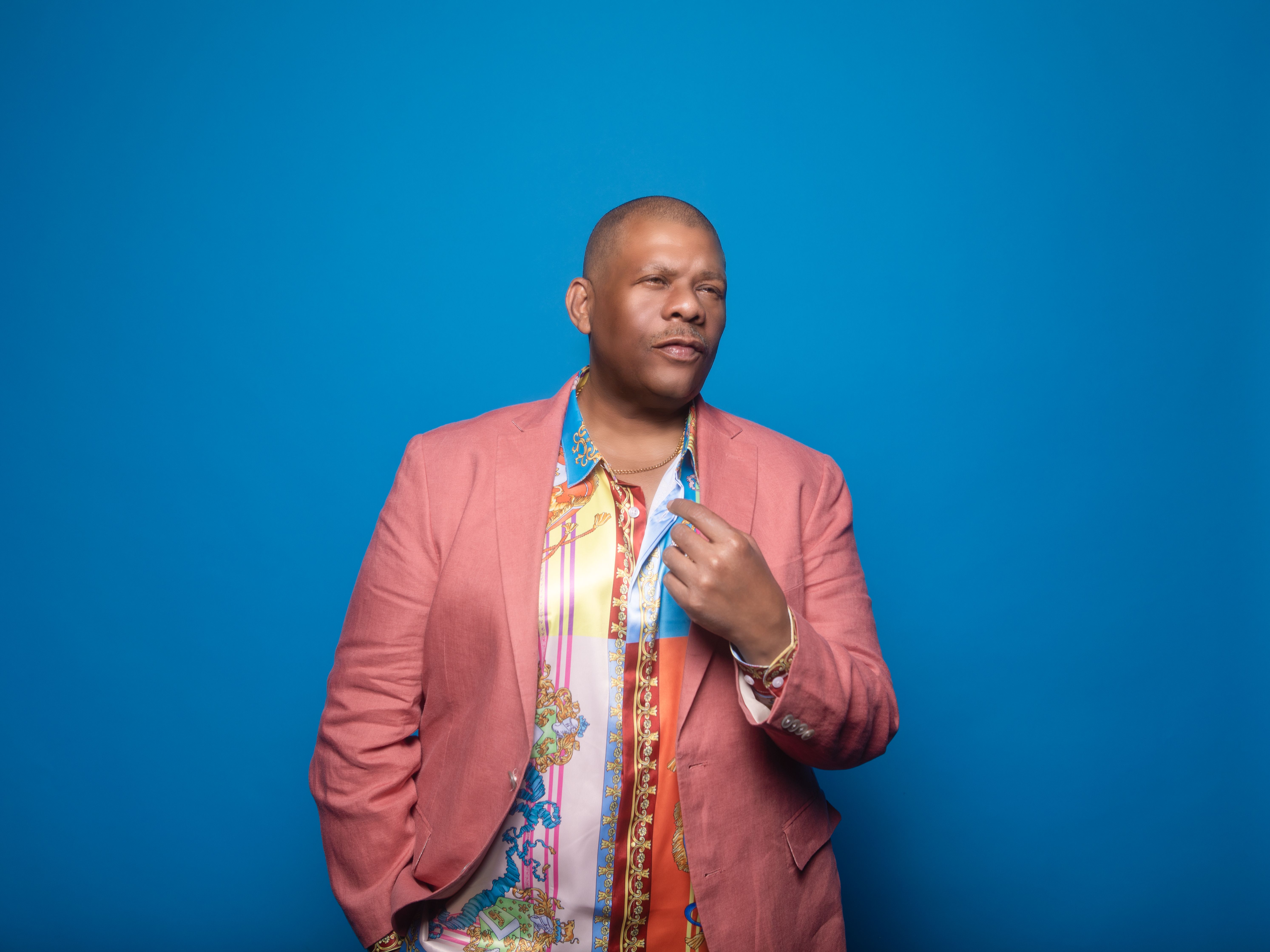
Published
Name: Teddy Douglas
Nationality: American
Occupation: Producer, DJ
Current release: Teddy Douglas's new EP Don't Turn Your Back On Me, featuring Pauline Taylor and remixes by Tedd Patterson, Shaka, and Danny Krivit, is out via Nervous. The song is taken off Teddy's latest album I'm Here. To buy, go to his profile on traxsource.
If you enjoyed this interview with Teddy Douglas, stay up to date on his work on Instagram and Soundcloud. For more on his production team Basement Boys, visit their official website.
For a deeper dive, read our earlier Teddy Douglas interview.
Where does the impulse to create something come from for you? What role do often-quoted sources of inspiration like dreams, other forms of art, personal relationships, politics etc play?
For me, the impulse to create has always come from deep musical roots. The records I grew up listening to: Motown, Stax, the richness of Philadelphia International, gospel and soul. My history and my sound have always been linear, like a current flowing through me.
I’ve always felt that my songs reflect my emotions, what I’m going through in my life, what the world is going through, all of that stirs me. Even when I moved away from music for a bit, I always had that for certain songs or moods that kept wanting to be expressed.
For you to get started, do there need to be concrete ideas – or what some have called a 'visualisation' of the finished work? What does the balance between planning and chance look like for you?
I often start with a small seed, even just one chord, a melody line, or a rhythm.
Rarely do I have the full picture early on. There’s always room for chance: improvisation, trying something unexpected in the studio, letting the session breathe. But there’s also planning: I think about the vibe, the energy, how it might translate live.
With I’m Here, some songs came from demos I made years ago, from certain moods when I moved to Pennsylvania and rethinking what my music could be.
Is there a preparation phase for your process? Do you require your tools to be laid out in a particular way, for example, do you need to do 'research' or create 'early versions'?
I’ve always collected records. I research sounds, textures, what instrumentation will feel right.
Over years I’ve learned what tools work for me, which studio gear, what vocalists, what mixing engineers. Then I often do early versions, rough demos, to test the emotional core.
Once I’m happy with that, I start shaping it: adding live elements, refining production, seeing how it moves from a demo to something that can stand on its own.
Do you have certain rituals to get you into the right mindset for creating? What role do certain foods or stimulants like coffee, lighting, scents, exercise or reading poetry play?
I don’t follow rigid rituals so much, but I like certain atmospheres. Good lighting, maybe low but warm; playing some favorite records to set a mood before starting.
Besides just external forces, mindset is as important as the technical tools, if I’m grounded, then the creativity flows more freely.
For I’m Here, what did you start with? If there were conceptual considerations, what were they?
Tthe starting point was three songs I wrote after moving from Baltimore to Pennsylvania in 2006: “Star in the Ghetto,” “Help!,” and “I’m Here.”
Those demos carried strong personal meaning and a kind of transition and rediscovery after stepping back from the music business. The concept behind the album is musical freedom: saying who I am, where I come from, all those decades in the game, and tying it to the roots, to house, funk, disco, soul.
So both the personal story and musical legacy shaped what the album would be.
For you, how did the new material develop and gradually take its final form?
For I’m Here, after the demo phase, I worked with collaborators, vocalists, production team, mixing / mastering.
We shaped up the arrangements, adding live instruments, refining grooves, making sure every song had its space. Listening back rough versions, evolving them: cutting, adding, sometimes rearranging.
Also making sure that the album as a whole had flow: not just individual tracks but the journey from beginning to end. And making sure the sound reflected both heritage and present, Baltimore house & disco & soul.
What makes lyrics good in your opinion? What are your own ambitions and challenges in this regard?
A good lyric, to me, is one that speaks truth and comes from the heart. Some emotional clarity but also space for the listener’s experience. It shouldn’t be overly complicated just for complexity’s sake; simpler sometimes is more powerful.
I want my lyrics to lift people up, to comfort, to inspire, provide a different perspective. The challenge is capturing something universal without losing personal authenticity.
Also balancing musical groove-first energy with lyrical depth is always a dance.
Many writers have claimed that as soon as they enter into the process, certain aspects of the narrative are out of their hands. Do you like to keep strict control or is there a sense of following things where they lead you?
I like a mix. I want to steer the ship, have a vision, but I also allow for magic — the unexpected voice in the session, a chord change that surprises me, a collaborator who brings in something beyond what I saw.
If I tried to control every little thing, I think I might kill that spark. So there is control, but there is also surrender. Collaboration and accepting the unexpected is where the good stuff is.
After finishing a piece or album and releasing something into the world, there can be a sense of emptiness. Can you relate to this – and how do you return to the state of creativity after experiencing it?
I do, absolutely. There’s a release: you pour yourself into something, then it goes out. Sometimes there’s a gap, a quiet moment where you wonder ‘what next?’.
Over time I’ve learned to embrace that emptiness as part of the cycle. I try to dive back into the mindset, get inspired by the people I love, the places I’m from, sounds that ignite me.
Or sometimes I just stop and let life happen. Usually something small, a melody, a lyric line, a rhythm, will resurface that calls me back in.