Published
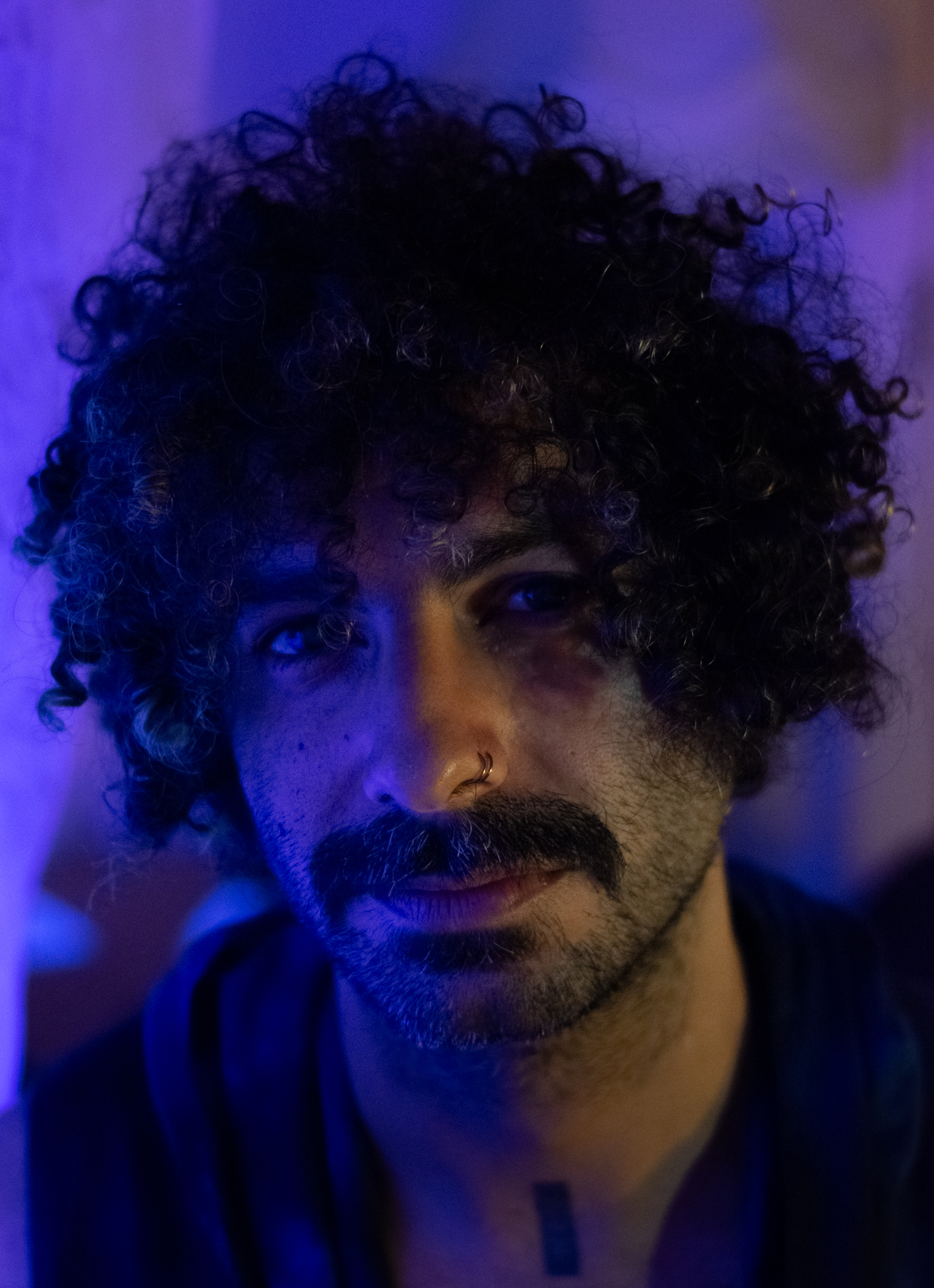
Name: Teddy Tawil aka tedzi تدزي
Nationality: Lebanese
Occupation: Producer, sound artist
Current Release: tedzi تدزي's debut album Mn Dehab is out July 25th 2025 via mnjm.
If you enjoyed this tedzi تدزي interview and would like to know more about his music, visit him on Instagram, and Soundcloud.
When was the first time you noticed you were drawn to darker themes and moods in music, literature or the movies?
I am not necessarily drawn to darker themes. I enjoy the lighter side of things a lot.
But when it comes to reflecting on reality, my perception of reality, it is quite dark. “Teghbish,” the last track of the album, clearly showcases that by coupling a sweet melody with noise.
I love transcendence in art. It doesn’t have to propel me into a better place, just a different place than this dying world.
“Darkness” is, of course, not strictly speaking a term related to sound. What constitutes darkness to you, especially in instrumental terms?
Darkness is truth. Truth is dark.
In tonal sense, dissonance and movement, unpredictable asymmetry, persistence, repetition and the lack of musical resolution.
Dropping tonal formulas that give relief, and keep those beats searching, instead of settling for those grids that work.
How would you describe the physical sensation and possible attraction of being exposed to darkness in music?
I feel challenged when exposed to darker music. Like having a necessary conversation with the self, and the world.
Physically, I am looking for the energy to withhold the pressure and sustain that conversation. Because only then, catharsis is achieved. It is quite powerful to witness darkness, accept it, and see the truth in it.
I do not like darkness that comes from a place of nihilism. I cannot relate to it. To play with darkness, be playful within it, is quite empowering. “Drbk 101” is a good example of that.
Does your interest in darker musical themes extend into extra-musical fields such as fashion, or politics?
I think politics comes first, then music follows. Music is an extension of politics, or a political tool. Even when it is merely entertaining.
My music is becoming my way to cope and to remain active, and invite whoever to join in that audial protest.
I have had a hard time explaining that listening to death metal calms me down. When you're performing a piece with a darker energy, does it tend to fill you with the same energy or feeling – or are there “paradoxical” effects?
It makes me feel more alive than anything else. Having control over so much chaos in sound, using that power to shake a room and move a crowd, maybe even challenge that crowd, is quite rewarding, and maybe even healthy.
It reminds me of going to therapy, and asking the tough questions. It is a journey of healing somehow.
Tell me about the creative process for Mn Dehab, please.
The process revolved around sampling sessions that were divided into mood explorations.
Sample and resample the self + my gear. Granulate them, layer them, organize them, disorganize them, sprinkle truth on top of it, decorate with whispers from the past, maintain power with below_beasts/beats, keep pushing, keep sampling, keep granulating, drop the grid, feed the grid, burn the world.
Exploring darker themes in the music often goes hand in hand with the accompanying artwork. Tell me a bit about this relating to Mn Dehab.
The artwork resembles the music in many ways.
But mostly, the artwork came to life by following a similar creative process. Black lights, layers and textures, breaking some rules, extracting truth from within, the gold from within.
DIY till it becomes an entity of its own.
I would love to know a little about the feedback you've received from listeners or critics about what they thought some of your darker songs are about or the impact it had on them – have there been “misunderstandings” or did you perhaps even gain new “insights?”
Most feedback I got felt like hugs. I am grateful and I remembered the importance of music when I saw people reacting to it. Because maybe they also felt hugged listening to it.
I loved how the feedback was diverse but somehow connected. Many felt the darkness and the sweetness at the same time.
Throughout the history of art, there have been artists who did not want to exorcise their demons, afraid they might lose their creative spark. What's your take on that?
I think angels carry the darkness. Demons carry neutrality, indifference, consumerism, superficiality, lightness, fake smiles, social performances, death of soul etc.
So I am not worried about that, I will continue listening to my angels and forever push for more truth through music.