Published
Name: Teleport Collective
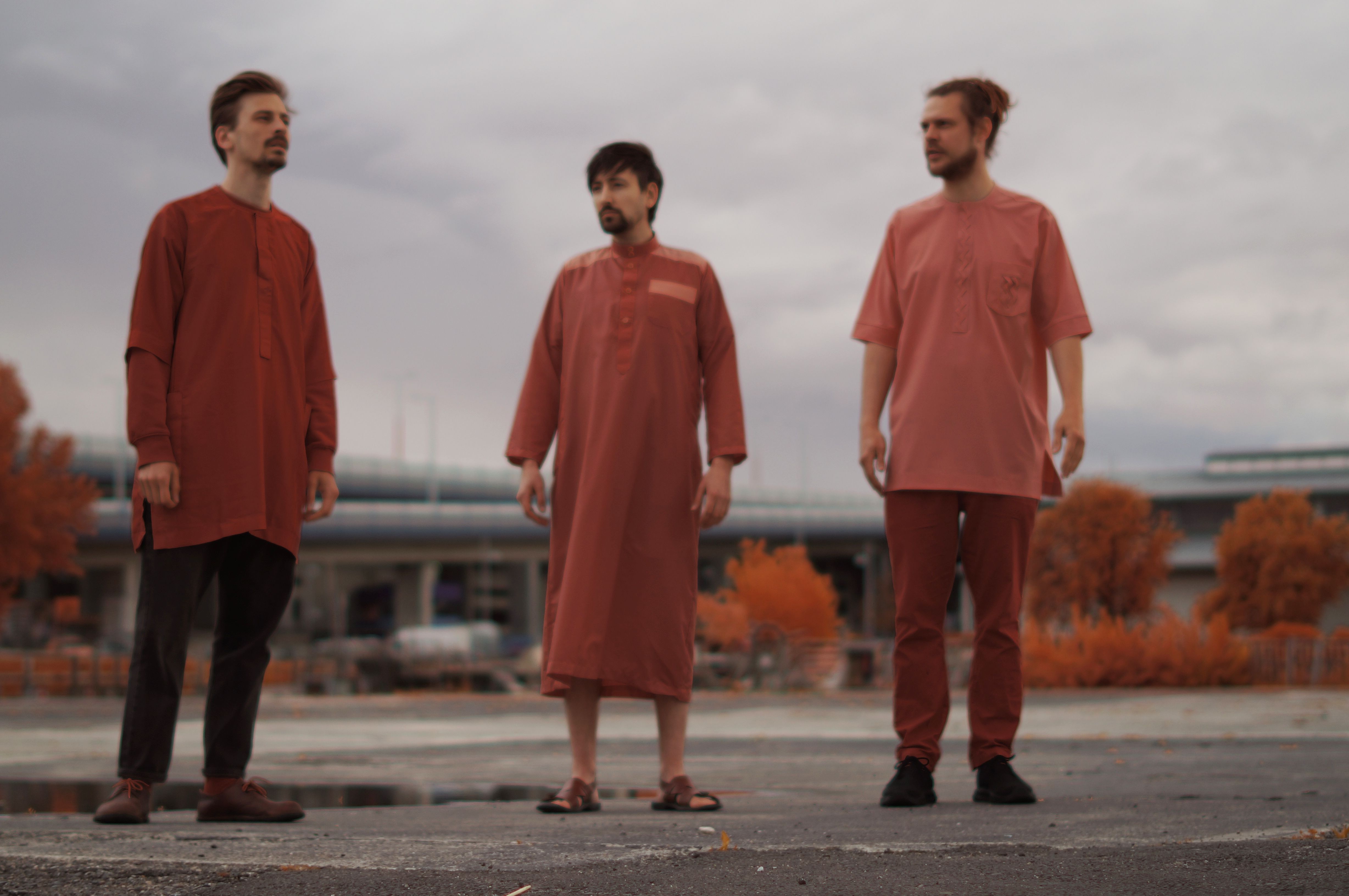
Members: Aaron Steiner (Keys, Synthesizer, Electronics, Poems/Lyrics), Joachim Huber (Bass, Electronics), Michael Naphegyi (Drums, Percussion, Electronics)
Nationality: Austrian
Current release: Teleport Collective's new album A Monolith‘s Dream is out via col legno.
If you enjoyed this Teleport Collective interview and would like to know more about the band and their music, visit their official homepage. They are also on Instagram, and Facebook.
What does the term jazz mean today, would you say?
Joachim: For us Jazz means freedom, exploring and combining all styles of music.
We always try to surprise ourselves and the audience with our music and our improvisations.
Jazz was about a lot more than just music in the 60s and 70s, from politics to fashion. For you personally, is jazz still a way of life – and if so, in which way?
Joachim: Our everyday-live has a lot in common with jazz. Improvisation is one of the main subjects in jazz, and so it is in life.
Some things are planned, but most things happens in the moment.
Many people perceive jazz as a genre with high barriers of entrance, both for listeners and musicians. What have your own experiences been in this regard?
Joachim: Our goal is to make music that can appeal to all kinds of listeners, from trained jazz musicians to music enthusiasts.
Derek Bailey defined improvising as the search for material which is endlessly transformable. As of 2024, what kind of materials are particularly stimulating for you?
Michael: Almost anything can be transformed into a musical instrument—pieces of metal, chains, or even old kitchenware have all been part of our music.
We love working with items we find at the venue, which always brings an element of surprise and inspiration. In this sense, we completely agree with Derek Bailey's definition.
What, would you say, are the key ideas behind your approach to improvisation?
Joachim & Michael: First and foremost, we aim to have fun with our music and rediscover ourselves each time we play. Our concerts are a blend of compositions and free improvisation, but even the composed pieces often sound entirely different with each performance.
For us, this freedom is essential to achieving a state of flow, which is particularly important in improvisation.
How would you describe your relationship with your instrument – is it an extension of your self/body, a partner and companion, a creative catalyst, a challenge to be overcome, something else entirely?
Michael: For me, my instrument is both a creative catalyst and an extension of my body.
I don’t necessarily like to call myself a drummer, but the drums are the instrument I feel most comfortable using to translate my musical ideas. Sometimes, though, it’s the rattling of a bunch of old keys or the clash of two metal plates.
Jazz has always had an interesting relationship between honouring its roots and exploring the unknown. What does the balance between these two poles look like in your music?
Michael: It’s definitely important to understand history in order to develop a deep appreciation for something. We are all influenced by musicians and artists of the past, across all kinds of genres. The more you listen, watch, and read, the more you grow as both an artist and a human being.
For me, being an artist means being in a constant state of exploration—searching for elements to add to your artistic vocabulary. I don’t want to simply copy; I want to understand, deconstruct, and rebuild so that it becomes an authentic part of who I am. It’s always a process of taking and adding.
Even if it’s not something entirely new to the world, it becomes new and inspiring to you—and that’s what matters most.
How, would you say are your live performances and your recording projects connected at the moment? How do they mutually influence and feed off each other?
Joachim: We try to see the studio and all its possibilities as another instrument, not just as a means of recording.
In our performances, we use samples and various devices to recreate the album’s sound.
There are various models to support jazz artists, from financial help to mentorships/masterclasses. Which of these feel like the best way forward to you?
Joachim: For us, the best way to support artists is by attending their shows and encouraging them directly with applause or positive feedback.
If the financial situation allows, it’s also great to buy their records!
The Montreux Festival intends to preserve its archive of recordings for future generations. Do you personally feels it's important that everything should remain available forever - or is there something to be said for letting beautiful moments pass and linger in the memories of those that experienced them?
Joachim: It’s always nice to have a recording of a concert from years ago to remember how it felt. But there’s also a beauty in letting moments pass without trying to capture them.
Nowadays, everyone seems to record concerts on their smartphones, often with terrible sound quality, more out of a fear of missing out than anything else. It’s a bit odd, really, because they end up watching the performers not in real life, but on their smartphone screens.