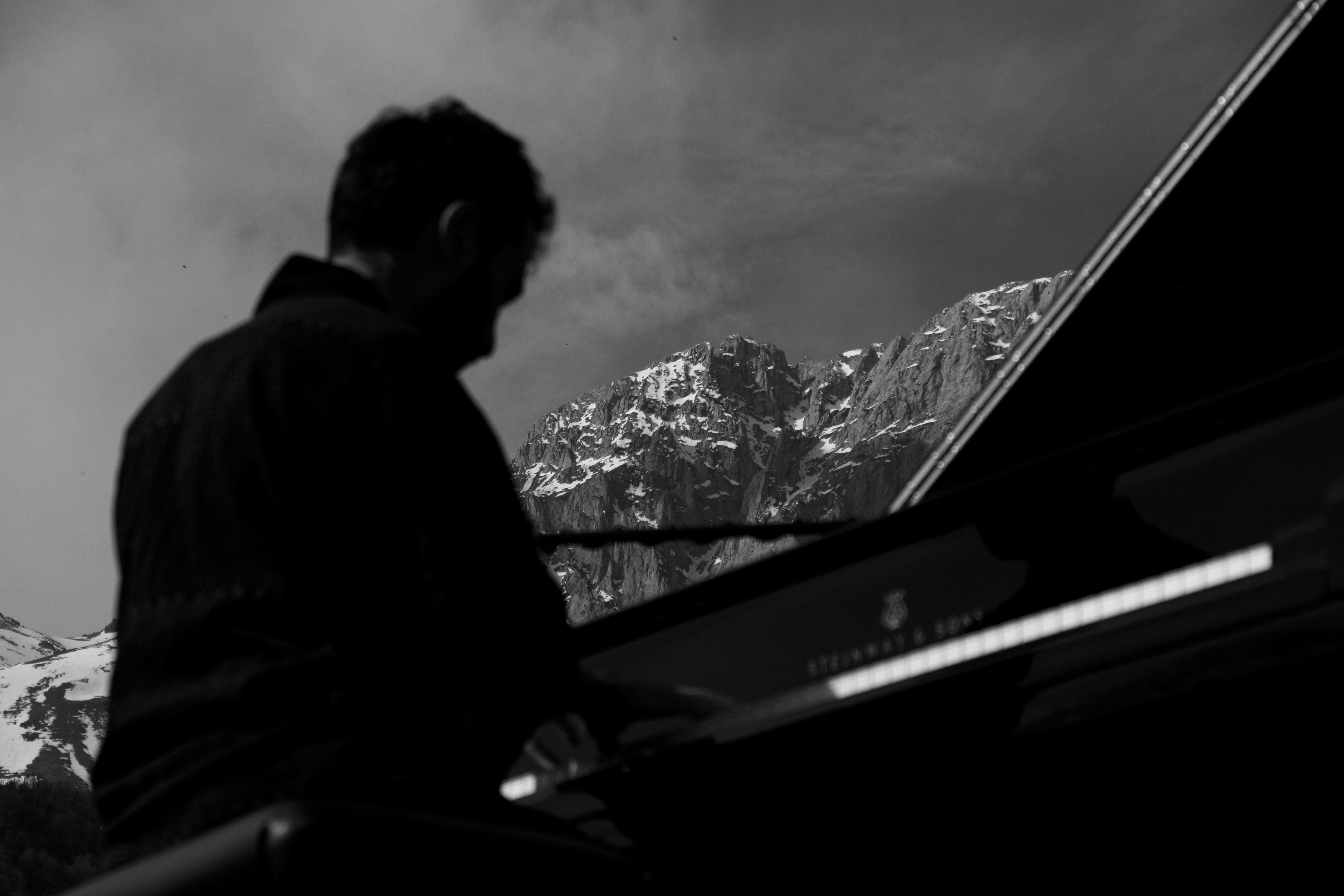
Published
Name: Tigran Hamasyan
Nationality: Armenian
Occupation: Pianist, composer, improviser
Current Release: Tigran Hamasyan's The Bird of a Thousand Voices is out via naive. For more on the project, there is a dedicated website.
If you enjoyed this Tigran Hamasyan interview and would like to know more about his music, current live dates and upcoming releases, visit his official homepage. He is also on Instagram, Facebook, and twitter.
Over the course of his career, Tigran Hamasyan has worked with a wide range of artists, including Eivind Aarset, Jan Bang, and Mark Guiliana.
[Read our Eivind Aarset interview]
[Read our Jan Bang interview]
[Read our Mark Guiliana interview]
Where does the impulse to create something come from for you? What role do often-quoted sources of inspiration like dreams, other forms of art, personal relationships, politics, etc. play?
The impulse to make music comes from the need to let out and hear what's inside, manifesting something that is inexplicable / unseen / unconscious. I am fascinated and inspired by different art forms like cinema, photography, poetry, visual arts, folk arts, archaeology, physics, belief systems, and nature.
I believe the richer your inner world, the richer your music will sound. Storytelling and dramaturgy are also very important to me, and I find connections between various art forms and music in that way. I’ve realized I am drawn to certain music for that reason too.
For example, I love the storytelling and dramaturgy of Led Zeppelin, Miles Davis’ My Funny Valentine Live '64, Shostakovich’s Preludes and Fugues, Jan Garbarek’s Dis, Bach’s St. John’s Passion, and traditional Armenian lullabies, which can contain entire creation myths, love stories, and lamentations.
These pieces are connected because of their storytelling, which inspires me to create and, I guess, explains to some extent why my music sounds the way it does.
Do you need concrete ideas – or what some have called a 'visualization' of the finished work – to get started? What does the balance between planning and chance look like for you?
I constantly compose and document (record) ideas as they come up, whether at the piano or not. Composing for me is about fixing ideas in a way that sounds as close as possible to the feeling you have when improvising.
You have to balance thinking and emotion so that neither takes over. Melodic content is crucial for me.
Do you have certain rituals to get into the right mindset for creating? What role do things like coffee, lighting, scents, exercise, or reading poetry play?
Coffee is something I’m addicted to and a vital need – haha! But I have to be careful not to have a coffee crash and ruin my energy.
I remind myself not to sit at the instrument too long and to get up, move / stretch, play with the jump rope, or walk in the garden.
Mainly, I need silence both inside and around me. At the same time, there needs to be a flow of inexplicable raw energy to get things out, whether it results in something cool or total trash. You have to constantly push yourself, no matter what mood the piece is in.
What do you start with? How difficult is that first line of text, the first note?
I don’t actually know what that beginning is. It just happens. But I also have many musical sections / ideas that clearly aren’t beginnings – they’re like choruses or developmental parts of the music.
Mostly, the creation process begins with a melody in my head that I then bring out into the world and develop.
Once you’ve started, how does the work gradually emerge?
Most of the time, I create a lot more material than I need.
I often end up with 4–5 parts that feel like they belong to “another opera,” and then I gradually find what the music needs. Sometimes I abandon it and come back to it later.
Many writers have claimed that once they enter the process, certain aspects of the narrative are out of their hands. Do you keep strict control over the process, or do you follow where things lead you?
It's a balance of letting go and controlling. I really let go and like the idea of venturing into the unknown – this is a crucial part of the process. Playing “for no reason” helps.
But when I find things I like, I analyze them and clean out the parts the music doesn’t need.
While writing, new ideas and alternate paths often open up, pulling the creator in different directions. Does this happen to you, and how do you deal with it?
Yes, this is the story of my life! I often end up with too many options.
Sometimes none of them work, and sometimes many of them do, but you still have to make a choice. In those instances, I leave the composition for a while and return with fresh ears.
There are many descriptions of the creative state. How would you describe it for yourself? Is there a spiritual element to what you do?
I aim to reach a place where everything I create is an “ode to God.” In other words, every note you create is done “in front of God,” and you have to be truthful in the process.
In the digital age, the writing and production process can seem infinite. What marks the end of the process for you? How do you finish a work?
Yes, infinite possibilities can be a problem.
Once I feel the dramaturgy and shape of the piece are to my liking, it's done. I may still work on small details, but the piece itself is finished.
After completing a piece or album, how important is it to let it sit and evaluate it later? How much refinement do you allow, and what does this process look like?
Since my writing process is slow, I already go through so many phases with compositions that when I come back to it after a break, I may only simplify the tune or cut a part. It’s important to evaluate a piece after some time but also to avoid going in circles or ruining it.
In my experience, it takes courage to throw away entire sections, but those parts often find their place later, even if they don’t end up in the final piece.
What’s your take on the role and importance of production, including mixing and mastering, for you personally? How involved do you get?
It’s very important. The key is making the right choices for each project. I’ve had experiences where I chose the wrong mixing engineer for a project, but they ended up being great for a different one.
Recording the sounds as close as possible to what the final result will be is the best way to get what you want.
After releasing a piece or album, there can be a sense of emptiness. Can you relate to this, and how do you return to creativity afterward?
Whenever I feel stuck or like things are becoming mechanical, I try to take long breaks.
However, if I’ve been working on, say, a heavy-sounding prog rock album, I get excited to start arranging for piano and choir or write a sonata afterward.
Creativity can touch many areas of life. Do you feel writing a piece of music is inherently different from making a great cup of coffee? What do you express through music that you couldn’t through more 'mundane' tasks?
Music is a form of communication. The feelings and inner world I can’t express through words are expressed through music, which is my favorite medium for communication.
In music, I search for the feeling of eternity. We all have certain tunes we can listen to on repeat without tiring of them. I think it’s because they contain a timelessness, a sense of eternity, that transcends our material world and exists in another dimension.